
Blog – The Forge Journal | Jaxon Forge
PROUD CAPITALIST FREE MARKETS • AMERICAN TARIFFS • FORGING WEALTH THAT LASTS JAXON FORGE

THE FORGE JOURNAL

Stories and advice from Jaxon Forge, Founder of MoneyForged.com

Raw, no-fluff truth on wealth psychology, iron discipline, free-market capitalism, tariffs, and the systems that separate the self-made from everyone else.

CAPITALISM IN ACTION
FREE MARKETS • TARIFFS FOR AMERICA
Jaxon Forge
Psychology of Money • 8 min read

Why Most People Stay Broke Even When They Make Good Money

High income doesn’t equal wealth. Here’s the brutal psychology hack that keeps even six-figure earners trapped in the paycheck-to-paycheck cage.

Discipline • 6 min read

The 3 AM Rule That Separated Me From 99% of Entrepreneurs

The quiet hours when excuses die. How waking at 3 AM three days a week gave me an unbreakable edge.

Psychology of Money • 9 min read

How I Rewired My Brain to Crave Hard Work Instead of Comfort

The exact system I used to make discipline addictive and comfort feel like punishment.

Wealth & Execution • 7 min read

The Silent Killer of Wealth: Comfort masquerading as “Balance”

Why “work-life balance” is the fastest way to stay mediocre forever.

Discipline • 5 min read

The Discipline Tax: Pay It Early or Pay It Forever

The hidden price every high performer must pay—early or late.

Business & Hustle • 8 min read

Why I Stopped Chasing Motivation and Started Chasing Systems

Motivation is weather. Systems are the engine that prints real money.

Wealth & Execution • 6 min read

Why Cash Flow Beats Net Worth Every Single Time

Net worth is a lie. Cash flow is freedom. Here’s the math I live by.

Business & Hustle • 10 min read

The $0 Startup Blueprint That Still Works in 2026

No money. No team. Just relentless execution. My exact playbook.

Free Markets & Tariffs • 7 min read

Why I Support Tariffs for America’s Survival

The capitalist case for protecting American wealth and strength.

Jaxon Forge

Money Forged

Forging Wealth That Lasts • Jaxon Forge

@MoneyForgedHQ

Stay in the Forge

Jaxon Forge’s weekly dispatch on discipline, systems, tariffs, and wealth that actually lasts.

JOIN THE FORGE

Author: Jaxon Forge

  • How to Fly Private Without Killing Your Wealth – The Self-Made Man’s Aviation Rules

    How to Fly Private Without Killing Your Wealth – The Self-Made Man’s Aviation Rules

    How to Fly Private Without Killing Your Wealth – The Self-Made Man’s Aviation Rules | Money Forged by Jaxon Forge
    Jaxon Forge - Founder of MoneyForged.com

    How to Fly Private Without Killing Your Wealth – The Self-Made Man’s Aviation Rules

    Hey, it’s Jaxon Forge. Last month I closed a $2.4 million deal at 41,000 feet on a chartered Phenom 300. The client signed while we were still climbing through 20,000 feet. No airport delays, no security lines, no wasted hours. Pure leverage. But here’s the part nobody posts: that same flight cost me $18,400 round-trip. I ran the numbers before I booked it — and I still flew. Because I follow the exact rules I’m about to give you.

    This isn’t another “private jets are for winners” fluff piece. I already wrote the brutal truth about ownership costs and why your airplane is not an investment. This one is different: the practical, no-BS playbook I actually use every single quarter so private aviation multiplies my wealth instead of quietly bleeding it.

    It all comes back to the same psychology I unpacked in “The Psychology of Making Money” and the Discipline Tax I live by every day. Comfort at altitude is still the silent killer of wealth. The moment flying private becomes a lifestyle flex instead of a calculated business weapon, you’ve already lost.

    The Self-Made Man’s 7 Aviation Rules I Live By in 2026

    1. Never own until the math screams yes. I charter or fractional 80% of the time. Ownership only enters the conversation when I’m logging 300+ hours a year and the numbers show positive ROI on deal velocity.
    2. Every flight must pass the 4-question test. (1) Does this save or create more than 10x the cost in time/revenue? (2) Is it replacing commercial first-class or a wasted day? (3) Does it protect my 3 AM deep-work edge? (4) Would my 20-year-old self call this a smart use of capital?
    3. Run it like a boring business, not a toy. I track every flight in the same spreadsheet I use for real estate cash-flow. If it doesn’t beat my worst-performing asset, it doesn’t fly.
    4. Use the quiet hours at altitude like a 3 AM Rule in the sky. No Wi-Fi scrolling. No champagne autopilot. Laptop open, deep work or deal prep only. That’s where the real return comes from.
    5. Delay the visible flex, protect the invisible compounding. Friends post the jet selfies. I post the closed deals. One compounds. One depreciates.
    6. Charter rates are negotiable — act like it. I never pay published rates. I book empty legs, negotiate bulk hours, and treat operators like vendors, not luxury concierges.
    7. Re-evaluate every 90 days. Lifestyle creep happens fast at altitude. I review every flight log like a P&L. If the edge is dull, I go back to Delta in a heartbeat.

    My 2026 Quick-Reference Charter vs Fractional vs Own Matrix

    Real numbers I reference before every booking. Use this as your filter.

    ScenarioBest OptionTypical Cost (200 hrs/yr)When I Choose It
    Under 150 hours / opportunistic dealsCharter (empty legs & on-demand)$300k–$600kMost of my flying — highest flexibility, zero fixed overhead
    150–300 hours / predictable scheduleFractional or jet card$600k–$1.2MWhen I need guaranteed availability without crew headaches
    300+ hours + heavy deal flowFull ownership or long-term lease$1.5M–$4M+Only when the math shows 3–5x ROI in time/revenue created

    The moment private aviation stops serving the mission and starts serving the ego, it becomes the same trap as the upgraded truck or the bigger house. Comfort masquerading as balance — just at 500 mph.

    I still remember the year I almost pulled the trigger on a pre-owned Citation. The salesman had the keys in my hand. Then I ran the full five-year projection against my boring real-estate portfolio. The jet lost. I walked. That single “no” probably saved me seven figures in opportunity cost and kept my compounding engine untouched.

    Private aviation can be one of the highest-leverage tools a self-made man has — but only if you treat it with the same discipline you used to build the wealth that lets you fly in the first place.

    Want the exact spreadsheet I use to run every flight decision?

    Join the Money Forged newsletter — the no-fluff weekly dispatch that gives you the systems, calculators, and rules I actually use. No guru nonsense. Just real talk from the trenches.

    GET THE NEWSLETTER + FREE AVIATION DECISION SPREADSHEET →

    Stories and advice from Jaxon Forge • @MoneyForgedHQ on X

    Previously in Aviation: Your Airplane is NOT an InvestmentThe Brutal Truth About Flying Private
    Next read: The True Cost to Own an AutomobileThe Power of Boring

  • Private Aviation: The Brutal Truth About Flying Private Without Going Broke

    Private Aviation: The Brutal Truth About Flying Private Without Going Broke

    Private Aviation: The Brutal Truth About Flying Private Without Going Broke | Money Forged by Jaxon Forge
    Jaxon Forge - Founder of MoneyForged.com

    Private Aviation: The Brutal Truth About Flying Private Without Going Broke

    Hey, it’s Jaxon Forge. A couple years ago I stepped off a chartered Gulfstream after closing a seven-figure deal mid-flight. The pilots shook my hand, the FBO staff treated me like royalty, and for thirty seconds it felt like I had finally “made it.” Then I opened the spreadsheet on my phone and saw the real number: $47,000 for one round trip. That single flight cost more than my first full year of grinding as a broke entrepreneur.

    Welcome to the unfiltered truth about private aviation. It’s not an investment. It’s not even close to a wealth builder for most high earners. And that’s perfectly okay — as long as you treat it like the high-leverage tool it actually is instead of the ego trophy most guys turn it into.

    This is the same psychology I unpacked in “The Psychology of Making Money” and “Your Airplane is NOT an Investment.” Comfort masquerading as balance. Lifestyle inflation dressed up in altitude. The silent killer of wealth isn’t bad markets or taxes — it’s convincing yourself that the next shiny thing in the sky is somehow building your future when it’s quietly draining it.

    The Real Math Nobody Shows You in the Hangar

    Light jet ownership: $3–6 million upfront. Annual operating costs: $800k–$2 million once you factor fuel, crew, hangar, insurance, maintenance, and depreciation that hits the second the wheels leave the tarmac. Fractional shares? Still six figures a year for meaningful hours. Chartering? Eye-watering per hour. I’ve watched seven-figure entrepreneurs feel “broke” for the first time in their lives because their burn rate now includes two full-time captains and a multimillion-dollar hangar lease.

    Sound familiar? It’s the exact same trap I escaped when I stopped upgrading trucks every two years and started forcing every new dollar into cash-flowing assets first. Cash flow beats net worth every single time — and private aviation is the ultimate cash-flow vampire if you let it become lifestyle instead of leverage.

    The Brutal Numbers: What Jet Ownership Actually Costs in 2026

    These are real 2026 market figures for ~200 flight hours per year. I pulled them from current industry data so you don’t have to. Most “business owners” underestimate by 30-50%. This is why the Discipline Tax exists.

    Aircraft ClassPurchase Price (New / Pre-Owned)Fixed Annual CostsVariable Hourly CostTotal Annual Cost (200 hrs)Depreciation (Year 1)
    Light Jet
    (Phenom 300E / Citation CJ4)
    $9M–$12M new
    $5M–$8M pre-owned
    $250k–$400k
    (crew, hangar, insurance, management)
    $2,500–$3,500$600k–$1M+12–18% of value
    Midsize Jet
    (Citation Latitude / Challenger 350)
    $15M–$28M new
    $10M–$18M pre-owned
    $500k–$800k$3,500–$5,000$1.2M–$1.8M10–15% of value
    Heavy / Long-Range
    (Gulfstream G650 / Global 7500)
    $50M–$75M+ new
    $30M–$60M pre-owned
    $1M–$2M+$6,000–$8,500+$2.5M–$5M+8–12% of value

    Breakdown of the fixed costs that quietly murder your cash flow:

    • Crew salaries & training: $300k–$700k/year (two pilots + possible attendant)
    • Hangar & parking: $60k–$200k/year (location matters — major airports hurt)
    • Insurance: $50k–$500k/year depending on hull value and liability limits
    • Maintenance & engine programs: $150k–$400k/year even if the plane barely flies
    • Fuel (variable but massive): $500–$2,500+ per hour depending on jet size and fuel prices

    Depreciation alone can eat $1M–$8M in the first five years. That’s not an asset — it’s a depreciating tool that demands you pay the Discipline Tax every single month or watch your net worth bleed out.

    How This Ties Straight Into the 3 AM Rule and the Discipline Tax

    Remember when I rewired my brain to crave hard work instead of comfort? The same rule applies at 30,000 feet. Buying the jet feels like the reward for all the 3 AM grind sessions. But the moment you call it an “investment,” you’ve already lost the game. You’ve traded long-term freedom for short-term dopamine. Comfort masquerading as balance again.

    I made a rule years ago: any luxury asset — truck, house, or jet — gets stress-tested against the Discipline Tax. Pay it early or pay it forever. I still charter more than I own. When I do own fractional or full, the math has to serve actual revenue streams, not my ego. Friends keep posting hangar selfies while I keep the same disciplined stack of boring businesses, real estate, and compounding assets. They look richer at 40,000 feet. I’m richer on the ground.

    The Self-Made Man’s Private Aviation Code

    1. Never buy what you can charter until the numbers prove otherwise.
    2. Run every flight through the same filter I use for every big decision: Does this move the needle on freedom, or just the needle on Instagram?
    3. Track every dollar like it’s coming out of your 20-year-old self’s pocket.
    4. Use the quiet hours in the air for deep work — not champagne and scrolling. The 3 AM Rule still applies at altitude.
    5. Keep the invisible compounding engine running. Delay the visible upgrades so the real wealth can do its job.

    Private aviation can be part of the wealth game. It can buy you irreplaceable time, close deals mid-flight, and create family memories money can’t replace. But only when you refuse to let it become the game itself. That’s the edge. That’s what separates the guys still chasing the next toy from the ones who actually built something that lasts.

    Tired of lifestyle creep stealing your future — whether on the ground or in the sky?

    Join the Money Forged newsletter — the no-fluff weekly dispatch that gives you the exact systems, calculators, and mindset shifts I used to go from broke to financially independent. Zero guru nonsense. Just real talk from the trenches.

    GET THE NEWSLETTER FREE →

    Stories and advice from Jaxon Forge • @MoneyForgedHQ on X

    Next read: Your Airplane is NOT an InvestmentThe True Cost to Own an AutomobileThe Power of Boring

  • The Control Premium: Why I Only Bet On Assets I Can Influence in 2026

    The Control Premium: Why I Only Bet On Assets I Can Influence in 2026

    The Control Premium: Why I Only Bet On Assets I Can Influence in 2026 | Jaxon Forge – Money Forged
    Jaxon Forge

    The Control Premium: Why I Only Bet On Assets I Can Influence in 2026

    Stories and systems from the guy who turned discomfort into discipline and cash flow into freedom.

    Let me take you inside my office in early February 2026. Markets were choppy — AI stocks swinging 15% in a week, talk of new tariffs, and everyone screaming about “the next big thing.” I sat down with my full portfolio spreadsheet, a black coffee, and zero hype. What I saw didn’t surprise me anymore… but it still hit hard.

    The positions where I had zero control — passive index slices, hot private deals I couldn’t influence, even a couple “set-it-and-forget-it” dividend plays — were the ones bleeding the most during the volatility. Meanwhile, the assets I could actually touch, tweak, and steer were quietly printing cash flow and holding their value. That gap? I call it the control premium.

    It’s not about being a control freak. It’s about refusing to be a passenger in your own wealth story. In 2026, with uncertainty baked into every headline, betting only on what I can influence has become my single biggest edge.

    I learned this the expensive way years ago. I dumped serious money into a “can’t-miss” tech play because the founder was charismatic and the pitch deck was beautiful. I had zero seat at the table. When the market turned, I watched from the sidelines as decisions I couldn’t affect tanked the value. Lesson learned: ownership without influence is just expensive hope.

    Fast-forward to Q1 2026. I passed on three “exciting” opportunities that would have required me to hand over capital and pray. Instead, I doubled down on two controlled plays — one rental portfolio I actively manage and a small service business where I sit on the advisory board and help set pricing and systems. Both are boring on purpose. Both are cash-flowing stronger than ever right now. That’s the control premium in action.

    The Exact 5-Step Framework I Use in 2026

    1. Deep Understanding Test — If I can’t explain the business or asset in plain English to a smart 15-year-old in under two minutes, I walk. No exceptions. 2026 is full of complex “innovations” that sound smart until you realize you don’t actually understand the engine.
    2. Influence Score — Can I directly affect revenue, costs, or operations? Do I have a relationship with the decision-makers? If the answer is “I hope the market or the team does the right thing,” it’s a no.
    3. Cash Flow First, Always — I don’t care how much it might appreciate. If it doesn’t throw off measurable cash flow that I can see and influence within 90 days, I’m out. Appreciation is a bonus, never the plan.
    4. Risk I Can Actually Manage — Market risk is fine if I can hedge or adjust it. Regulatory risk, founder risk, or “black swan” risk I can’t touch? Hard pass. I want risks I can mitigate with better systems, not prayers.
    5. Systems Alignment Check — Does this asset fit my daily/weekly routines and discipline? If it requires me to chase updates or babysit it constantly, it violates the iron will I’ve built. The best investments get stronger when I’m focused elsewhere.

    Every new idea that lands in my inbox gets run through these five filters. Most die on step one or two. The ones that survive? They become the quiet compounders that actually move my net worth.

    Real-World Example from My Portfolio Right Now

    Take the four-unit rental building I bought last year. I didn’t just hand money to a property manager and hope. I negotiated the purchase with seller financing, personally reviewed every lease renewal, installed better systems for tenant screening, and raised rents 9% while keeping occupancy at 100%. I control pricing, expenses, and upgrades. In Q1 2026, while some passive REITs got hammered, my cash flow from this property actually increased. That’s control.

    Contrast that with the “hot” private credit fund I was pitched in January. Beautiful returns on paper, zero ability to influence a single loan decision. I passed. Two months later the fund announced a temporary suspension on redemptions. No thanks.

    Why This Matters More Than Ever in 2026

    The world is noisier than ever. Everyone has an opinion, a hot tip, a new token, or an AI-powered “guaranteed” play. But real wealth — the kind that survives volatility and buys freedom — still comes from owning pieces of the economy you can actually steer.

    I’m not saying you need to micromanage everything. I’m saying you should only deploy serious capital where your knowledge, relationships, and systems give you a genuine edge. That’s how self-made men separate from everyone else. Not talent. Not luck. Control.

    If you’re reading this and feeling that quiet recognition — maybe your portfolio is full of things you don’t truly understand or influence — this is your invitation to change it. Start small. Audit one position this week using the five steps above. Sell what doesn’t pass. Reinvest in what does.

    The control premium compounds quietly. But over time it becomes the difference between hoping for wealth and building it on purpose.

    Stay hungry. Stay in control.

  • The Hidden Leverage of Boring Real Estate Investments

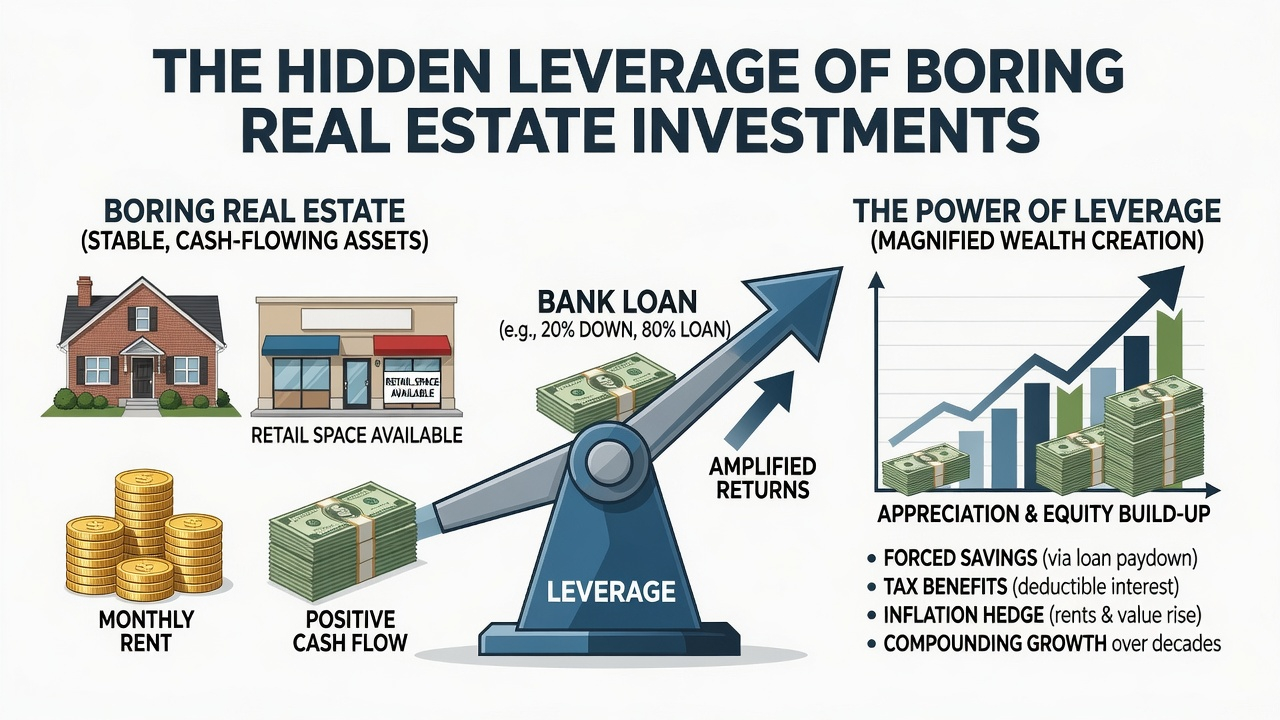
    The Hidden Leverage of Boring Real Estate Investments

    The Hidden Leverage of Boring Real Estate Investments | Jaxon Forge
    Jaxon Forge - Founder of MoneyForged.com

    Jaxon Forge
    Founder of MoneyForged.com • @MoneyForgedHQ

    The Hidden Leverage of Boring Real Estate Investments

    Stories and advice from Jaxon Forge, the Founder of MoneyForged.com

    I used to chase the “exciting” real estate deals too. Fix-and-flips that looked great on Instagram. Short-term rentals in hot markets. Development plays with big upside and even bigger risk. Then I watched the 2022-2023 correction wipe out a lot of those “geniuses” while my boring portfolio kept quietly compounding.

    The real leverage in real estate isn’t in the sex appeal. It’s in the boredom. Assets that solve everyday problems people will always pay for, no matter the economy. Assets that generate cash flow month after month with almost zero drama.

    Why Most Real Estate Investors Stay Broke (Even in Good Markets)

    They chase appreciation and excitement instead of cash flow. They leverage up on properties that need constant attention. They fall for the story instead of the math. I did it too — until I learned the hard way that cash flow beats net worth every single time.

    Boring real estate investments flip the script: low maintenance, high predictability, and the ability to survive (and thrive) when the market gets ugly.

    The Boring Real Estate Models That Actually Build Wealth

    These are the exact categories I own pieces of or have studied closely. They don’t make for flashy dinner-party stories, but they make for fat bank accounts.

    1. Long-Term Residential Rentals (Buy & Hold)

    Plain vanilla single-family homes or small multifamily in solid middle-class neighborhoods. Tenants stay for years. Rents cover the mortgage and then some. Appreciation is a bonus, not the main event.

    2. Self-Storage Facilities

    People pay you every month to store stuff they don’t use. Extremely low operating costs once built. Almost recession-proof. One of the most boring — and profitable — real estate plays out there.

    3. Triple-Net (NNN) Lease Commercial Properties

    Think pharmacies, dollar stores, fast-food buildings. Tenant pays taxes, insurance, and maintenance. You collect a check like a bond — except it grows with rent escalations.

    4. Mobile Home Parks

    Land is the asset. Homes are owned by residents. Low cap-ex, high cash-on-cash returns, and constant demand for affordable housing.

    5. Car Washes & Laundromats on Owned Land

    Real estate with a built-in cash-flowing business. Boring location + automated revenue = sleep-well-at-night investing.

    The Math Most People Ignore

    I run every deal through the same filter I shared in “Why Cash Flow Beats Net Worth Every Single Time.” If it doesn’t throw off strong cash flow from day one, I pass — no matter how “sexy” the upside looks.

    Boring real estate forces discipline. You buy for cash flow. You hold forever. You let time and debt paydown do the heavy lifting. No hype required.

    The Silent Killer Most Real Estate “Investors” Never See Coming

    Comfort masquerading as balance. They buy the shiny property, stretch on the financing, and tell themselves it’s “strategic.” Then the market shifts and they’re stuck managing drama instead of building wealth.

    I learned this the hard way early on. The boring path looked too slow… until the compound interest on steady cash flow left the exciting plays in the dust.

    Link back: The Psychology of Making Money — because the mindset shift to embrace boring is everything.

    If You’re Still Chasing the Next Hot Deal…

    Ask yourself these five questions before you sign anything:

    1. Will this property generate cash flow even if appreciation is zero?
    2. Is the demand for this asset truly boring (i.e., recession-resistant)?
    3. Can I sleep at night if the market drops 30%?
    4. Does it require my daily attention or can systems run it?
    5. Would I still buy it if nobody ever knew I owned it?

    The boring path isn’t glamorous. But it’s the one that actually gets you to financial independence without a heart attack along the way.

    What boring real estate asset are you looking at right now? Drop it below — I’ll tell you straight whether it has the leverage.


    Related Reading:

    Stories and advice from Jaxon Forge, the Founder of MoneyForged.com • @MoneyForgedHQ

  • The Hidden Leverage of Owning Boring Businesses

    The Hidden Leverage of Owning Boring Businesses

    The Hidden Leverage of Owning Boring Businesses | Jaxon Forge
    Jaxon Forge - Founder of MoneyForged.com

    Jaxon Forge
    Founder of MoneyForged.com • @MoneyForgedHQ

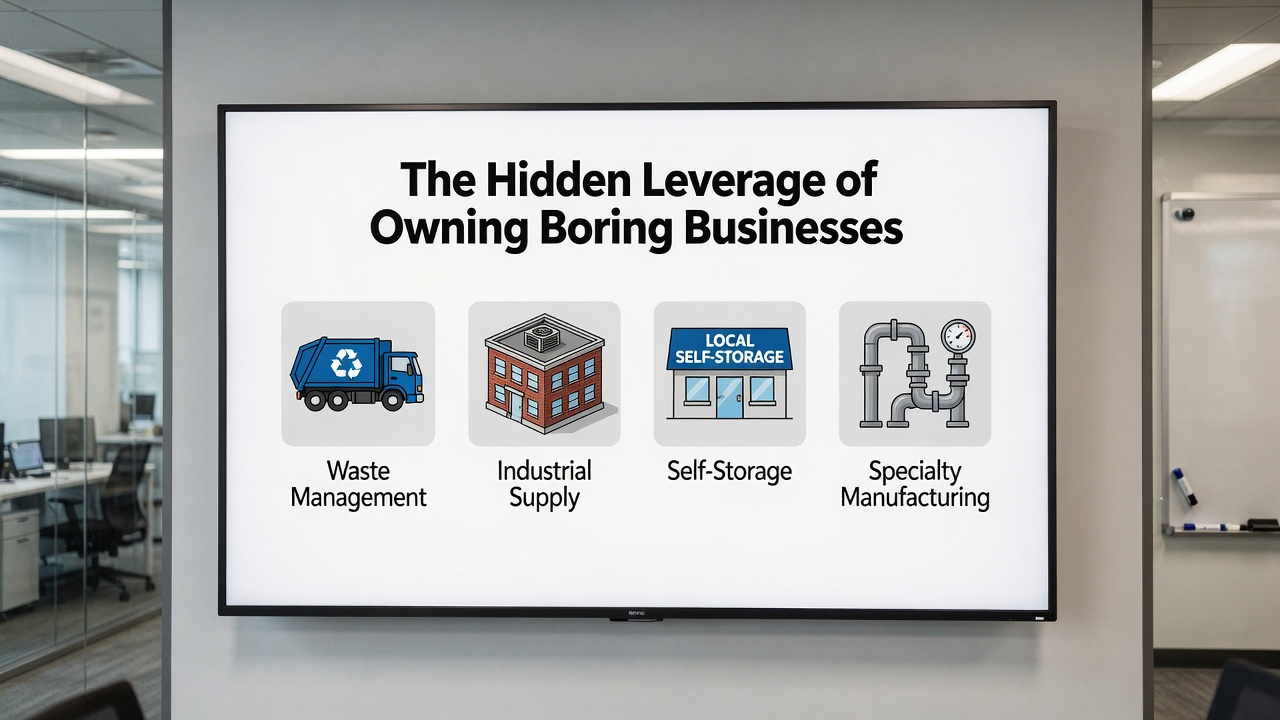
    The Hidden Leverage of Owning Boring Businesses

    Stories and advice from Jaxon Forge, the Founder of MoneyForged.com

    I used to chase sexy businesses. The ones that get you likes on LinkedIn. The ones with “disruptive” in the pitch deck. I burned time and money on a few of them before I learned the brutal truth: the real wealth is built in businesses so boring that most people scroll right past them.

    Boring businesses have a massive hidden leverage. They solve problems people have to fix. They generate cash flow whether the economy is booming or sucking wind. And because they aren’t glamorous, competition stays relatively low and margins stay fat.

    Why Most Entrepreneurs Miss This

    The modern mind is wired for dopamine. TikTok gurus, crypto moonshots, AI startups — everyone wants the story they can post about. I did too. But after watching my “exciting” plays bleed cash while a couple of boring assets quietly compounded, I made the switch.

    Here’s what boring businesses actually deliver that the sexy ones rarely do:

    • Predictable, recurring cash flow — not lottery-ticket revenue
    • Low drama, low ego — no need to be the smartest guy in the room
    • Recession resistance — people still need clean clothes, storage, and dumpsters
    • One-man empire friendly — systems do the heavy lifting
    • Scalable without burning out — you own the asset, the asset doesn’t own you

    The Boring Models That Actually Print Money

    These aren’t theories. These are the exact types I’ve studied, owned pieces of, or watched print serious money while the “exciting” plays imploded:

    1. Laundromats

    24/7 passive cash machines. Once set up right, they run themselves. Recurring demand that never goes away.

    2. Self-Storage Units

    People will pay you every month to store junk they don’t use. Extremely low touch once built.

    3. Dumpster Rentals / Waste Management

    Construction, renovations, cleanouts — someone always needs a dumpster. High margins, recurring corporate contracts possible.

    4. Commercial Cleaning / Janitorial Services

    Offices, medical buildings, gyms. Recurring monthly contracts. Scalable with crews.

    5. Automated Car Washes

    One location can generate $150k–$300k+ profit per year with minimal daily involvement.

    6. Pressure Washing Services

    Low startup, mobile, high demand for driveways, fleets, buildings. Can be one-man or scaled.

    7. Vending Machine Routes or ATM Placement

    Tiny locations, passive income once placed in high-traffic spots.

    The Real Leverage: Cash Flow Beats Net Worth Every Single Time

    Link to my earlier piece: Why Cash Flow Beats Net Worth Every Single Time. Boring businesses force you to focus on the one thing that actually matters — money coming in every month, not a valuation number on paper.

    In my own journey, shifting focus from chasing the next hot trend to stacking boring, cash-flowing assets changed everything. It gave me the freedom the “sexy” path promised but never delivered.

    If You’re Still Chasing the Next Big Idea…

    Ask yourself these five questions before you touch it:

    1. Is this business boring enough to last?
    2. Does it solve a problem people pay to fix month after month?
    3. Can I build systems around it so I’m not trading time for money forever?
    4. Would I still do it if nobody ever clapped for me?
    5. Does it generate cash flow even when I’m not actively working?

    The boring path isn’t easy — it requires consistency and patience. But it’s the path that actually leads to real, lasting wealth.

    What boring business are you considering? Drop it in the comments or hit reply — I’ll tell you straight if it has the leverage.


    Related Reading:

    Stories and advice from Jaxon Forge, the Founder of MoneyForged.com • @MoneyForgedHQ

  • Umbrella Insurance: The Invisible Shield Every High Earner Needs

    Umbrella Insurance: The Invisible Shield Every High Earner Needs

    The Psychology of Making Money | Jaxon Forge | MoneyForged.com
    Jaxon Forge – Founder of MoneyForged.com

    The Psychology of Making Money

    Why most people stay broke even when they make good money — and the exact mental shifts that built my real wealth.

    Welcome to the raw truth about money and mindset.

    I’m Jaxon Forge, founder of MoneyForged.com. For years I watched high earners stay broke. I was one of them. Six-figure months, nice car, big house — yet I still felt one bad month from panic.

    Why Most People Stay Broke Even When They Make Good Money

    Most think the fix is “make more.” Get the raise. Scale the hustle. But income goes up and spending races ahead faster. That’s lifestyle inflation — the silent thief.

    I lived it. Doctors, lawyers, tech guys pulling $200k–$300k still live paycheck to paycheck. They upgrade the house, lease the newer car, take the bigger vacation “because they deserve it.”

    High income doesn’t mean wealth. It just means you’re good at earning. Staying broke is about how your brain handles what comes in.

    The Silent Killer of Wealth: Comfort Masquerading as “Balance”

    Everyone chases “work-life balance.” I did too. When checks got bigger I told myself, “I’ve earned this. Time to ease up.”

    More downtime. More dinners. Bigger house. Newer car. Longer vacations. I called it balance. Really it was a slow slide into higher burn rate and lower ambition.

    Comfort is addictive. Your brain rewires to protect it. Risk feels dangerous. Hard work feels optional. Suddenly “balance” is just an excuse to lower the bar.

    How I Rewired My Brain to Crave Hard Work Instead of Comfort

    The fix isn’t forcing yourself. It’s rewiring so you actually crave the grind.

    I started small but brutal: 4:30 a.m. wake-up every day. No snooze. Feet on floor in three seconds flat. Cold water on face. No negotiation.

    At first it was misery. Then the body adapted. The mind started linking early rising with power. Deep work by 7 a.m. while the world slept gave me dopamine from accomplishment — not scrolling.

    I applied the same rule to cold showers, heavy lifts, long focus blocks, and saying no to easy money. Effort became the reward. Comfort started feeling wrong.

    The 3 AM Rule That Separated Me From 99% of Entrepreneurs

    Most entrepreneurs talk 5 a.m. clubs. Talk is cheap.

    The real separator is what you do when no one is watching. I pushed to 3 a.m. three days a week during a rough stretch.

    Alarm at 3:00 sharp. Feet on floor in three seconds. Straight to deep work — no phone, no scrolling. By 6 a.m. I had already logged 2–3 hours of high-leverage output.

    That psychological edge changed everything. The day felt like bonus rounds. Resistance later? Almost gone.

    The Day I Realized Laziness Was Just Unexamined Fear

    For years I called it laziness. Big tasks triggered heavy resistance. I’d scroll instead of ship.

    One night before a major launch I sat with the feeling instead of running. It wasn’t laziness. It was fear — fear of failing, fear of success, fear of judgment.

    Once I named it, the power drained. I started asking three questions every time resistance hit:

    • What’s the worst that could realistically happen?
    • What’s the best that could happen?
    • What’s the real long-term cost of not doing it?

    Fear became my compass. The bigger the pushback, the higher the leverage on the other side.

    How to Build an Iron Will in a World Full of Soft Options

    The modern world is built to keep you soft. Notifications. One-click everything. Endless distraction.

    I built my will like muscle — with daily friction. The three-second rule became law for every hard choice.

    Consistency compounds. After months, hard work felt like oxygen. Skipping it left me restless.

    Motivation is the most overrated drug. Systems are the engine.

    Why I Stopped Chasing Motivation and Started Chasing Systems

    I used to chase motivational highs. They always crashed. Then I built a stupidly simple daily system:

    • 4:30 a.m. — feet on floor in 3 seconds
    • First 90 minutes: highest-leverage deep work
    • Next block: only revenue-generating tasks
    • Midday: move the body
    • Evening: plan tomorrow’s top 3 + no screens after 9 p.m.

    No more mood-based decisions. The system carried me on days motivation ghosted. Results exploded.

    Why Grinding in Silence Beats Posting Your Wins Online

    I stopped sharing every win. The quiet grind freed massive mental energy. No audience pressure — just production.

    Boredom became my secret weapon. I learned to sit in silence, walk without podcasts, let the mind generate ideas instead of consuming.

    The Self-Made Man’s Code: 12 Rules I Live By Every Day

    • Pay the discipline tax early or pay it forever
    • Comfort zones are cemeteries for ambition
    • Systems beat motivation every time
    • Say no to 10× your income
    • Grind in silence
    • Turn boredom into fuel
    • Fear is just unexamined laziness
    • Own the 3 a.m. window
    • Delay visible gratification so invisible compounding works
    • Never invest in anything you don’t understand
    • Cash flow beats net worth
    • Integrity is the best long-term investment

    Ready to rewire your brain for wealth?

    Join thousands getting the exact frameworks, calculators, and no-BS advice straight from my desk.

    Get the Free 7-Pathways to Financial Prosperity + Weekly Forge Notes

    Stories and advice from Jaxon Forge, the Founder of MoneyForged.com
    Jaxon Forge on X @MoneyForgedHQ

  • Asset Protection Trusts: The Silent Fortress That Protects What You’ve Forged

    Asset Protection Trusts: The Silent Fortress That Protects What You’ve Forged

    Asset Protection Trusts: The Silent Fortress That Protects What You’ve Forged | MoneyForged.com
    WEALTH PROTECTION SERIES

    ASSET PROTECTION TRUSTS:
    THE SILENT FORTRESS
    THAT PROTECTS WHAT YOU’VE FORGED

    I watched a peer lose seven figures in a single lawsuit. That was the day I stopped treating protection like an afterthought. Here’s the exact structure I built—and the mindset that made it non-negotiable.

    Jaxon Forge

    Jaxon Forge

    Founder, MoneyForged.com • @MoneyForgedHQ

    12 min read
    March 30, 2026
    Jaxon Forge – Founder of MoneyForged.com

    Most people stay broke even when they make good money because they treat their assets like an open wallet instead of a fortress. I was one of them—until a single legal threat nearly wiped out years of grinding.

    The Wake-Up Call That Cost Me Nothing (But Could Have Cost Me Everything)

    Back when I was scaling my first real revenue streams, I thought net worth was the only number that mattered. Cash flow was strong. Investments were compounding. Life looked solid from the outside. Then a business partner from years earlier got sued. The lawyers came after every entity he touched—including mine by association.

    That night I stared at my accounts and realized something brutal: my wealth was completely exposed. No trusts. No proper entity layering. Just me and my personal name on the line. It was the same psychology I talk about in The Psychology of Making Money—comfort masquerading as “everything’s fine.” I had rewired my brain to crave hard work, but I hadn’t rewired my asset structure to crave protection.

    What an Asset Protection Trust Actually Is (And Why Most People Get It Wrong)

    An Asset Protection Trust (APT) is an irrevocable trust that moves assets out of your personal ownership and into a separate legal entity. Once properly funded, those assets are shielded from future creditors, lawsuits, judgments, and even certain divorce claims—while you can still benefit from them under the terms you set.

    There are two main flavors:

    • Domestic APTs – Available in states like Nevada, Alaska, South Dakota, and Wyoming. Strong protection with U.S. court oversight.
    • Offshore APTs – Cook Islands, Nevis, Belize. Even stronger barriers because foreign courts rarely enforce U.S. judgments.

    The key is timing. You must set it up before any threat appears. Do it after and courts call it fraudulent conveyance. That’s why I call this the ultimate Discipline Tax—you pay it early or you pay forever.

    How I Built My Own Fortress (The Exact Framework I Still Use)

    After that close call I didn’t hire a guru. I hired the best asset-protection attorney money could buy and followed this simple stack:

    1. Layer 1: LLCs and holding companies for every income stream (real estate, businesses, investments).
    2. Layer 2: Domestic APT funded with the majority of liquid and illiquid assets.
    3. Layer 3: Offshore APT for the highest-risk assets (the ones I never want a U.S. court to touch).
    4. Layer 4: Life insurance and retirement accounts that already have statutory protection.

    Total setup cost? Less than what I was losing every month to lifestyle creep. Return? Peace of mind that no single lawsuit can touch what I’ve forged. This is the same boring-but-powerful approach I wrote about in The Power of Boring.

    The Psychology Behind Protection (Why Most High Performers Skip This)

    In The Psychology of Making Money I talk about how comfort masquerades as balance. The same lie applies here. “I’ll set up protection later when I’m bigger” is just another version of the hedonic treadmill. You delay the discipline tax today because it feels uncomfortable. Then one lawsuit, one bad partner, one random claim shows up and you’re back to square one.

    Self-made men understand: protection isn’t pessimistic. It’s the ultimate act of confidence. You’re saying, “I plan to build so much that someone will eventually try to take it—so I’m ready.”

    When You Should Pull the Trigger (The Accredited Investor Checklist)

    If you’ve checked any three of these boxes, it’s time:

    • Net worth over $500k (excluding primary residence)
    • Multiple income streams or side businesses
    • Real estate holdings that could attract tenants or partners
    • Visible online presence or personal brand
    • Any industry with litigation risk (construction, consulting, investing, etc.)

    Start with a domestic APT. It’s simpler, cheaper, and still incredibly strong. Only move offshore once you’ve scaled past seven figures.

    Quick Action Steps

    1. 01 Book a call with a specialized asset-protection attorney (not your regular estate guy).
    2. 02 Review your current entity structure using the free checklist in my 7 Pathways download.
    3. 03 Fund the trust with cash-flowing assets first—never touch your emergency fund.
    4. 04 Sleep better knowing your wealth is now bulletproof.

    Comfort zones are cemeteries for ambition. Your asset structure is no different. Build the fortress now, while it’s still cheap. The world rewards the prepared.

    Disclaimer: This is not legal, tax, or financial advice. Asset protection laws vary by state and country. Always work with licensed professionals. Past results are not guarantees of future outcomes. I share what worked for me so you can make informed decisions.

    Stories and advice from Jaxon Forge, Founder of MoneyForged.com

  • Payroll Deductions Calculator

    Payroll Deductions Calculator

    Payroll Deductions Calculator with State Tax Variations | MoneyForged.com – Jaxon Forge
    UPDATED FOR 2026 – NOW WITH STATE TAX VARIATIONS
    Jaxon Forge

    Payroll Deductions Calculator

    See exactly what’s left after every deduction — now with realistic 2026 state income tax variations. Most people stay broke even when they make good money because they never look under the hood. I did — and it changed everything.

    Your Paycheck Reality Check

    $

    Approximate effective rates based on 2026 brackets. Actuals vary by exact income & deductions.

    %
    $

    YOUR FORGED BREAKDOWN

    Estimates only (2026 federal + state rates). Actual taxes vary by exact W-4, exemptions, and local rules. Use this as a wake-up call — not tax advice.

    Jaxon Forge

    Jaxon Forge

    Founder, MoneyForged.com • Author of The Psychology of Making Money

    The Silent Killer Hiding in Your Paycheck — Now With State Variations

    I used to pull six figures and still feel broke. Not because I was stupid with money — but because I never really looked at what was being taken before the money even hit my account. And every state is different.

    Payroll deductions + state taxes are the ultimate comfort masquerading as “normal.” You see the big gross number, you spend like it’s real, and suddenly lifestyle inflation eats the rest. That’s how high earners stay broke.

    This calculator isn’t just math. It’s the first step in rewiring your brain to crave hard numbers and iron systems. Once you see the real net — adjusted for your actual state — you stop trading long-term freedom for short-term comfort. You pay the discipline tax early. You direct every extra dollar into the compound machine instead of the hedonic treadmill.

    That’s what separated me from 99% of entrepreneurs. Not talent. Not luck. Just ruthless clarity about where the money actually goes — and the discipline to make it work for me instead of against me.

  • 1040 Tax Calculator 2026 – Estimate Your Federal Tax Bill

    1040 Tax Calculator 2026 – Estimate Your Federal Tax Bill

    1040 Tax Calculator 2026 | Estimate Your Federal Tax Bill | MoneyForged.com
    FINANCE CALCULATORS

    1040 TAX
    CALCULATOR 2026

    Stop guessing. Stop overpaying. Know exactly what you owe — and keep what you forge.

    Jaxon Forge

    Built by Jaxon Forge

    The same systems that saved me six figures legally

    2026 tax brackets
    Standard & itemized deductions
    Child Tax Credit + more
    Jaxon Forge – Founder of MoneyForged.com

    Your 2026 1040 Tax Estimator

    Read my 6-figure tax playbook →
    $

    Enter total credits here

    FROM THE FOUNDER

    Taxes aren’t the enemy.
    Paying them blindly is.

    I used to hand the IRS whatever they asked for. Then I learned the game. The Discipline Tax applies here too — pay attention early or pay forever.

    Read “The Tax Strategies That Saved Me Six Figures Legally”
    Most high-earners I know still treat taxes like a surprise bill. They make great money, then write a massive check to the government every April and call it normal.

    I stopped doing that the day I realized every dollar I legally keep compounds forever. That single mindset shift — treating tax strategy as a wealth weapon instead of a chore — is what separated me from 99% of entrepreneurs still living paycheck-to-paycheck on six figures.
    IMPORTANT DISCLAIMER

    This 1040 Tax Calculator is for educational and illustrative purposes only. It uses projected 2026 federal tax brackets and does not constitute tax, legal, or financial advice. Actual tax liability may vary significantly based on your full financial picture, state taxes, deductions, credits, and IRS rules. Jaxon Forge and MoneyForged.com strongly recommend consulting a licensed CPA or qualified tax professional before making any decisions. We make no guarantees about accuracy or completeness of results.

    © 2026 MoneyForged.com • Forging Wealth That Lasts

    Part of the MoneyForged Calculators suite • Built for men who refuse to stay average • Browse all 21 calculators
  • Life Insurance Calculator

    Life Insurance Calculator

    Life Insurance Calculator | How Much Coverage Do You Really Need? | Jaxon Forge – MoneyForged.com
    NEW TOOL • FINANCE CALCULATORS

    LIFE INSURANCE
    CALCULATOR

    The exact number your family needs if you’re gone tomorrow. No fluff. No sales pitch. Just the brutal math that separates the prepared from the regretful.

    Jaxon Forge

    Jaxon Forge

    Founder, MoneyForged.com

    Jaxon Forge - Forging Wealth That Lasts

    Jaxon Forge • Stories & Advice from the Founder

    FROM JAXON FORGE

    “Most people think life insurance is boring. Until the day it becomes the only thing standing between your family and financial ruin.”

    I learned this the hard way — the same way I learned every lesson that actually built my wealth. High income doesn’t mean high protection. I watched too many “successful” men with six-figure bank accounts leave their wives and kids with nothing but a mortgage and a pile of debt.

    Life insurance isn’t an expense. It’s the ultimate Discipline Tax you pay early so your family never has to pay it forever. Comfort masquerading as “I’ll figure it out later” is the silent killer here too. Run the numbers. Face the truth. Then take action.

    Read the full essay → @MoneyForgedHQ on X

    Calculate Your Coverage Need

    Answer these 8 questions. The math never lies.

    $
    $
    $
    $
    $
    $
    YOUR FORGED NUMBER
    $1,245,000

    This is the minimum coverage your family needs if you’re no longer here.

    Based on Jaxon Forge’s real-world wealth protection framework
    (10–15× income replacement + debts + legacy costs)

    Why This Calculator Matters More Than You Think

    Most high earners skip this step because it feels uncomfortable. That’s exactly why you need to run the numbers today. Comfort masquerading as “my family will be fine” is the silent killer of legacy. Pay the discipline tax now — buy the coverage — and you’ll sleep better knowing you’ve forged something that outlives you.

    Read Jaxon’s full essay on the Psychology of Making Money