

Blog – The Forge Journal | Jaxon Forge
PROUD CAPITALIST FREE MARKETS • AMERICAN TARIFFS • FORGING WEALTH THAT LASTS JAXON FORGE

THE FORGE JOURNAL

Stories and advice from Jaxon Forge, Founder of MoneyForged.com

Raw, no-fluff truth on wealth psychology, iron discipline, free-market capitalism, tariffs, and the systems that separate the self-made from everyone else.

CAPITALISM IN ACTION
FREE MARKETS • TARIFFS FOR AMERICA
Jaxon Forge
Psychology of Money • 8 min read

Why Most People Stay Broke Even When They Make Good Money

High income doesn’t equal wealth. Here’s the brutal psychology hack that keeps even six-figure earners trapped in the paycheck-to-paycheck cage.

Discipline • 6 min read

The 3 AM Rule That Separated Me From 99% of Entrepreneurs

The quiet hours when excuses die. How waking at 3 AM three days a week gave me an unbreakable edge.

Psychology of Money • 9 min read

How I Rewired My Brain to Crave Hard Work Instead of Comfort

The exact system I used to make discipline addictive and comfort feel like punishment.

Wealth & Execution • 7 min read

The Silent Killer of Wealth: Comfort masquerading as “Balance”

Why “work-life balance” is the fastest way to stay mediocre forever.

Discipline • 5 min read

The Discipline Tax: Pay It Early or Pay It Forever

The hidden price every high performer must pay—early or late.

Business & Hustle • 8 min read

Why I Stopped Chasing Motivation and Started Chasing Systems

Motivation is weather. Systems are the engine that prints real money.

Wealth & Execution • 6 min read

Why Cash Flow Beats Net Worth Every Single Time

Net worth is a lie. Cash flow is freedom. Here’s the math I live by.

Business & Hustle • 10 min read

The $0 Startup Blueprint That Still Works in 2026

No money. No team. Just relentless execution. My exact playbook.

Free Markets & Tariffs • 7 min read

Why I Support Tariffs for America’s Survival

The capitalist case for protecting American wealth and strength.

Jaxon Forge

Money Forged

Forging Wealth That Lasts • Jaxon Forge

@MoneyForgedHQ

Stay in the Forge

Jaxon Forge’s weekly dispatch on discipline, systems, tariffs, and wealth that actually lasts.

JOIN THE FORGE

Author: Jaxon Forge

  • Why I Stopped Chasing Hot Markets and Started Chasing Cash-Flow Systems

    Why I Stopped Chasing Hot Markets and Started Chasing Cash-Flow Systems

    Why I Stopped Chasing Hot Markets and Started Chasing Cash-Flow Systems | Jaxon Forge

    MoneyForged.com

    Raw Stories & Unfiltered Advice from Jaxon Forge, Founder

    Why I Stopped Chasing Hot Markets and Started Chasing Cash-Flow Systems

    It hit like ice water: another Sun Belt “hot” listing—prices pumped 40% in two years, rents crawling, flippers everywhere pretending it’s still 2021. Friends flashing paper gains while bleeding monthly. I almost hit buy. Then I ran the actual numbers.

    That killed the hot-market chase. Switched to cash-flow systems. No flash. No likes. Just the raw pivot from gambling to forcing money into my account every month.

    The Hype Trap: Expensive and Fragile

    Early days, I chased headlines like everyone else: “Phoenix exploding!” “Austin the next tech mecca!” “Florida tax-free paradise!” Buy the narrative, ride appreciation out. Reality? Hot markets are pure momentum bets. When the wave crashes (and it always does), you’re stuck with overpriced properties, high costs, thin margins, and tenants who bail at the first sign of trouble.

    2026 proves it. 30-year fixed rates sit ~6.00-6.15% (Freddie Mac at 6.00% March 5, Bankrate ~6.15% today), home prices flat or minimal growth (0-3% forecasts, many at 1-2% or stalled at 0% nationally). No more bidding wars, inventory up, rents stabilized. Chasing “hot” now means overpaying for assets that barely cover themselves—pure speculation.

    Cash Flow: The Quiet Empire Builder

    Cash flow? Boring as hell, repeatable, unbreakable. It’s rental income smashing mortgage, taxes, insurance, maintenance, vacancies, CapEx—then dumping real cash in your pocket monthly. In 2026, with affordability keeping people renting and demand solid, cash flow rules. Smart money targets 8-10%+ cash-on-cash in stable Midwest/Southeast spots—Cleveland, Indianapolis, Memphis, Fort Wayne, Alabama/Tennessee pockets—where entry prices make sense and rents deliver.

    I paid the price to learn. First “hot” deal: trendy area, insane appreciation on paper. Bad tenant, surprise roof, rents flat—bled cash. Refi at higher rates, swallowed the loss, vowed never again.

    My Ruthless Cash-Flow System

    1. Screen cash flow first—no mercy: Strict filter—1% rule where possible (rent ≥1% purchase price), target 8%+ cash-on-cash after every expense. Miss it? Walk. No exceptions.
    2. Hunt boring markets: Cleveland, Indianapolis, Memphis, Midwest/South Central. Low multiples, steady jobs, stable pop, rent-to-price ratios that pay real income. Not sexy—compounds silently while hot spots chase headlines.
    3. Build ironclad systems: Top-tier property management, ruthless tenant screening, fat reserves for surprises, forced appreciation via smart fixes—not market bets.
    4. Block the noise: No Redfin doom-scrolling for “up-and-coming” zips. I chase deals that pay today, not tomorrow’s promises.

    Outcome? Portfolio spits consistent monthly checks that fund life and more buys. Recessions, rate spikes—I sleep. Properties cover themselves. Appreciation? Bonus gravy, never the plan.

    The Brutal Truth

    Still chasing hot markets in 2026? You’re not building wealth—you’re betting on momentum. Real, lasting money comes from systems forcing cash in every 30 days, headlines be damned.

    Quit the crowd. Hunt cash flow. The discipline tax hurts upfront. The freedom compounds forever.

    — Jaxon Forge
    Founder, MoneyForged.com
    © 2026 MoneyForged.com | Wealth Through Discipline & Boring Wins

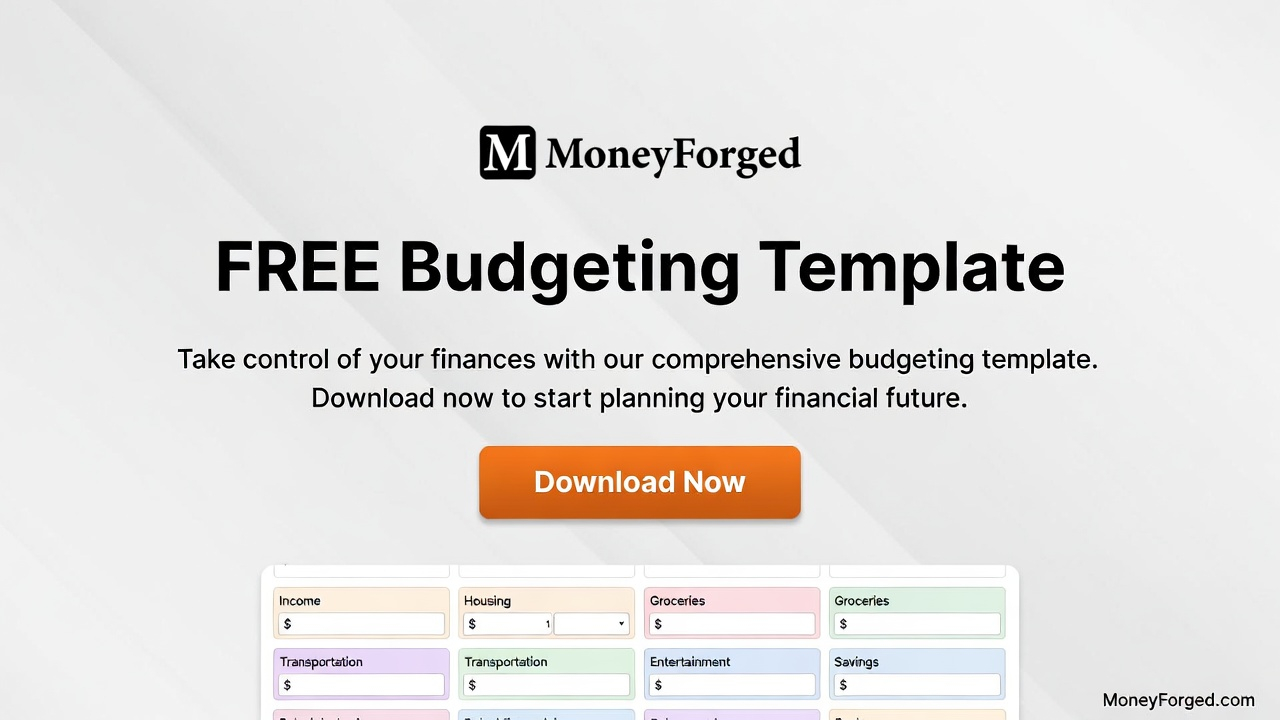
  • Download Free Budgeting Template

    Download Free Budgeting Template

    Free Zero-Based Budget Template | MoneyForged
    100% Free Download

    The Ultimate Zero-Based Budget Template

    Stop wondering where your money went. Tell it exactly where to go. Download the automated spreadsheet that has helped thousands forge their path to financial independence.

    [ MoneyForged Budget Dashboard Preview ]

    Why Use This Template?

    We stripped away the clutter and built exactly what you need to succeed with a zero-based budget.

    ±

    Automated Math

    No calculator required. Enter your income and planned expenses, and the spreadsheet automatically calculates your remaining balance to hit zero.

    Actual vs. Planned

    A budget is only as good as your tracking. Easily input what you actually spent throughout the month to see exactly where you are overspending.

    📊

    Visual Insights

    Built-in charts automatically update to show your spending breakdown by category. See if your money is really aligning with your values.

    How to Get Started Today

    1

    Download or Copy the Template

    Choose your preferred platform (Excel or Google Sheets). If using Google Sheets, simply click “File > Make a Copy” to save a private version to your own Google Drive.

    2

    Enter Your Expected Income

    At the top of the sheet, enter all the money you expect to receive this month. This includes your salary, side hustles, and any other income sources.

    3

    Give Every Dollar a Job

    Go down the category list—Housing, Food, Debt Payoff, Investing—and assign an amount to each. Stop when the “Left to Budget” cell hits exactly $0.00.

    4

    Track Your Spending

    Every few days, open the sheet and log your receipts into the “Actual Spent” column. Adjust categories as needed throughout the month to keep your balance at zero.

    Ready to Forge Your Wealth?

    Join the MoneyForged community and start treating your personal finances like a successful business. Download the template below.

    No email sign-up required. We believe financial tools should be accessible to everyone.

    © 2026 MoneyForged.com. All rights reserved. | Forging wealth, one step at a time.

    Disclaimer: The information and tools provided on this website are for educational purposes only and do not constitute financial advice.

  • Budgeting

    Budgeting

    Budgeting: The Blueprint to Wealth | MoneyForged

    Take Control of Every Dollar

    A budget isn’t a restriction—it’s a roadmap. Learn how to stop wondering where your money went and start telling it exactly where to go.

    The MoneyForged Budgeting Blueprint

    At MoneyForged, we believe that wealth is not built by how much money you make, but by how you manage the money that flows through your hands. The tool that makes management possible is the budget.

    If you are living paycheck to paycheck, burdened by credit card debt, or unable to find the cash to invest, the root of the problem usually leads back to an unstructured cash flow. Here are the core methods we teach to take your financial power back.

    1. The Zero-Based Budget (Our Top Recommendation)

    The Zero-Based Budget is simple in theory: Income minus Expenses equals Zero.

    Before the month begins, you write down your expected income. Then, you assign every single dollar a job—whether that job is paying rent, buying groceries, crushing debt, or going into savings. At the bottom of the page, you should have exactly $0 left unassigned. It forces intentionality into your spending.

    2. The 50/30/20 Rule

    If you prefer a more automated, big-picture approach, the 50/30/20 rule is an excellent framework. You divide your after-tax income into three buckets:

    • 50% for Needs: Housing, utilities, groceries, transportation, and minimum debt payments.
    • 30% for Wants: Dining out, entertainment, hobbies, and vacations.
    • 20% for Future-Building: Extra debt payoff, building an emergency fund, and investing.

    Pro Tip: Pay Yourself First

    Most people spend their income and save whatever is left over (which is usually nothing). The secret to a successful budget is flipping the script. As soon as you get paid, transfer your savings and debt-payoff amounts first. Then, live off the rest.

    Latest Budgeting Guides

    Start Your Journey Today

    Don’t just read about budgeting—take action. Download our free, customizable MoneyForged Zero-Based Budget Spreadsheet and start telling your money where to go.

    Download Free Budget Template

    © 2026 MoneyForged.com. All rights reserved. | Forging wealth, one step at a time.

    Disclaimer: The information provided on this website is for educational purposes only and does not constitute financial advice.

  • Car Dealer Jargon Decoded

    Car Dealer Jargon Decoded

    Car Dealer Jargon Decoded | MoneyForged
    Smart Spending

    Car Dealer Jargon Decoded: Don’t Get Played at the Dealership

    Walking into a car dealership can feel like stepping into a foreign country where you don’t speak the language. The salesperson tosses around acronyms, hidden fees, and confusing math on a piece of paper, and before you know it, you’re signing a 72-month contract.

    At MoneyForged, we know that information is your greatest financial weapon. Dealerships rely on confusion to maximize their profits. By understanding their jargon, you strip away their advantage and protect your hard-earned money.

    Here is your official translator for the most common—and most dangerous—car dealer jargon.

    1. The Pricing Alphabet Soup

    When you start talking numbers, the dealer is going to throw several different “prices” at you. Knowing the difference is crucial.

    • MSRP (Manufacturer’s Suggested Retail Price): Also known as the “sticker price.” This is what the manufacturer recommends the dealer charge. You should almost never pay this price, unless you are buying a highly rare, in-demand vehicle.
    • Invoice Price: This is supposedly what the dealer paid the manufacturer for the car. Dealers will sometimes say, “I’m giving it to you at invoice!” to make you feel like you’re getting a steal. Beware: Dealers get hidden kickbacks (“holdbacks”) from the manufacturer, so their true cost is often well below the invoice price.
    • OTD (Out-The-Door Price): This is the only price that actually matters. The OTD price is the final, total cash amount you will pay to drive the car off the lot, including taxes, tags, and all dealer fees. Always negotiate based on the OTD price, never the monthly payment.

    2. The Infamous “Four-Square”

    If you sit down at a salesperson’s desk, they will likely pull out a piece of paper divided into four boxes. This is the oldest trick in the auto finance playbook.

    The Four-Square Method Explained

    The four boxes represent:

    1. The purchase price of the new car
    2. The trade-in value of your old car
    3. Your down payment
    4. Your monthly payment

    The Trap: It’s a shell game. If you demand a lower purchase price in Box 1, they will simply lower the value of your trade-in in Box 2. If you insist on a $350 monthly payment in Box 4, they will just stretch your loan from 60 months to 84 months to hit your number, costing you thousands more in interest.

    3. Finance and Insurance (F&I) Jargon

    Once you agree on a price, you are sent to the F&I office. This is where the dealership actually makes most of its money. Keep your guard up when you hear these terms:

    • ACV (Actual Cash Value): This is what your trade-in vehicle is actually worth in the wholesale market. Dealers will almost always offer you less than the ACV hoping you won’t know the difference. Check Kelley Blue Book or get a quote from CarMax before you go.
    • Doc Fee (Documentation Fee): A fee the dealer charges for “filling out the paperwork.” Some states cap this fee at $75; in other states, dealers routinely charge $800 or more. While they often refuse to remove the fee, you can negotiate the actual price of the car down to offset it.
    • Money Factor: If you are leasing a car, you won’t hear the term “interest rate” or “APR.” Instead, you’ll hear “Money Factor.” To convert a Money Factor into an APR you can actually understand, multiply it by 2,400. (e.g., A money factor of .0025 x 2400 = 6% APR).
    • Spot Delivery: This happens when the dealer lets you drive the car home before the bank has officially approved your loan. A few days later, they call saying “financing fell through” and demand you come back to sign a new contract with a higher interest rate. Never leave the lot without approved, finalized financing.
    “The most powerful words you can use at a car dealership are not a counter-offer. The most powerful words are: ‘No thank you, I’m going to keep looking.’”

    Your MoneyForged Defense Strategy

    Now that you speak their language, how do you win the game? It comes down to preparation and separation.

    First, separate the transactions. Do not negotiate your new car price, your trade-in, and your financing all at once. Secure financing from your local credit union before you walk in. Sell your old car to a third party or negotiate the new car price completely before mentioning you have a trade-in.

    Second, focus only on the Out-The-Door (OTD) price. When they ask, “What kind of monthly payment are you looking for?” your response should be, “I’m a cash buyer/I have my own financing. I only want to discuss the Out-The-Door price.”

    By refusing to play the jargon game, you take control of your money and keep your journey to financial independence on the fast track.

    MF

    The MoneyForged Team

    MoneyForged is dedicated to providing free, no-nonsense personal finance education. We help you forge a wealthier future through budgeting, investing, and aggressive debt elimination.

    © 2026 MoneyForged.com. All rights reserved. | Forging wealth, one step at a time.

    Disclaimer: The information provided on this website is for educational purposes only and does not constitute financial advice.

  • The Trade-In Rollercoaster of Debt

    The Trade-In Rollercoaster of Debt

    The Trade-In Debt Rollercoaster | MoneyForged
    Debt Management

    The Trade-In Debt Rollercoaster: Are You Trapped in the Negative Equity Cycle?

    There is a silent wealth-killer parked in millions of driveways right now. It smells like new leather, it has the latest touchscreen infotainment system, and it is quietly keeping hard-working people living paycheck to paycheck.

    Welcome to the Trade-In Debt Rollercoaster.

    At MoneyForged, we believe in building real, lasting wealth. But before you can build a fortress of financial security, you have to plug the holes in your financial bucket. Today, we are tackling one of the biggest holes of all: rolling negative car equity into new auto loans.

    What is the Trade-In Debt Rollercoaster?

    The rollercoaster starts innocently enough. You buy a car with a standard 5-year or 6-year auto loan. A few years later, you get bored of it. Or maybe it needs a set of new tires and a brake job, and a shiny new model at the local dealership catches your eye.

    You head to the dealer to trade it in. The problem? You owe more on the car than the car is actually worth. In the finance world, this is called being “upside down” or having “negative equity.”

    The car salesman smiles and says, “No problem! We can just roll what you owe into the new loan. We’ll even keep your monthly payment the same by stretching the new loan to 84 months!”

    “You cannot borrow your way out of debt, and you certainly cannot drive your way out of it.”

    The Math Behind the Madness

    Let’s look at exactly how this traps you. When you roll negative equity into a new loan, you are paying interest on a car you no longer own, combined with a depreciating asset you just bought.

    The Rollercoaster Math Example

    Your Current Car: You owe $15,000 on your loan, but the dealer only offers you $10,000 for the trade-in. You have $5,000 in negative equity.

    The New Car: You want to buy a new car priced at $30,000.

    The Trap: Instead of taking out a $30,000 loan, the dealer adds your negative equity to the new balance. You take out a new loan for $35,000.

    As soon as you drive that new car off the lot, it drops in value to $26,000. You now owe $35,000 on a $26,000 car. You are instantly $9,000 in the hole. The rollercoaster has peaked, and it’s all downhill from here.

    The Hidden Dangers of Rolling Over Debt

    Being trapped in this cycle does more than just hurt your net worth. It introduces severe financial risks into your life:

    • The Total Loss Trap: If your new car is totaled in an accident, your standard auto insurance will only pay the actual cash value of the car (e.g., $26,000). You will still personally owe the bank the remaining $9,000 out of pocket immediately.
    • Exorbitant Interest: You are paying compound interest on “ghost debt”—debt for a vehicle that has already been crushed into a cube at a junkyard or sold to someone else.
    • The 84-Month Loan Trend: To hide the massive loan balances, dealers stretch loan terms to 7 or even 8 years. Because cars depreciate rapidly, long-term loans guarantee you will be upside down for almost the entire life of the loan.

    How to Get Off the Ride

    If you are currently upside down on a car loan, take a deep breath. You can get off this ride, but it requires discipline and a refusal to step back onto the dealership lot. Here is the MoneyForged escape plan:

    1. Drive it into the ground: Stop looking at new cars. Your current mission is to keep your vehicle until the loan is completely paid off. Yes, even if it requires a $1,000 repair. A $1,000 repair is infinitely cheaper than a $35,000 new car mistake.
    2. Attack the principal: Make extra payments targeted specifically at the “Principal Balance” of your auto loan. This speeds up the amortization schedule and closes the gap on your negative equity faster.
    3. Get GAP Insurance (temporarily): If you are massively upside down, make sure you have Guaranteed Asset Protection (GAP) insurance. This covers the difference if you total the car. Cancel it once you owe less than the car is worth.
    4. Pay Cash Next Time: Once you finally own the car free and clear, keep making that “car payment” to a high-yield savings account. When your current car finally dies, use that cash to buy a reliable, slightly used vehicle.

    Final Thoughts

    The auto industry spends billions of dollars on marketing to convince you that you deserve a new car every three years. They sell a lifestyle, but they deliver a monthly payment.

    True financial freedom on the MoneyForged journey means breaking the cycle of consumer debt. Refuse the trade-in trap. Keep your car, pay it off, and start using your hard-earned income to invest in your future, not a depreciating piece of metal.

    MF

    The MoneyForged Team

    MoneyForged is dedicated to providing free, no-nonsense personal finance education. We help you forge a wealthier future through budgeting, investing, and aggressive debt elimination.

    © 2026 MoneyForged.com. All rights reserved. | Forging wealth, one step at a time.

    Disclaimer: The information provided on this website is for educational purposes only and does not constitute financial advice.

  • Do I Need GAP Insurance?

    Do I Need GAP Insurance?

    What Is GAP Insurance? | Protect Your Wealth from Car Depreciation Traps – MoneyForged

    What Is GAP Insurance?

    Protecting your capital means avoiding stupid financial holes. GAP insurance is one tool that can either save your ass or be completely unnecessary — here’s how to know which camp you’re in.

    The Brutal Reality Most Drivers Ignore

    You roll off the lot in a shiny new (or new-to-you) car. Within months — sometimes weeks — it’s worth 15-25% less. Cars depreciate faster than most people realize. If you financed with little down or stretched the loan to 72+ months, you can easily owe more than the car is worth. That’s called being “upside down.”

    Then disaster hits: accident, theft, totaled. Your standard collision/comprehensive insurance pays the actual cash value (ACV) — what the market says the car is worth today, minus deductible. If you owe $32,000 but ACV is $26,000, you’re still on the hook for $6,000. The bank doesn’t care that your car is gone. They want their money.

    That’s the “gap.” GAP insurance (Guaranteed Asset Protection) covers exactly that difference so you don’t get stuck paying for a car you no longer have.

    How GAP Insurance Actually Works

    It’s optional add-on coverage (through your insurer, dealer, or lender). When your vehicle is declared a total loss:

    • Primary auto insurance pays ACV to the lender (minus deductible).
    • GAP kicks in and covers the remaining balance owed on the loan/lease (often minus deductible, depending on policy).
    • You walk away clean — no surprise six-figure debt hanging over your head.

    Most policies only apply to the original owner/lessee and newer vehicles. It doesn’t cover repairs, medical bills, or your deductible — just the loan gap on total loss or theft.

    Do You Actually Need It? My No-BS Take

    Buy new or low-down-payment? Long loan term? Leased vehicle? You’re at high risk of being upside down fast — GAP is cheap peace of mind (usually $20-50/year added to your policy, or a one-time fee from the dealer).

    But if you put 20%+ down, bought used, or paid cash/short loan — skip it. You’re not carrying enough negative equity to justify the cost. Wealth is built by eliminating unnecessary expenses, not buying every optional coverage pushed at the dealership.

    Pro tip: Shop it through your regular insurer first — often cheaper than dealer add-ons. And always read the fine print: some GAP waivers forgive the gap completely, others just pay a portion.

    The Wealth Lesson Here

    Most people stay broke because they ignore hidden risks that compound into real damage. A $5-10k surprise bill after a wreck can derail years of progress. Smart money protects the downside so you can aggressively pursue the upside.

    Whether it’s GAP, an emergency fund, or boring index funds — the game is avoiding self-inflicted wounds while stacking advantages. Know your numbers, cover the real risks, and keep grinding.

    © 2026 MoneyForged.com | Jaxon Forge — Building Real Wealth, One Disciplined Decision at a Time

    Home | Blog | About Jaxon Forge

    GAP Insurance Calculator / Estimator | MoneyForged.com

    GAP Insurance Estimator

    Your Estimated GAP Exposure

    Formula breakdown: GAP = Loan Balance − (Vehicle Value − Deductible)
    Positive = amount you could owe the lender out-of-pocket after a total loss.
    Zero or negative = you’re covered with equity—no gap risk today.

    Jaxon Forge pro tip: If you’re financing >80% of a vehicle’s price (new or recent), add GAP coverage early. It’s usually $20–$100/year on your auto policy—cheap insurance against the silent killer of depreciation. Pay the discipline tax now, or pay forever later.
    © 2026 MoneyForged.com | Building wealth the boring, disciplined way
  • Your Car is NOT an Investment – and that’s OK

    Your Car is NOT an Investment – and that’s OK

    Your Car is Not an Investment, and That’s Okay | Jaxon Forge – MoneyForged.com

    Your Car is Not an Investment, and That’s Okay

    Published March 2026

    I used to tell myself the same lie most guys do: “This car will hold value. It’s a smart buy. It’s an asset.”

    Then reality hit. I watched six-figure depreciation in under five years while my actual investments—boring rental properties, index funds, a couple of unglamorous businesses—quietly compounded. The car? It just sat there costing me insurance, gas, maintenance, and opportunity cost every single month.

    Here’s the cold truth most people refuse to hear: **Your car is a liability, not an investment.** And accepting that fully is one of the fastest mental upgrades you can make on the road to real wealth.

    The Math Doesn’t Lie

    Drive a $60k vehicle off the lot? It’s worth $45–50k the second the tires hit pavement. Year one depreciation often eats 20–30%. By year five? You’re lucky to get 40–50% of original MSRP back—if it’s a reliable brand.

    Meanwhile, that same $60k parked in a boring S&P 500 tracker at 8–10% average annual return? It grows. No oil changes required. No surprise repair bills. No monthly payments bleeding your cash flow.

    I stopped trading cash flow for chrome around age 32. Traded the leased German status box for a paid-off, reliable Japanese sedan that cost me $18k cash. Insurance dropped 40%. Maintenance became predictable. And the difference? Straight into investments that actually pay me back.

    Why We Lie to Ourselves About Cars

    It’s ego dressed up as practicality. We tell ourselves:

    • “I need it for work/clients.”
    • “It’s an investment in my personal brand.”
    • “This one’s different—it holds value.”

    I’ve been there. Drove the flashy car. Got the nods in valet lines. Felt like I’d “made it.” Then I ran the numbers and realized I’d paid six figures in depreciation + interest + upkeep to rent temporary social proof.

    The silent killer? Comfort masquerading as “balance.” You convince yourself a nicer car = better life. But it usually just = less money working for you.

    What Actually Moves the Needle

    Want faster wealth? Obsess over assets that produce cash flow or appreciate with minimal input:

    • Real estate that pays rent every month
    • Index funds that compound decade after decade
    • Boring businesses that print recurring revenue
    • Skills that turn into multiple income streams

    Your car? Treat it like a tool. Buy what gets you from A to B reliably, cheaply, and without drama. Pay cash if possible. Keep it until the wheels fall off. The less it costs to own, the more you keep to forge real money.

    Exception? If you’re collecting rare classics as a true hobby and you can afford to lose money on them—fine. But don’t call it investing. Call it what it is: expensive entertainment.

    Bottom line: Your car isn’t building your net worth—it’s quietly destroying it. Accept that, redirect the money, and watch how fast the boring path compounds into serious freedom.

    If this hit home, drop a comment or share your own “car lie” story below. And if you’re ready to stop leaking money on liabilities and start forging real wealth, head to the Accredited Investor Checklist I wish I’d had at 30.

    Grind in silence. Compound in public (eventually).
    — Jaxon Forge

    © 2026 Money Forged. All rights reserved. Stories and advice from Jaxon Forge.

  • Disclaimer

    Disclaimer | MoneyForged.com – Raw Wealth Building Truths

    Disclaimer

    This entire site and all associated content (including posts, videos, articles, and any X/Twitter activity under @MoneyForgedHQ) operates under an alias / pen-name persona: Jaxon Forge.

    This is not my real name, and this is not tied to any public personal identity. It is deliberately anonymous / pseudonymous to focus purely on the ideas, not the person. Stories, rules, frameworks, and advice are drawn from real experience—but presented through this alias for clarity and impact.

    No Financial Advice – Ever

    Nothing on MoneyForged.com, in videos, newsletters, or any related channels constitutes financial, investment, tax, legal, or professional advice of any kind. This is pure personal opinion, hard-earned lessons, and unfiltered experience from one man’s path. What worked for me may not work for you. Markets change. Risks are real. Results are not guaranteed.

    Sharing knowledge and personal stories is not a crime. But your decisions are your own. I am not a licensed advisor, fiduciary, broker, or anything of the sort.

    Not Selling Anything Here

    There are no courses, masterminds, paid newsletters, affiliate links disguised as content, or hidden upsells on this site (at least not as of 2026). If something changes in the future, it will be clearly disclosed. Right now: zero sales pitch. Just raw value.

    Read at Your Own Risk

    Use this content however you want—but do so at your own caution and risk. Do your own research. Talk to qualified professionals before making any money moves. Past performance (mine or anyone else’s) is no indicator of future results. I accept zero liability for any losses, missed opportunities, or decisions based on what you read here.

    Grind smart. Question everything. Forge your own path.

    — Jaxon Forge
    Founder, MoneyForged.com

    @MoneyForgedHQ

    Last updated: March 2026 | © MoneyForged.com – All rights reserved. Alias account. Opinions only.

  • Auto Loan Pre-Approval Checklist

    Auto Loan Pre-Approval Checklist

    Auto Loan Pre-Approval Checklist | MoneyForged.com – Get Ahead Before You Step on the Lot

    Auto Loan Pre-Approval Checklist

    Most people walk onto a car lot blind, get dazzled by shiny paint and monthly payments, and leave with a worse deal than they could have had. I learned this the hard way early on – back in my 20s, I got suckered into a high-interest loan because I didn’t know my numbers. Ended up paying thousands extra over the years.

    Get pre-approved first. It costs you nothing but a little time, hands you real negotiating power, locks in your budget, and stops the dealership finance guy from running circles around you. Here’s exactly what you need to do it right — no fluff, no excuses. I’ll break it down step by step, with real stories from my grind, extra tips, and links to tools that actually work.

    Step 1: Prepare Your Mindset & Numbers (Before You Apply)

    • Know your credit score (and fix anything broken)
      Pull your reports from AnnualCreditReport.com – it’s free weekly right now. Dispute errors now; I once fixed a bogus charge-off that jumped my score 70 points in a month. A 50-point bump can save you thousands in interest. If your score is under 661, delay the purchase and grind it higher first – focus on paying down debt and avoiding new inquiries.
      Pro Tip: Use free tools like Credit Karma for monitoring, but remember they’re estimates. Real lenders use FICO.
    • Calculate your real budget — not what the dealer says you can “afford”
      Total car expenses (payment + insurance + gas + maintenance) should never exceed 15–20% of your take-home pay. Write it down. Stick to it. I ignored this once and bought a truck that ate 30% of my income – sold it at a loss six months later. Factor in hidden costs like registration and repairs.
      Tool Recommendation: Plug your numbers into an auto loan calculator to see real monthly impacts.
    • Decide your max loan amount and term upfront
      Shorter terms = less interest paid. I never go beyond 60 months unless the math forces it. Know your number before you apply. Longer loans might lower payments but crush you with interest – I’ve seen people pay double the car’s value over 72 months.
      Extra Insight: Aim for 20% down to avoid being upside down. If you can’t, reconsider the purchase.

    Step 2: Gather These Documents & Details (What Lenders Actually Want)

    • Personal identification
      Government-issued photo ID (driver’s license or passport) + Social Security number + full legal name, date of birth, phone, email. Lenders verify this to prevent fraud – skip it, and your app gets denied fast.
      Story Time: Early in my hustle, I applied without scanning my ID properly; wasted a week resubmitting.
    • Proof of income
      Recent pay stubs (last 2–4 weeks), W-2s or tax returns (last 1–2 years), employer name/address. Self-employed? Bring bank statements + 1099s or profit & loss. Lenders want stability – if your income jumps around, explain it upfront.
      Link: Check IRS for W-2 details if you’re missing docs.
    • Housing & residence proof
      Current address, how long you’ve lived there, monthly rent/mortgage payment + recent utility bill, lease agreement, or bank statement showing address. This proves you’re not a flight risk.
      Tip: If you’ve moved recently, have proof for the last two addresses to show stability.
    • Current debts & obligations
      List monthly payments (student loans, credit cards, other loans). Lenders pull this anyway, but having it ready speeds things up and keeps you honest. High debt-to-income ratio kills approvals – aim under 36%.
      Calculator Link: Use this DTI calculator to check yours.
    • Proof of insurance (sometimes required early)
      Have liability coverage lined up – many lenders want proof before final approval. Get quotes now so you’re not surprised later. Shop around; I saved $400/year by switching providers.
      Resource: Compare rates on The Zebra.
    • Trade-in info (if applicable)
      VIN, mileage, loan payoff amount/title status. Clean this up early – it affects your down payment math. Get a real valuation; don’t trust dealer estimates.
      Valuation Tool: Use Kelley Blue Book for accurate trade-in values.

    Step 3: Apply Smart – Where & How

    • Hit credit unions and banks first
      Usually better rates than captive dealership financing. Apply to 2–3 in a short window (14–45 days) so multiple inquiries count as one on your score. I always start with my local credit union – got 1.5% lower than the dealer offered.
      Find One: Search for credit unions near you.
    • Ask for pre-approval (not just pre-qualification)
      Pre-approval involves a hard pull and gives you a real offer with rate, term, and amount. Pre-qual is usually soft and meaningless. Insist on the full monty – it shows you’re serious.
      Difference Explained: Read more on CFPB’s site.
    • Get it in writing
      Print or save the pre-approval letter/email. Walk into the dealership already holding the power. Show it to the finance manager – watch them squirm when they can’t upsell crappy rates.
      Bonus: If rates drop, you can often refinance later via LendingTree.

    Step 4: Common Pitfalls & How to Avoid Them (Lessons From the Trenches)

    • Don’t apply everywhere at once
      Too many hard pulls tank your score. Space them out or use rate-shopping windows. I made this mistake and dropped 20 points unnecessarily.
    • Beware dealer “pre-approvals”
      They’re often just pre-quals designed to lock you in. Always bring your own from outside lenders.
    • Read the fine print on offers
      Check for fees, prepayment penalties, or variable rates. Fixed is king for predictability.
    • Factor in total cost, not just payments
      Low monthly might mean high interest. Use amortization calculators to see the full picture.
    Final Forge Rule: The dealership makes money when you’re desperate or uninformed. Pre-approval removes both. Pay the discipline tax now — or pay forever at the finance desk. Remember, this is about building wealth, not just buying wheels.

    © 2026 MoneyForged.com | Stories & Systems from Jaxon Forge

    Building wealth isn’t about motivation. It’s about unbreakable systems.

  • The Dealership “Cheat Sheet” for the Glovebox

    The Dealership “Cheat Sheet” for the Glovebox

    The Dealership Cheat Sheet: Don’t Get Played When Buying a Car | MoneyForged

    The Dealership “Cheat Sheet”

    I’ve built serious wealth by treating every dollar like it matters. Dealerships are one of the biggest wealth leaks out there — shiny cars, slick talk, and hidden fees designed to separate you from your money. This simple checklist is what I wish I had laminated in my glovebox years ago. Print it, keep it handy, and never let them play you again.

    • 1. Get Pre-Approved FIRST (Before You Step Foot on the Lot) Hit your credit union or bank and get pre-approved for the loan amount you actually want. This kills their financing games and gives you real leverage. Dealers make fat commissions on in-house financing — don’t hand them that power.
    • 2. Negotiate ONLY the Out-the-Door (OTD) Price Forget monthly payments — that’s how they hide thousands in markups, extended terms, and garbage fees. Demand the full OTD number (vehicle price + taxes + title + doc fees + everything). Get it in writing before anything else moves.
    • 3. Never Reveal Your Monthly Payment Target The second you say “I want payments around $500,” they stretch the loan to 84 months, jack up the price, and add extras. Stay silent on payments. Focus on total cost.
    • 4. Sleep on It — No Exceptions Big purchases trigger emotion. If they pressure you with “this deal ends today,” walk. Real deals don’t vanish overnight. A good night’s sleep has saved me more money than any negotiation tactic.
    • 5. Say No to Everything in the Finance Office Extended warranties, gap insurance, paint protection, VIN etching — 90% is overpriced fluff you don’t need. If you want something, buy it cheaper elsewhere later.
    • 6. Walk Away Power The strongest close is your feet. Be ready to leave. Dealers hate losing a live buyer — they’ll often call you back with a better number.
    • Bonus: Research Hard Before You Go Know invoice price, incentives, and market value (use tools like Edmunds, Kelley Blue Book). Come armed — ignorance costs you equity.