
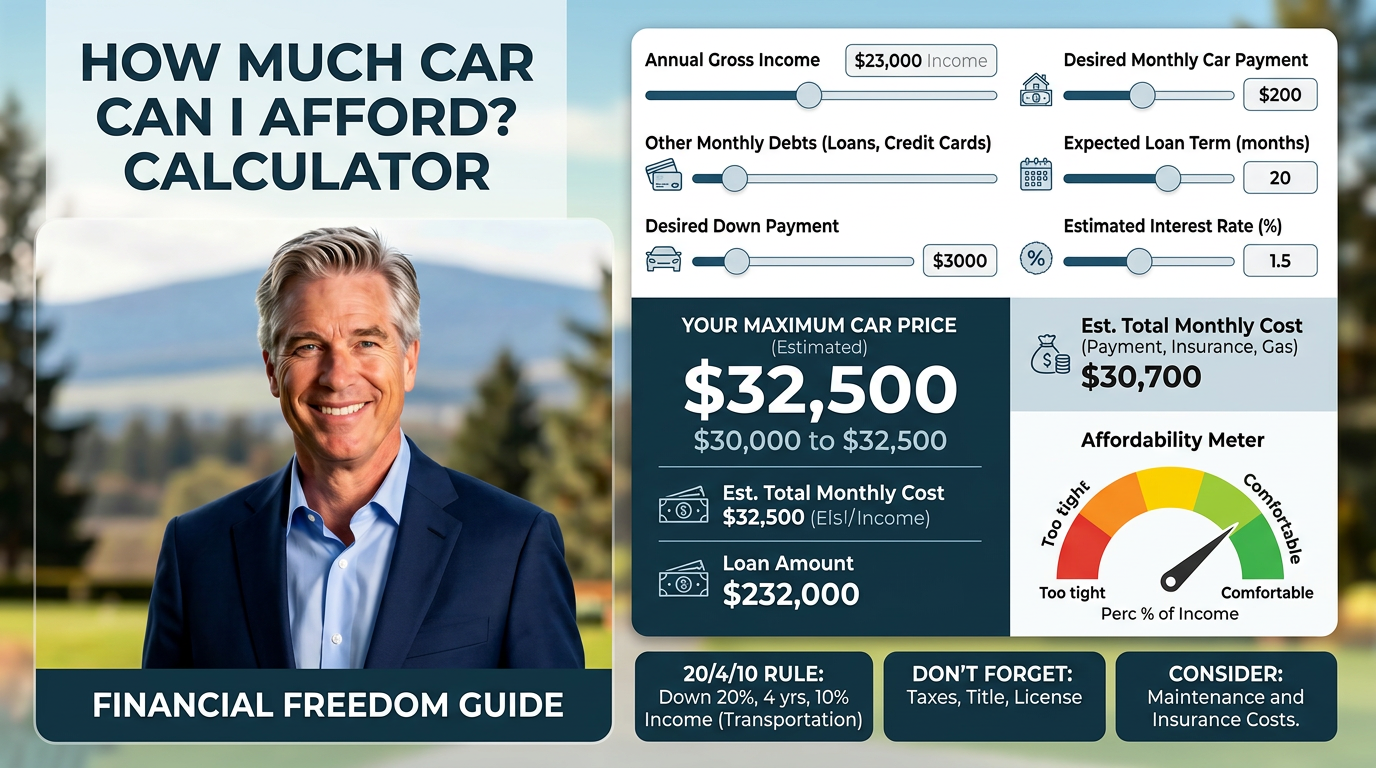
🚗 “How Much Car Can I Afford?” Calculator
Using the classic 20/4/10 Rule, let’s find a car budget that keeps you on the path to prosperity. No debt traps here!
Your Maximum Purchase Price
MoneyForged.com
Stories and Advice from Jaxon Forge
How Much Car Can I Afford (And Why Most People Get It Wrong)
March 2026
I remember the exact moment I almost blew it.
Business had just hit consistent six figures. First big bonus landed. Instead of wiring it to investments or the mortgage, I started shopping trucks. Bigger, newer, leather everything. “I’ve earned this,” I told myself. “Reliable ride for client meetings. Safety. Comfort.”
Sound familiar?
That’s lifestyle inflation in real time. Income goes up, so the car payment goes up faster. You don’t feel extravagant because it’s “just” a step up from before. But over months and years, that upgrade becomes baseline. Your freedom shrinks while the shiny thing in the driveway sits there depreciating 20% the second you drive it off the lot.
I stopped myself before signing. Kept driving the same reliable truck for another three years. That decision alone probably added six figures to my net worth through compounding. Here’s the raw truth most people miss: the question isn’t “Can I afford the payment?” It’s “Is this car stealing my future freedom?”
The Silent Killer: Comfort Masquerading as “I Deserve It”
High earners stay broke because they treat upgrades like rewards instead of risks. You get the raise, lease the luxury SUV, post the pics, feel on top. Then the payment hits every month like clockwork. Insurance jumps. Gas jumps. Maintenance jumps. Suddenly you’re working harder just to maintain the image.
Real example: I knew a surgeon pulling $350k/year. Nice house, private school for kids, vacations every quarter. But he was always stressed. Why? His $1,200/month car lease (plus $300 insurance) ate what could’ve been investments. He upgraded every three years “because the warranty was up.” Hedonic treadmill on wheels. Looked rich. Felt trapped.
Another one: Tech guy friend hit $200k after a promotion. Immediately leased a $90k Tesla. “It’s an investment in myself,” he said. Two years later, job slowed, payments stayed. He was one layoff from panic. The car didn’t build wealth—it built a cage.
Comfort zones are cemeteries for ambition. A nicer car feels like balance. It’s not. It’s trading long-term freedom for short-term dopamine.
The Rules I Live By: How Much Car Can You Actually Afford?
- 20/3/8 Rule (My Go-To Framework)
– Put at least 20% down (avoid being underwater).
– Finance for no more than 3 years (short term kills interest drag).
– Total car payment (including insurance, gas, maintenance) ≤ 8% of gross monthly income.
Example: $10k/month gross? Max $800/month all-in on car stuff. Keeps you lean and investing the rest. - 10-15% of Take-Home on Payments Only
Most experts say car payment ≤10% of net pay. I push 10% max for new, 15% only if used and paid fast. Anything higher and you’re funding depreciation instead of compounding. - Total Vehicles ≤ 50% of Annual Income
Unless your net worth is $1M+, don’t let all your cars combined exceed half your yearly gross. Keeps ego in check and capital working. - Pay Cash If Possible
If you can’t buy it outright (or close), you probably can’t afford it. Debt on a depreciating asset is wealth poison. - Delay the Upgrade
When bonus hits, fund freedom first: extra principal, investments, “screw you” fund. Delay gratification on the visible stuff. The gap widens while friends look richer—you actually get richer.
The Real Math: What a “Deserved” Upgrade Costs You
Let’s say you make $150k/year ($8k take-home/month after taxes). You “upgrade” to a $70k car with $800/month payment (10% of take-home—already at the edge).
Over 5 years: ~$48k in payments + interest + extra insurance/gas/maintenance ≈ $60k total.
Invest that $60k at 10% average return instead? In 10 years ≈ $155k. In 20 years? Over $400k.
One “deserved” car stole a house down payment or early retirement chunk. That’s not theory—that’s math.
Bottom Line: Stay Hungry, Drive Boring
I still drive a truck that’s paid off. It’s not sexy. It hauls what I need and gets me where I’m going. Friends upgraded years ago. They look successful. I’m free.
If you want wealth that buys real options—not just nicer seats—treat the car like what it is: a tool, not a status symbol. Pay the discipline tax early. Delay the upgrade. Let compounding do the heavy lifting.
Because the moment you say “I deserve the nicer car,” comfort has already started winning.
Stay sharp. Stay hungry.
— Jaxon Forge