Stories and advice from Jaxon Forge, Founder of MoneyForged.com
Raw, no-fluff truth on wealth psychology, iron discipline, free-market capitalism, tariffs, and the systems that separate the self-made from everyone else.
How to Launch a Side Hustle While Keeping Your Day Job | Jaxon Forge – Money Forged
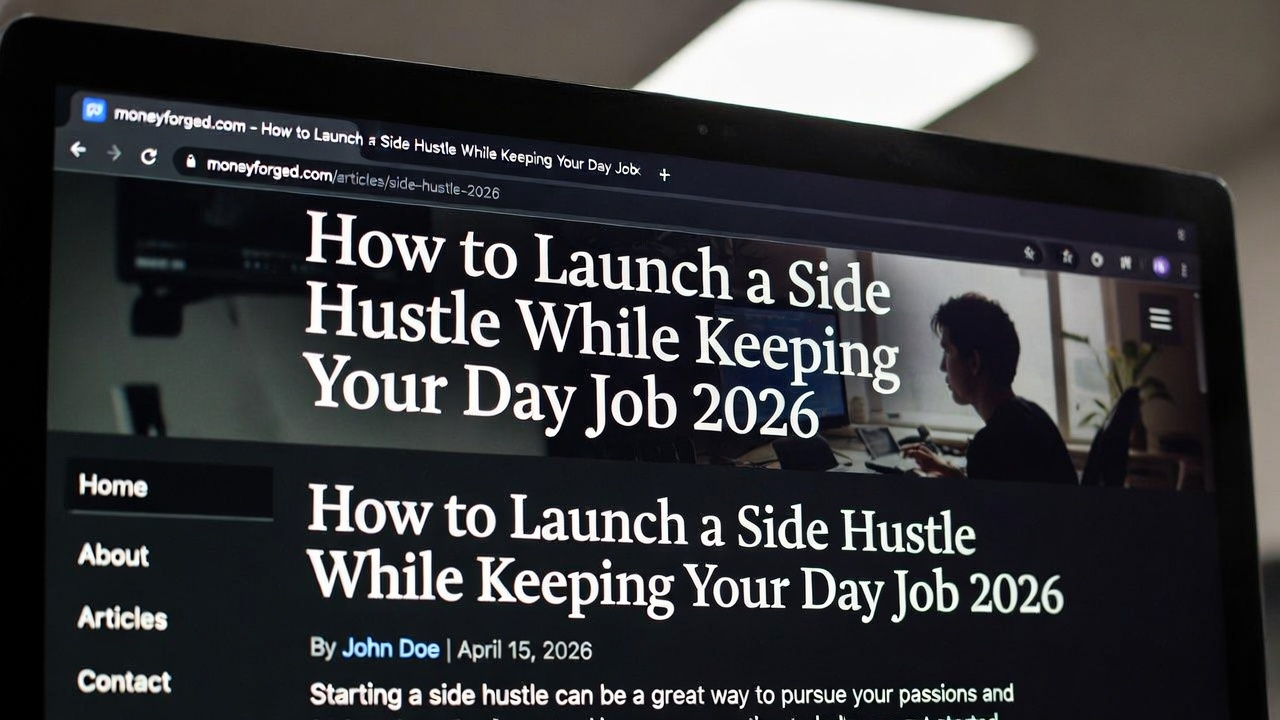
How to Launch a Side Hustle While Keeping Your Day Job
Stories and advice from Jaxon Forge, Founder of MoneyForged.com
I kept my day job for 27 months while the side income went from $0 → $8k/month. Not because I was scared to quit—because I was smart enough not to.
Most people blow up their only source of oxygen the second they get a taste of freedom. Then they panic, burn savings, and crawl back to another 9-5. I refused to play that game. Here’s the exact framework I used to launch without gambling stability.
1. Protect the Paycheck Like It’s Oxygen
Your day job isn’t the enemy—it’s your unfair advantage. It funds experiments, covers mistakes, and gives you psychological leverage. The moment you start treating it like a prison is the moment you make dumb decisions.
Do not tell coworkers or your boss (unless your contract forces disclosure).
Never work on the side hustle on company time or equipment—clean break.
Build a minimum 6-month emergency fund before you go hard on the hustle.
2. Pick a Hustle That Stacks With Your Existing Skills
I didn’t start a dropshipping store or crypto trading. I took the boring skill I already got paid for during the day (high-ticket consulting adjacent) and productized it evenings/weekends.
Rule: If it takes 90+ days to get competent, pick something else. Speed of cashflow is king when you’re double-shifting.
3. Time Block Like a Machine (My Exact Schedule)
Wake at 4:30. No negotiation.
4:30–6:00 AM: Deep work on side hustle (content, outreach, delivery)
6:00–7:00 AM: Gym + walk (mental reset)
Day job 8:00 AM–5:00 PM
7:00–9:00 PM: 2 more focused hours (client calls, fulfillment)
Total: ~25–30 hours/week on the hustle without burning out. Systems over motivation.
4. Launch Ugly, Sell First, Polish Later
I sent 47 cold DMs on LinkedIn with a one-page PDF offer before I had a website, logo, or business cards. Closed $11k in the first 30 days. Ugly works when the value is real.
“Perfect is the enemy of revenue.” — me, after losing six months on branding nonsense early on.
5. Revenue Milestones Before You Even Think About Quitting
My personal rules (adjust to your burn rate):
$3k/month → prove it’s not luck (3 consecutive months)
$7k/month → start transitioning clients to recurring
$12k+/month + 6-month runway → resignation letter
I hit $12k in month 19. Quit in month 28 after $15k+ for four straight months. No drama, no gap.
6. The Mental Game: Expect Resistance
Your brain will scream for comfort after 60–90 days. Friends will say “you’re working too hard.” Family will worry. That’s normal. It means you’re close.
Anchor to one question every morning: “If I stay comfortable today, where will I be in 36 months?”
Final Word
Launching a side hustle while keeping your day job isn’t about balance—it’s about ruthless prioritization. Protect the paycheck, stack boring skills, move in silence, and let revenue dictate the timeline.
Most people never escape because they quit too early or never start. Decide which one you refuse to be.
The exact 10-step system I used to go from broke renter to multiple cash-flow doors. Skip any step and the market will punish you — hard.
— Jaxon Forge, Founder @ MoneyForged.com
I didn’t inherit properties or get a real estate degree. I bought ugly, boring duplexes in solid areas, screened tenants like they were applying for my life savings (because they basically were), and built systems so I wasn’t on call 24/7.
In 2026, insurance is brutal, regs are tighter, and weak players are exiting. If you want real cash flow — not Instagram fantasy — follow this framework religiously.
The 10-Step Landlord Starter Framework
1. Get Your Money Right First
Don’t buy until you have 6–12 months living expenses + 6–12 months per-door reserves (repairs, vacancy, CapEx). Run your numbers: 1% rule is a filter, not gospel. Aim for 8–12% cash-on-cash return after everything. Use hard numbers — no “it feels good” deals.
2. Buy Boring, Not Sexy
Target 3-bed/1–2-bath in working-class neighborhoods with jobs, schools, low crime. Avoid war zones or luxury flips. Ugly houses rent faster and appreciate steadily. Pay cash or low-leverage if possible — debt kills beginners.
3. Master Your Local Landlord-Tenant Laws (2026 Update)
Know eviction timelines (now months in many states), security deposit max/return rules, required disclosures, habitability standards, Renters’ Rights Act changes if applicable. Non-compliance = fines or lost property rights. Read your state statutes + local ordinances. Ignorance isn’t a defense.
4. Bulletproof Tenant Screening
Income 3x rent minimum. Full credit + background + eviction/criminal check. Previous landlord references (call them). No exceptions for “nice people.” Bad tenant = $10k–$50k nightmare. Use services like TransUnion SmartMove or Cozy — worth every penny.
5. Ironclad Lease + Addendums
Use state-specific lease. Add pet policy, late fees (max legal), no smoking, maintenance responsibilities. Include move-in checklist/photos. Require renters insurance. Make it crystal clear — ambiguity breeds disputes.
6. Set Up Systems, Not Hope
Separate business bank account + bookkeeping (QuickBooks or Stessa). Online rent collection (no checks). Calendar for inspections, insurance renewals, tax deadlines. Property manager if scaling — 8–10% fee buys freedom.
7. Prepare for the Inevitable
Budget 1–2% of property value/year for CapEx (roof, HVAC). 5–10% vacancy. Emergency fund per door. Have plumber, electrician, handyman on speed dial. Eviction attorney retainer if in tough state.
8. Insurance & Tax Game
Landlord policy (not homeowner’s) + umbrella. Ask about landlord-specific riders. Track every expense — mileage, repairs, depreciation. Use 1031 if selling up. Talk to CPA early — deductions saved me six figures.
9. Inspect & Document Ruthlessly
Move-in/move-out photos/videos. Quarterly walk-throughs (legal notice). Fix issues fast to avoid habitability claims. Document everything in writing/email.
10. Know When to Exit or Scale
Run annual review: cash flow, appreciation, headache level. Sell losers. 1031 into better. Don’t fall in love — it’s business. Goal: freedom, not more properties forever.
2026 Reality Check: Tenant protections are stronger, insurance premiums up 20–50% in many markets, interest rates still sting. If you half-ass screening, skip reserves, or ignore laws, you’ll bleed money or lose the asset. Most quit in year 1–3. Don’t be most.
Ready to Execute?
This framework isn’t theory — it’s battle-tested. Print it. Tattoo it. Live it.
So You Want to Be a Landlord | Jaxon Forge | MoneyForged.com
So You Want to Be a Landlord
Passive income sounds sexy until the toilet explodes at 2 AM and your “tenant” ghosts you on rent. Here’s the real talk nobody posts about.
— Jaxon Forge, Founder @ MoneyForged.com
Everyone sees the Zillow screenshots and thinks: “Buy a duplex, collect checks, retire on the beach.”
I bought my first rental at 28. By 32 I had six doors. By 35 I’d learned why 80% of new landlords quit or lose money in the first five years.
This isn’t motivation porn. This is what actually happens when you become the bank.
The Money Looks Good… Until It Doesn’t
Cash flow is king — but after vacancy, repairs, CapEx reserves, property tax hikes, insurance doubling, and that one tenant who trashes the place… most “positive” deals are break-even at best. The ones that win? Boring locations, brutal screening, and zero emotion.
Tenant Horror Stories Are Not “If” — They’re “When”
Non-payment. Hoarding. Unauthorized pets. Police visits. Squatters in some markets. In 2026 tenant protections are stronger than ever. Evictions take months and cost thousands. You’re not just renting property — you’re running a small courtroom drama every few years.
It’s Never Passive (Unless You Pay Someone to Make It Passive)
Property manager = 8–12% of gross rent gone forever. DIY = your phone never stops buzzing. Weekends become “fix the AC” instead of family time. The only people calling it passive are selling courses.
The Real ROI Is Freedom… But Only If You Survive
Done right, rentals can buy your freedom — no boss, no 9-to-5, compounding equity while you sleep (finally). Done wrong, it’s a second full-time job that bleeds you dry. Most people never make it to the freedom part.
Brutal Truth 2026 Edition: Rising insurance, new regulations, higher interest on new buys, and tenant-friendly laws mean amateur landlords are getting filtered out fast. If you treat this like a side hustle instead of a business, the market will punish you.
What Separates Winners From Quitters
Buy ugly/boring properties in solid cash-flow areas — not Instagram bait
Screen tenants like your life depends on it (because your net worth does)
Keep 6–12 months reserves per door — emergencies are monthly, not yearly
I’ve watched too many sharp, driven guys dive into real estate rentals chasing that legendary passive income dream: snag a solid property, let reliable tenants handle the mortgage while equity stacks quietly in the background, freedom unlocked. It looks clean on spreadsheets, feels like the smart man’s escape from the daily grind. But after years in the game—multiple properties, wins that felt effortless, and headaches that tested every ounce of discipline—here’s the raw truth: “passive” is mostly marketing until you’ve paid the real price in blood, sweat, and midnight wake-ups.
This isn’t the glossy version where properties appreciate forever and tenants stay perfect. This is from someone who’s stared at water damage at 3 a.m., fought through drawn-out court battles, and learned that one bad call can erase years of progress. Being a landlord means you’re in the business of solving endless problems for profit—tenant drama, surprise repairs, shifting rules—and if you don’t build ironclad systems around it, the game eats you alive.
Start with the money reality. Cash flow sounds simple: rent in, expenses out. But the list of what actually subtracts from that check is brutal and sneaky. Property taxes climb without apology. Insurance premiums spike, especially in places hit by weather risks or rising claims. Maintenance isn’t optional—it’s constant, from small leaks to full system failures that hit when you least expect. Vacancy periods turn income into silence, turnover eats time and cash on cleaning, touch-ups, marketing. If you’re self-managing, your evenings and weekends become part of the overhead. And the big-ticket items—roofs, HVAC, appliances—don’t ask permission; they demand reserves you build early or pay painfully later.
Miss those buffers, and even “good” rent feels like treading water. I’ve seen properties that looked profitable on paper bleed red once reality layered in. The winners treat every line item like a fight to control, not a line to ignore.
Then come the people. Tenants aren’t abstract revenue streams; they’re humans with full lives, stresses, and sometimes zero regard for the asset you’ve bet on. The great ones pay early, respect boundaries, communicate like adults—pure gold. They make the whole machine hum. The difficult ones? They stretch limits until something breaks. Late payments pile up, rules bend with extra occupants or unapproved changes, damage goes beyond wear-and-tear into destruction. And when it escalates to eviction, especially in tenant-heavy markets, you’re in for a slog.
Portland right now? It’s one of the tougher arenas. Strong tenant protections, layered regulations from city and state, recent tweaks that add more steps and safeguards for renters. No-cause terminations get restricted after the first year, notices stretch longer, processes drag through backlogged courts. Eviction filings spiked hard early this year—highest in half a decade—showing the pressure, but also how sticky things get when disputes hit legal channels. Rent caps sit at 9.5% for most older units, squeezing margins as costs keep rising. Add in new rules around notices, deposits, access, and it demands precision. One wrong form or missed deadline, and your leverage evaporates.
I’ve navigated markets friendlier to owners, where rules tilt a bit more balanced and cash flows stronger without constant regulatory chess. But if Portland’s your battlefield—and I get it, roots run deep here—you adapt or you bleed. Screen like your freedom depends on it: deep background, rental history, income verification well above rent. Price smart but aggressively to cut turnover. Document everything obsessively. Build relationships where possible, but never confuse courtesy with weakness.
The long-game winners treat rentals like a real operation. Systems over hope. Proactive maintenance plans. Ruthless tenant selection. Emergency funds that actually get used. Boring properties in stable pockets over flashy rehabs that promise big but deliver drama. Avoid over-leveraging—debt plus a nightmare tenant equals nightmare amplified. Diversify when you can, across units or even markets. Know your exit ramps: when to hold tight, when to sell clean, when to trade up.
If you’re just stepping in, don’t cannonball. House-hack to start—live in one unit of a duplex or triplex, rent the rest. Learn the rhythms with lower stakes. Or run paper deals: dissect listings, crunch scenarios, spot red flags before money moves.
Bottom line: Landlord life isn’t about effortless checks hitting your account. It’s high-leverage problem-solving—tenant issues, property upkeep, market curves, rule changes. If you crave structure, can handle chaos without folding, and pay the discipline tax upfront, it builds wealth faster than most paths, compounding into real independence. But if people problems or surprise fixes drain your soul, pivot to cleaner plays: index funds, syndications where operators eat the headaches, or businesses that scale without emergency texts.
Single-family homes to start simple? Multi-family for leverage? Short-term for higher yield but more touch? What’s drawing you in right now, and how’s the Portland scene looking from your side? Drop the details—I’ll sharpen a framework that matches your edge.
Rental Cash Flow Analyzer | MoneyForged.com – Real Estate for Real Wealth
Rental Cash Flow Analyzer
Tools & Truths from Jaxon Forge, Founder of MoneyForged.com
Why Cash Flow Is King – Not Net Worth, Not Hype
I’ve bought (and passed on) hundreds of deals. The ones that built my wealth? The boring ones that cash flow positive from day one. Cash flow pays the bills, covers vacancies, funds repairs, and lets compounding do its thing without you sweating payroll.
Most landlords lose because they ignore expenses or chase appreciation. I run every deal through math like this: gross rent minus realistic ops (50% rule as baseline), minus debt service. If monthly cash flow isn’t positive and strong, I walk—no exceptions.
Use this calculator to vet your next rental. Input conservative numbers. If it still looks good, dig deeper. If not, next deal.
Rental Property Cash Flow Calculator
Crunch the numbers like a landlord who wants to stay rich.
Quick Rules I Live By
Target 8-12%+ Cash-on-Cash Return minimum for leveraged deals.
Cap Rate >7-8% in most markets—higher risk, higher reward.
Positive monthly cash flow after ALL expenses or pass.
Use the 1% Rule as a quick screen: Monthly rent ≥1% of purchase price.
More articles dropping soon: “Why Cash Flow Beats Net Worth Every Single Time”, “The Hidden Leverage of Owning Boring Businesses (and Rentals)”, “The Tax Strategies That Saved Me Six Figures Legally”.