Blog – The Forge Journal | Jaxon Forge
PROUD CAPITALIST FREE MARKETS • AMERICAN TARIFFS • FORGING WEALTH THAT LASTS JAXON FORGE

THE FORGE JOURNAL

Stories and advice from Jaxon Forge, Founder of MoneyForged.com

Raw, no-fluff truth on wealth psychology, iron discipline, free-market capitalism, tariffs, and the systems that separate the self-made from everyone else.

CAPITALISM IN ACTION
FREE MARKETS • TARIFFS FOR AMERICA
Jaxon Forge
Psychology of Money • 8 min read

Why Most People Stay Broke Even When They Make Good Money

High income doesn’t equal wealth. Here’s the brutal psychology hack that keeps even six-figure earners trapped in the paycheck-to-paycheck cage.

Discipline • 6 min read

The 3 AM Rule That Separated Me From 99% of Entrepreneurs

The quiet hours when excuses die. How waking at 3 AM three days a week gave me an unbreakable edge.

Psychology of Money • 9 min read

How I Rewired My Brain to Crave Hard Work Instead of Comfort

The exact system I used to make discipline addictive and comfort feel like punishment.

Wealth & Execution • 7 min read

The Silent Killer of Wealth: Comfort masquerading as “Balance”

Why “work-life balance” is the fastest way to stay mediocre forever.

Discipline • 5 min read

The Discipline Tax: Pay It Early or Pay It Forever

The hidden price every high performer must pay—early or late.

Business & Hustle • 8 min read

Why I Stopped Chasing Motivation and Started Chasing Systems

Motivation is weather. Systems are the engine that prints real money.

Wealth & Execution • 6 min read

Why Cash Flow Beats Net Worth Every Single Time

Net worth is a lie. Cash flow is freedom. Here’s the math I live by.

Business & Hustle • 10 min read

The $0 Startup Blueprint That Still Works in 2026

No money. No team. Just relentless execution. My exact playbook.

Free Markets & Tariffs • 7 min read

Why I Support Tariffs for America’s Survival

The capitalist case for protecting American wealth and strength.

Jaxon Forge

Money Forged

Forging Wealth That Lasts • Jaxon Forge

@MoneyForgedHQ

Stay in the Forge

Jaxon Forge’s weekly dispatch on discipline, systems, tariffs, and wealth that actually lasts.

JOIN THE FORGE

Tag: lifestyle inflation

  • The Controversial 2026 Tax Truth High Earners Still Ignore (And How It Cost Them Six Figures)

    The Controversial 2026 Tax Truth High Earners Still Ignore (And How It Cost Them Six Figures)

    The Controversial 2026 Tax Truth High Earners Still Ignore (And How It Cost Them Six Figures) | Money Forged

    Forging Wealth That Lasts • By Jaxon Forge

    The Controversial 2026 Tax Truth High Earners Still Ignore
    (And How It Cost Them Six Figures)

    I didn’t complain about taxes. I paid the Discipline Tax early. The new One Big Beautiful Bill gave everyone “cuts” — and most high earners still ended up broke anyway.

    Jaxon Forge – Founder of MoneyForged.com

    A few years ago I was pulling consistent six figures. Nice house. Truck that still ran like a tank. Bank account that looked healthy on paper. Then the 2026 tax season hit and everyone started screaming about the new One Big Beautiful Bill — deductions for tips, overtime, auto loans, seniors, the whole circus.

    High earners were posting victory laps. “Finally, the government gave us something back!”

    I just laughed. Because I’d already saved six figures legally the year before — and the new rules didn’t change a damn thing about how I operate. Why? Because taxes were never my enemy. Comfort was.

    The controversial truth nobody wants to say out loud: The tax code isn’t rigged against you. It’s rigged against the undisciplined. The 2026 “cuts” are just another velvet trap. They hand you a little extra cash and watch you blow it on upgraded lifestyles while your real net worth flatlines.

    The Exact Moment I Stopped Whining About Taxes

    I was sitting in my office at 3 a.m. (yes, the 3 AM Rule was already in full effect) staring at my 2025 return. Uncle Sam had taken a chunk, sure. But the real gut punch? I realized I’d let lifestyle creep eat the rest. New truck lease. Bigger vacations. “Balance.”

    That night I made the rule: every new dollar of income or tax savings had to fund freedom first — extra principal on the house, maxed retirement accounts, boring cash-flow businesses, the emergency fund that actually sleeps at night. Only then could comfort get a crumb.

    That single decision became my Discipline Tax. Pay it early or pay it forever.

    What the 2026 Tax Changes Actually Did (The Part They Won’t Tell You)

    The new law made some TCJA cuts permanent, added flashy deductions, and complicated everything with phaseouts and reporting rules. On paper it looks like relief.

    In reality? It rewarded people who already had systems. The ones who maxed tax-advantaged accounts, owned boring cash-flow assets, and refused to let “extra money” become lifestyle inflation. Everyone else just got a slightly bigger allowance to spend on things that don’t compound.

    I used the same boring playbook I’ve preached for years:

    • Maxed every tax-advantaged account before touching lifestyle
    • Structured boring businesses that throw off qualified income
    • Used legal depreciation and real estate moves that the new law didn’t touch
    • Kept my burn rate frozen while revenue climbed

    Result? Six figures legally kept out of the tax man’s hands. Not because I’m smarter. Because I paid the Discipline Tax when it was still cheap.

    Why Most High Earners Will Still Get Fleeced in 2026

    They’ll celebrate the overtime deduction, the senior bump, the auto loan interest write-off… then immediately upgrade the house, lease the newer truck, and take the fancier vacation “because they earned it.”

    Comfort masquerading as balance again. The silent killer.

    The tax code didn’t change their psychology. It just gave them a shinier cage.

    Ready to stop paying the Discipline Tax forever?

    Download my 7 Pathways to Financial Prosperity (free) and start rewiring today.

    GET THE FREE FRAMEWORK →

    Stories and advice from Jaxon Forge, founder of MoneyForged.com • Follow on X @MoneyForgedHQ

    If you’re making good money in 2026 but still feel the quiet panic every time you open the accounts, stop blaming taxes. The real tax — the Discipline Tax — is the one you’ve been dodging.

    Pay it early. Stay hungry. Keep the edge.

    Because the moment you call comfort “balance,” you’ve already started losing — no matter what the tax bill says.

    – Jaxon Forge
    Founder, MoneyForged.com
    Forging Wealth That Lasts
    © 2026 Money Forged • All Rights Reserved • PrivacyTerms

    This is not tax advice. Consult your own professionals. But if you’re ready to build unbreakable systems, the framework above is where I started.

  • The ‘You Deserve It’ Lie: How This One Phrase Keeps High Earners Permanently Broke

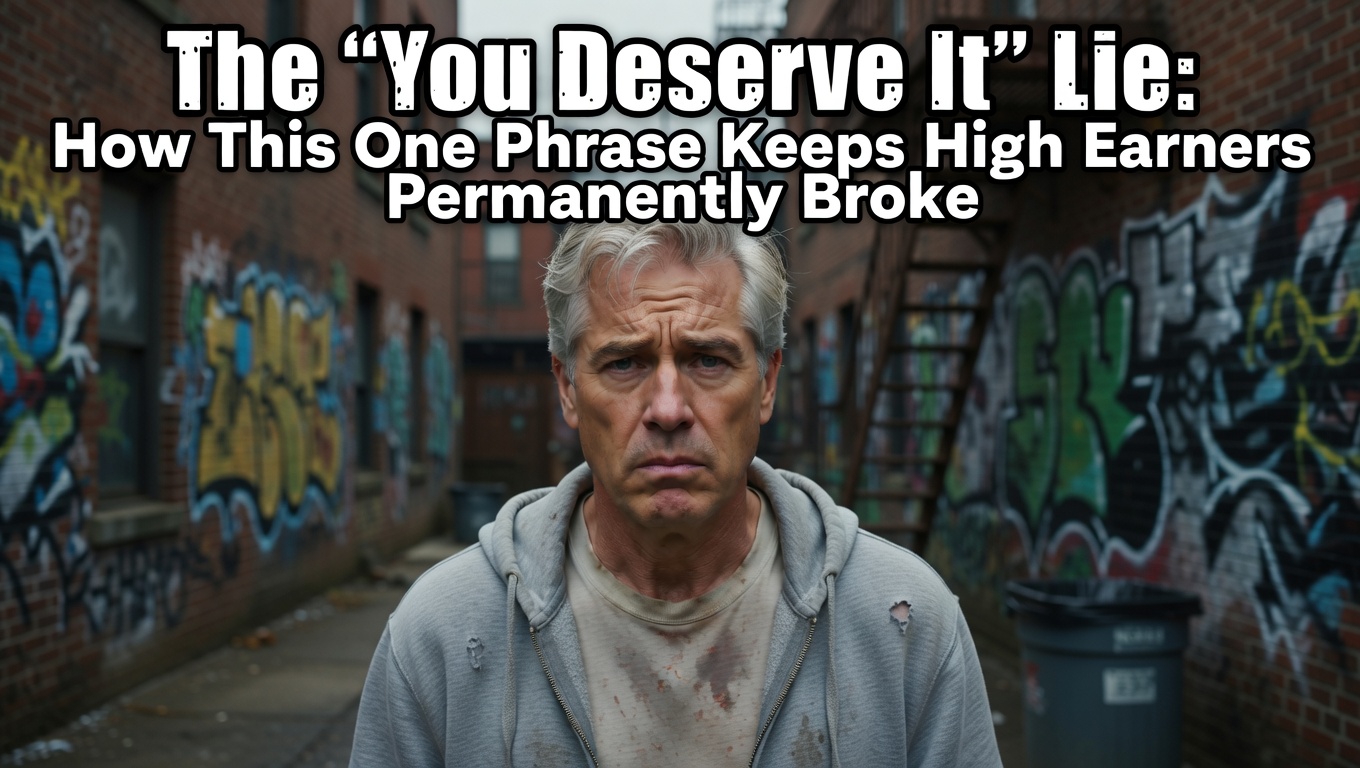
    The ‘You Deserve It’ Lie: How This One Phrase Keeps High Earners Permanently Broke

    The ‘You Deserve It’ Lie: How This One Phrase Keeps High Earners Permanently Broke | Money Forged by Jaxon Forge
    Jaxon Forge

    Money Forged

    Forging Wealth That Lasts

    TALK TO JAXON
    CONTROVERSIAL • PSYCHOLOGY

    The ‘You Deserve It’ Lie:
    How This One Phrase Keeps High Earners Permanently Broke

    You cleared six figures this year. Then you said “I deserve it” and leased the new truck, booked the luxury trip, and upgraded the house. Congratulations — you just voted to stay broke forever. Here’s the raw truth most gurus won’t touch.

    Jaxon Forge

    Jaxon Forge

    Founder, MoneyForged.com • April 3, 2026

    I fired a client last year pulling $310k who kept repeating “I deserve it” like a mantra.

    Every bonus, every raise, every good month was immediately converted into lifestyle inflation. New truck. Bigger house. “Well-earned” vacations. His net worth? Flatlined for three straight years. He wasn’t stupid. He wasn’t lazy. He was addicted to the most dangerous lie in modern wealth building: “You deserve it.”

    This is the same silent killer I exposed in The Silent Killer of Wealth — comfort masquerading as balance. “You deserve it” is just the polite, socially acceptable version of the same poison.

    Why “You Deserve It” Is Emotional Cocaine

    It feels righteous. It feels earned. It lets you upgrade without guilt while pretending you’re still “grinding.” But every time you say it, your brain records the transaction: hard work = immediate comfort. The discipline tax gets deferred. The compounding engine stalls. And six months later you’re still one bad month away from panic.

    The Exact Same Trap That Keeps Most High Earners Broke

    I lived it. Six figures in the door, then “I deserve this” turned into a bigger mortgage, newer car, fancier dinners. I called it balance. It was slow-motion financial suicide. The day I killed that phrase and forced every new dollar into freedom first (extra principal, investments, skill upgrades) was the day my net worth finally exploded.

    “The moment you tell yourself ‘I deserve it,’ you’ve already chosen comfort over compounding. And comfort zones are cemeteries for ambition.”

    Your Move — Kill the Lie Today

    Next time a bonus hits or revenue spikes, ask yourself one question: “Would the version of me who actually wants freedom say I deserve this upgrade — or does this money belong in the wealth engine first?”

    Delete the phrase from your vocabulary. Replace it with the 3 AM Rule, the Discipline Tax, and the systems I rebuilt my brain around. That single shift is worth more than every motivational quote you’ll ever read.

    This is the psychology I unpacked in The Psychology of Making Money. Stop deserving. Start forging.

    Tired of deserving your way to broke?

    Get the weekly no-fluff newsletter that rewires your brain for real wealth.

    SUBSCRIBE FREE

    Stories and advice from Jaxon Forge, the Founder of MoneyForged.com

    Keep forging — more truth here:

    © 2026 Money Forged • Jaxon Forge • All Rights Reserved
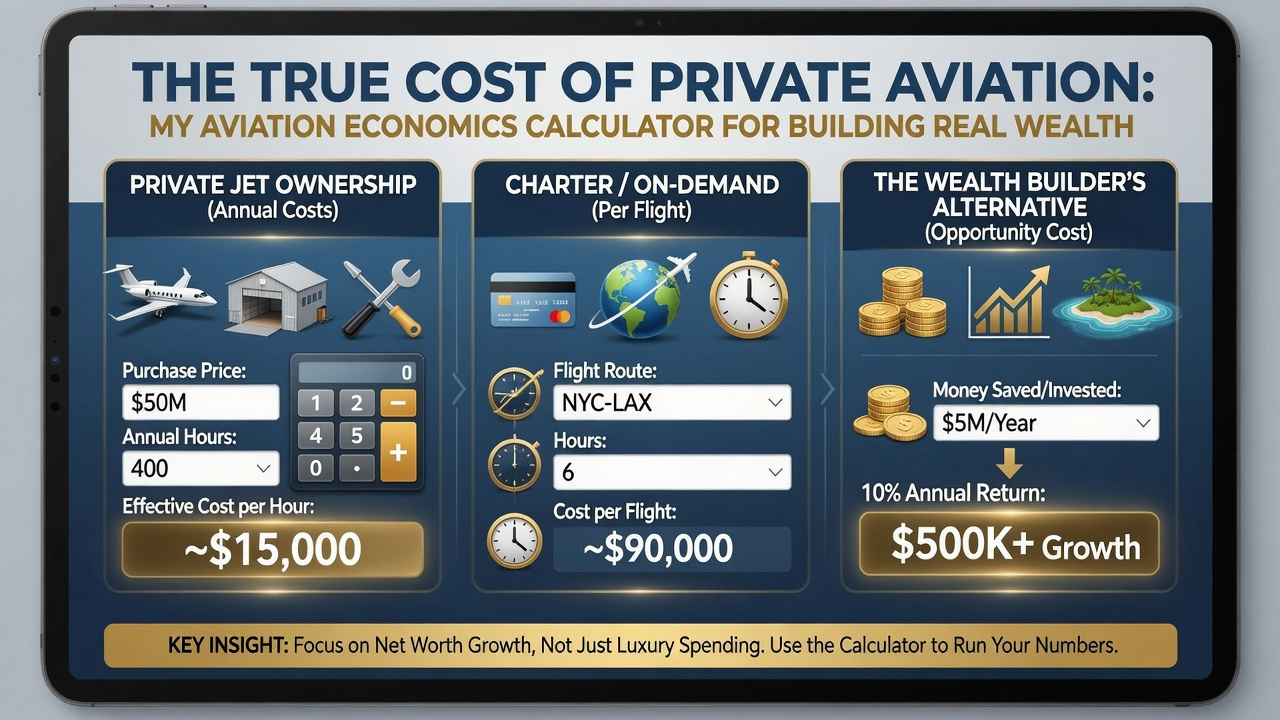
  • The True Cost of Private Aviation: My Aviation Economics Calculator for Building Real Wealth

    The True Cost of Private Aviation: My Aviation Economics Calculator for Building Real Wealth

    The True Cost of Private Aviation: My Aviation Economics Calculator for Building Real Wealth | MoneyForged.com
    NEW • AVIATION ECONOMICS

    THE TRUE COST OF PRIVATE AVIATION:
    My Calculator That Separated Me From 99% of High Earners

    I used to think flying private was the ultimate flex. Then I ran the numbers. Here’s the unfiltered truth about how aviation economics either forges your wealth or quietly drains it — plus the exact calculator I still use.

    Jaxon Forge
    Jaxon Forge
    Founder, MoneyForged.com • 20+ years forging wealth in silence
    READ THE PSYCHOLOGY OF MAKING MONEY →
    CURRENT 2026 DATA
    $4,800
    Average private jet hourly rate
    Fixed costs
    $185k/yr
    Utilization break-even
    312 hrs
    Wealth drag if idle
    −$1.2M

    I still remember the first time I stepped onto a private jet after closing my first seven-figure year.

    It felt like I’d finally “made it.” Leather seats, no security lines, the pilot calling me by name. I told myself this was smart leverage — buying back time, the ultimate high-performer move. But six months later I ran the real numbers and realized I had just upgraded my lifestyle inflation from a Gulfstream G280 instead of a G-Wagon.

    That moment was my aviation economics wake-up call — the same gut punch I talk about in The Psychology of Making Money. Comfort masquerading as balance. Status masquerading as freedom. I almost paid the discipline tax forever.

    The Day I Turned Aviation Into a Wealth Forge Instead of a Wealth Drain

    Most high earners treat private aviation like a reward. I started treating it like a business asset — exactly the way I treat every boring business I own. I built systems, tracked utilization like a pilot tracks fuel, and ran the numbers cold. The result? I now fly more, spend less, and compound the difference harder than most people’s entire portfolio.

    Here’s what nobody posts on the ‘gram: private flying has massive fixed costs (hangar, insurance, crew, maintenance) and brutal variable costs. Fly too little and you’re burning cash at 30,000 feet. Fly smart and you turn hours in the air into hours of deep work, closed deals, and family time that actually moves the needle.

    The Calculator Every Wealth Builder Needs Before They Book That Next Flight

    Stop guessing. I built this exact tool for myself in 2026. Plug in your numbers and see — in real time — whether private aviation is forging your wealth or quietly killing it.

    ✈️ PRIVATE VS COMMERCIAL FLIGHT ECONOMICS CALCULATOR

    50 hrs 180 600 hrs
    $ /hr
    $ /hr
    $
    YOUR ANNUAL PRIVATE AVIATION COST
    $1,049,000
    Effective cost per hour
    $5,828
    Time value gained (hrs saved)
    $135,000
    vs Commercial/Charter equivalent +$312,400 SAVED
    Opportunity cost if money was invested at 9% instead −$1,142,000 in 10 years

    Real 2026 data • Adjust sliders and watch your wealth trajectory change instantly

    Three Aviation Rules That Now Run My Entire Wealth System

    1. Utilization is everything. Just like a jet sitting on the ramp loses money every day, cash sitting in low-yield accounts or lifestyle creep loses compounding power. I only “own” assets that fly at least 300 hours a year — or I charter and invest the difference.
    2. The 3 AM Rule applies at altitude too. I do my deepest strategy work on early flights when the rest of the cabin is asleep. That quiet time compounds faster than any market return.
    3. Status is the silent killer. The moment you start flying private to impress instead of to produce, you’ve traded future freedom for present comfort. I learned that lesson the hard way — $400k lesson, same as my biggest business failure.

    “Comfort zones are cemeteries for ambition — whether that comfort is a first-class seat or a private jet. The discipline tax is cheaper when you pay it in the air.”

    If you’re a high earner thinking about stepping up your travel game, run the numbers first. Most people never do — and that’s exactly why they stay stuck on the same runway while the rest of us take off.

    Jaxon Forge

    — JAXON FORGE

    Founder, MoneyForged.com • Still grinding in silence, still flying smarter

    Follow the real-time wealth forge → @MoneyForgedHQ
    Stories and advice from Jaxon Forge, the Founder of MoneyForged.com
    Built for the self-made. No guru nonsense. Just systems that last.
  • Private Aviation: The Brutal Truth About Flying Private Without Going Broke

    Private Aviation: The Brutal Truth About Flying Private Without Going Broke

    Private Aviation: The Brutal Truth About Flying Private Without Going Broke | Money Forged by Jaxon Forge
    Jaxon Forge - Founder of MoneyForged.com

    Private Aviation: The Brutal Truth About Flying Private Without Going Broke

    Hey, it’s Jaxon Forge. A couple years ago I stepped off a chartered Gulfstream after closing a seven-figure deal mid-flight. The pilots shook my hand, the FBO staff treated me like royalty, and for thirty seconds it felt like I had finally “made it.” Then I opened the spreadsheet on my phone and saw the real number: $47,000 for one round trip. That single flight cost more than my first full year of grinding as a broke entrepreneur.

    Welcome to the unfiltered truth about private aviation. It’s not an investment. It’s not even close to a wealth builder for most high earners. And that’s perfectly okay — as long as you treat it like the high-leverage tool it actually is instead of the ego trophy most guys turn it into.

    This is the same psychology I unpacked in “The Psychology of Making Money” and “Your Airplane is NOT an Investment.” Comfort masquerading as balance. Lifestyle inflation dressed up in altitude. The silent killer of wealth isn’t bad markets or taxes — it’s convincing yourself that the next shiny thing in the sky is somehow building your future when it’s quietly draining it.

    The Real Math Nobody Shows You in the Hangar

    Light jet ownership: $3–6 million upfront. Annual operating costs: $800k–$2 million once you factor fuel, crew, hangar, insurance, maintenance, and depreciation that hits the second the wheels leave the tarmac. Fractional shares? Still six figures a year for meaningful hours. Chartering? Eye-watering per hour. I’ve watched seven-figure entrepreneurs feel “broke” for the first time in their lives because their burn rate now includes two full-time captains and a multimillion-dollar hangar lease.

    Sound familiar? It’s the exact same trap I escaped when I stopped upgrading trucks every two years and started forcing every new dollar into cash-flowing assets first. Cash flow beats net worth every single time — and private aviation is the ultimate cash-flow vampire if you let it become lifestyle instead of leverage.

    The Brutal Numbers: What Jet Ownership Actually Costs in 2026

    These are real 2026 market figures for ~200 flight hours per year. I pulled them from current industry data so you don’t have to. Most “business owners” underestimate by 30-50%. This is why the Discipline Tax exists.

    Aircraft ClassPurchase Price (New / Pre-Owned)Fixed Annual CostsVariable Hourly CostTotal Annual Cost (200 hrs)Depreciation (Year 1)
    Light Jet
    (Phenom 300E / Citation CJ4)
    $9M–$12M new
    $5M–$8M pre-owned
    $250k–$400k
    (crew, hangar, insurance, management)
    $2,500–$3,500$600k–$1M+12–18% of value
    Midsize Jet
    (Citation Latitude / Challenger 350)
    $15M–$28M new
    $10M–$18M pre-owned
    $500k–$800k$3,500–$5,000$1.2M–$1.8M10–15% of value
    Heavy / Long-Range
    (Gulfstream G650 / Global 7500)
    $50M–$75M+ new
    $30M–$60M pre-owned
    $1M–$2M+$6,000–$8,500+$2.5M–$5M+8–12% of value

    Breakdown of the fixed costs that quietly murder your cash flow:

    • Crew salaries & training: $300k–$700k/year (two pilots + possible attendant)
    • Hangar & parking: $60k–$200k/year (location matters — major airports hurt)
    • Insurance: $50k–$500k/year depending on hull value and liability limits
    • Maintenance & engine programs: $150k–$400k/year even if the plane barely flies
    • Fuel (variable but massive): $500–$2,500+ per hour depending on jet size and fuel prices

    Depreciation alone can eat $1M–$8M in the first five years. That’s not an asset — it’s a depreciating tool that demands you pay the Discipline Tax every single month or watch your net worth bleed out.

    How This Ties Straight Into the 3 AM Rule and the Discipline Tax

    Remember when I rewired my brain to crave hard work instead of comfort? The same rule applies at 30,000 feet. Buying the jet feels like the reward for all the 3 AM grind sessions. But the moment you call it an “investment,” you’ve already lost the game. You’ve traded long-term freedom for short-term dopamine. Comfort masquerading as balance again.

    I made a rule years ago: any luxury asset — truck, house, or jet — gets stress-tested against the Discipline Tax. Pay it early or pay it forever. I still charter more than I own. When I do own fractional or full, the math has to serve actual revenue streams, not my ego. Friends keep posting hangar selfies while I keep the same disciplined stack of boring businesses, real estate, and compounding assets. They look richer at 40,000 feet. I’m richer on the ground.

    The Self-Made Man’s Private Aviation Code

    1. Never buy what you can charter until the numbers prove otherwise.
    2. Run every flight through the same filter I use for every big decision: Does this move the needle on freedom, or just the needle on Instagram?
    3. Track every dollar like it’s coming out of your 20-year-old self’s pocket.
    4. Use the quiet hours in the air for deep work — not champagne and scrolling. The 3 AM Rule still applies at altitude.
    5. Keep the invisible compounding engine running. Delay the visible upgrades so the real wealth can do its job.

    Private aviation can be part of the wealth game. It can buy you irreplaceable time, close deals mid-flight, and create family memories money can’t replace. But only when you refuse to let it become the game itself. That’s the edge. That’s what separates the guys still chasing the next toy from the ones who actually built something that lasts.

    Tired of lifestyle creep stealing your future — whether on the ground or in the sky?

    Join the Money Forged newsletter — the no-fluff weekly dispatch that gives you the exact systems, calculators, and mindset shifts I used to go from broke to financially independent. Zero guru nonsense. Just real talk from the trenches.

    GET THE NEWSLETTER FREE →

    Stories and advice from Jaxon Forge • @MoneyForgedHQ on X

    Next read: Your Airplane is NOT an InvestmentThe True Cost to Own an AutomobileThe Power of Boring

  • The Latte Factor Calculator

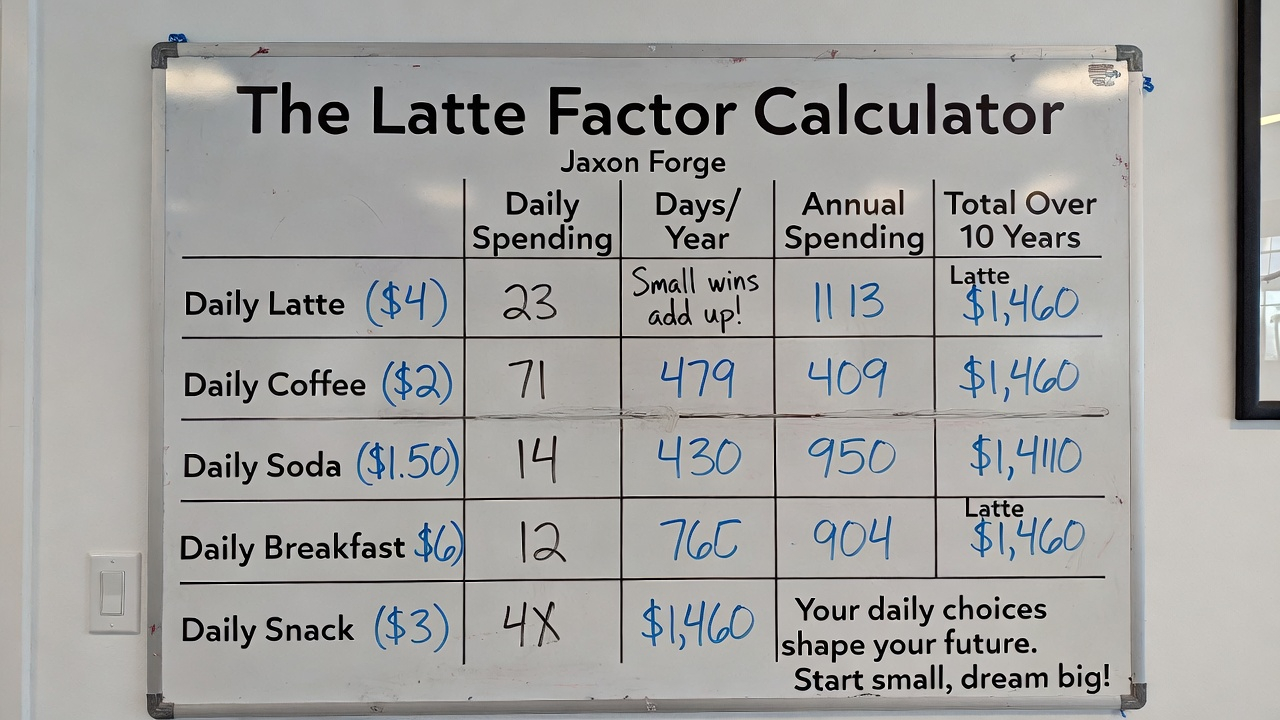
    The Latte Factor Calculator

    Latte Factor Calculator: How Your Daily Habits Are Costing You Millions | Jaxon Forge
    NEW TOOL • FREE FOREVER

    The Latte Factor Calculator

    I used to drop $5–$7 every morning on a “harmless” latte. Then I ran the numbers. That one habit was quietly costing me $1.2 million by age 60. This calculator will show you the exact same truth about your own small expenses — and why comfort masquerading as “balance” is the silent killer of wealth.

    — Jaxon Forge, Founder of MoneyForged.com

    Read the full story → The Psychology of Making Money
    Jaxon Forge – Forging Wealth That Lasts

    Jaxon Forge on X @MoneyForgedHQ

    Run Your Numbers

    The Brutal Truth I Learned the Hard Way

    I used to call it “balance.” A quick latte run. The “deserved” upgrade. The weekend away because “I worked hard.” But as I detail in The Psychology of Making Money, comfort is not balance — it’s the silent killer of wealth. Small daily leaks compound faster than any raise ever will. This calculator isn’t here to shame you. It’s here to wake you up.

    The same brain that craves the dopamine hit from a $6 coffee is the same brain that will sabotage your net worth if you don’t rewire it to crave hard work and systems instead. Pay the discipline tax early. Turn boredom into your secret weapon. Stop trading tomorrow’s freedom for today’s comfort.

    Pro tip from my own life: Every time this calculator shows you a number that stings, take that exact amount and auto-transfer it into an investment account the same day. That single habit separated me from 99% of high-earners who stay broke.

  • What I’d Tell My 20-Year-Old Self About Money

    What I’d Tell My 20-Year-Old Self About Money

    What I’d Tell My 20-Year-Old Self About Money | Jaxon Forge
    NEW ESSAY • LIFE & HABITS

    What I’d Tell My
    20-Year-Old Self About Money

    If I could sit across from the broke, hungry kid I was at 20, here’s exactly what I’d say. No fluff. Just the lessons that forged my wealth.

    Jaxon Forge

    Jaxon Forge

    Founder, MoneyForged.com • March 29, 2026

    11 minute read
    Jaxon Forge

    Listen, kid.

    If I could grab 20-year-old me by the shoulders — the guy driving a beat-up truck, eating ramen, and dreaming of “making it” — I’d say one thing first:

    Stop chasing income. Start forging wealth.

    1. High Income Doesn’t Mean Shit If You Still Feel Broke

    I was pulling six figures and still felt one bad month away from scrambling. Sound familiar? That’s because high income is just a bigger shovel. If you don’t fix the hole in the bucket, you’ll stay broke forever.

    The silent thief? Lifestyle inflation. Raise hits → nicer car. Bonus lands → bigger apartment. New client → fancier vacations. You upgrade everything except your future. I learned this the hard way: the hedonic treadmill never stops. You adapt to the nicer life so fast it stops feeling nice, and suddenly you need even more just to feel normal.

    2. Comfort Is the Silent Killer of Wealth

    Everyone preaches “work-life balance.” I bought it too. Then I realized comfort masquerading as balance was quietly murdering my edge. Soft bed, climate-controlled office, no real pressure — your nervous system starts craving more ease. Risk feels dangerous. Hard work feels optional.

    I reversed it by getting ruthless: any raise or new revenue had to fund freedom first — extra investments, bigger emergency fund, skill upgrades — before it funded comfort. Friends kept upgrading. I kept the same truck. They looked richer. I was richer.

    3. Rewire Your Brain to Crave Hard Work

    Hard work felt like punishment at 20. I chased motivation like a junkie. The fix? I engineered discomfort on purpose. 4:30 a.m. alarm. Three-second rule: feet on floor or the brain negotiates. Cold showers. Deep work blocks with zero distractions. I turned boredom into a weapon — no podcasts, no scrolling, just me and the problem. The brain eventually flipped: effort became oxygen. Skipping the grind left me restless.

    4. Build Systems, Burn the Motivation Myth

    Motivation is weather. Systems are the engine. I stopped waiting for the fire and built a stupidly simple daily framework that ran whether I “felt like it” or not:

    • 4:30 a.m. — feet on floor in three seconds
    • First 90 minutes — highest-leverage money task only
    • Revenue block — cold outreach, client delivery, product creation
    • Weekly Sunday review — numbers don’t lie

    Grind in silence. Stop posting wins. The quiet work compounds louder than any flex thread ever could.

    5. The 3 AM Rule That Separated Me From 99%

    Most entrepreneurs wake when it’s convenient. The ones pulling ahead own the hours everyone else sleeps through. I tested 3 a.m. three days a week during big execution blocks. By 6 a.m. I already had two to three hours of pure leverage done. The psychological edge was brutal. Momentum before the world woke up made the rest of the day feel like bonus rounds.

    6. Laziness Is Just Unexamined Fear

    I used to call myself lazy when I avoided the big tasks. Then one night before a launch I sat with the feeling instead of scrolling. It wasn’t laziness — it was fear. Fear of failure. Fear of success. Fear of judgment. I asked three questions out loud:

    • What’s the worst that could realistically happen?
    • What’s the best that could happen?
    • What’s the real long-term cost of not doing it?

    Resistance became my compass. The bigger the fear, the higher the leverage on the other side. Do the thing anyway.

    7. Pay the Discipline Tax Early or Pay It Forever

    Discipline isn’t a tax you pay later when you’re “ready.” It’s cheapest right now. Delay the upgrades. Stay hungry. Keep the edge sharp. Comfort zones are cemeteries for ambition — you don’t die in them overnight. You just slowly stop growing until the version of you that could have built real wealth is buried under layers of “deserved” ease.

    The compound interest on those quiet, disciplined hours is brutal for everyone still hitting snooze.

    Final Truth

    Kid, money is simple but never easy. Income is temporary. Systems, discipline, and the willingness to choose the hard path every single day are what build wealth that lasts. Stop trading potential freedom for the illusion of balance. Stay hungry. Stay uncomfortable. Forge ahead.

    You’ve got one life. Make it count.

    Share this with the 20-year-old in your life

    Get Every New Essay From Jaxon

    Straight to your inbox. No spam. Just the same no-BS wealth advice that built my life.

    Join 28,471 builders already forging ahead.

    My 7-Pathways to Financial Prosperity

    Free downloadable & printable framework I wish I had at 20.

    DOWNLOAD NOW
  • The Discipline Tax: Pay It Early or Pay It Forever

    The Discipline Tax: Pay It Early or Pay It Forever

    The Discipline Tax: Pay It Early or Pay It Forever | Jaxon Forge – MoneyForged.com

    The Discipline Tax: Pay It Early or Pay It Forever

    Hey, it’s Jaxon Forge. If you’re pulling in decent money but still feel that quiet panic at month-end—like one bad stretch could unravel everything—this is for you. No guru fluff, no quick-fix promises. Just the unfiltered truth I’ve lived: high income isn’t wealth. Wealth is what happens when discipline compounds faster than your excuses.

    Let me take you back a few years. I was running my own thing, clearing six figures consistently. On paper, it looked solid: revenue rolling in, nice truck in the driveway, house that impressed from the street. But every reconciliation felt like a slap. Money flowed in—and vanished faster. I wasn’t stupid with it. No flashy nonsense. Just “earned” upgrades: better dinners, longer vacations, house tweaks, car leases because “why not?” Lifestyle inflation. The silent thief most high earners never spot until it’s too late.

    Most diagnose wrong: “I just need more income.” Raise, new gig, scale the hustle—problem solved. I bought that lie too. Watched MDs, lawyers, tech guys pulling 200–300k+ still living paycheck-to-paycheck. Income up, spending up faster. Baseline creeps. The gap for real wealth? Gone. You’re richer-looking, but net worth flatlines. Maintaining a fancier cage, not escaping it.

    The Silent Killer: Comfort Masquerading as “Balance”

    You’ve heard it preached everywhere: work-life balance is sacred. Podcasts sell it, HR tracks it, coaches package it. Noble-sounding. But if you’re making good money and still stuck, bet a chunk is buying the version where balance = more ease, more “deserved” comfort.

    I did. When checks grew, I told myself: “You’ve earned this. Ease up. Protect health, family first.” So: more downtime, nicer spots, bigger house, newer ride. Called it balance. Reality? Ambition’s slow poison. Comfort addicts fast. Nervous system adapts—soft everything, no pressure—and craves more. Risk feels dangerous. Grind optional. No to distractions = punishment.

    Peak year: consistent six-figure months. Revenue soaring, stress low, life perfect externally. Internally? Drifting. 4:30 a.m. wake-ups became “whenever.” Workouts optional. Deep work → email + half-Netflix. Money still came—more than ever—but trajectory flattened. Explosive compounding → maintenance mode.

    One sleepless night in a bed worth more than my first car, in a house bought to “settle,” it hit cold: this “balance” was anesthetizing me. I wasn’t building. I was coasting. Luxurious coasting ends downhill.

    That was the pivot. Renamed comfort: silent killer of wealth. Not taxes, bad picks, poverty. Comfort. Softens you. Accepts average. Trades freedom for ease. Feels good—until momentum vanishes.

    How it plays out: Income rises → upgrade just enough (feels reasonable). Normalizes. Becomes required. Burn rate eats income. Investments, skills, buffers starve. Richer on paper, trapped in reality.

    I reversed ruthlessly. Rule: Raise/bonus/new stream funds freedom first—principal payments, investments, bigger emergency fund, skills—before comfort. Delayed visible so invisible compounding ran. Not sexy. Friends upgraded; I kept the truck. They looked richer. I was richer. Gap widened yearly.

    Comfort Zones: Cemeteries for Ambition

    Brutal truth: You don’t die overnight in comfort zones. You stop growing until the version of you that could build real wealth is buried under “deserved” ease layers.

    If this rings—that coasting despite looking good—this is your alarm. Balance suits average. For wealth buying freedom? Treat comfort as enemy. Pay discipline tax early—cheap now. Delay upgrades. Stay hungry. Edge sharp.

    Moment you call comfort “balance,” you’ve started losing.

    Rewire: Crave the Hard Stuff

    Antidote: Train brain to want hard—not tolerate, crave—like coffee post-fast. Impossible till lived.

    Early: Effort = punishment. Chased motivation highs that crashed. Low point: business stalled, savings thin, 2 a.m. rage at comfort creep. Decision: No waiting for sparks. Rewire: effort rewards, ease punishes.

    Engineered discomfort: 4:30 a.m. daily—no exceptions. Alarm off, feet floor in 3 seconds. No negotiation. Misery first. Observed resistance: “Uncomfortable? Noted. Doing anyway.” Quieted. Adapted. Mind linked early wins to power. Dopamine from accomplishment.

    Applied: cold showers, heavy lifts, no-distraction blocks, no to misaligned cash. Chose hard when easy tempted. Reinforced: Effort = reward. Comfort = anxiety.

    Weaponized boredom: No noise fillers. Silence, walks without pods. Emptiness → fuel for ideas, breakthroughs.

    Stopped negotiations: No “just once.” Bargaining? Shut down. Consistency compounds fastest.

    Months later: Hard work = oxygen. Skipping = restless. Flipped: Comfort punishes.

    Still maintain: 4:30 a.m., friction seeking, harder path. Stop craving grind? Comfort kills momentum.

    Quit Motivation, Build Systems

    Motivation: overrated entrepreneurial drug. Chased highs, posted wins, crashed. Realized: unreliable emotion = weather. Empires built on systems—not weather.

    Quit junk. Built non-negotiable framework:

    • Wake 4:30. Feet floor 3 seconds. No negotiation.
    • First 90 min: Deep work on highest-leverage task. No distractions.
    • Next: Revenue only—outreach, delivery, creation.
    • Midday: Movement reset.
    • Evening: Review, plan top 3. No scrolling post-9 p.m.

    Boring. Consistent. Carried when motivation absent. Most days: just system. That’s when money showed up.

    Systems for decision fatigue: Rules everywhere—email twice/day, no pre-noon meetings, one new idea/week. Removed negotiation drain.

    Stopped posting wins. Grinding in silence freed bandwidth. No performing. Just producing. Results louder.

    Treated boredom as asset. Leaned in during droughts. Fuel, not enemy.

    Pay Now or Pay Forever

    Discipline tax: Pay early—cheap, compounds. Pay late—forever in regret, flat net worth, trapped life.

    Start today: One hard avoided thing. Non-negotiable 30 days. Observe resistance. Watch craving build. Ease feel wrong.

    That’s iron will in soft world. Not superhuman. Consistent enough brain adapts.

    Forge ahead. The edge is everything.
    More raw stories and systems at MoneyForged.com.
    Level up your money game.
    © 2026 Jaxon Forge | MoneyForged.com | Stories from the trenches.
  • My Unbreakable Stock Investing Systems: Why Discipline Beats Hype (Even After You’re Already “Making Good Money”)

    My Unbreakable Stock Investing Systems: Why Discipline Beats Hype (Even After You’re Already “Making Good Money”)

    My Unbreakable Stock Investing Systems: Why Discipline Beats Hype (Even After You’re Already “Making Good Money”) | Jaxon Forge – MoneyForged.com

    My Unbreakable Stock Investing Systems: Why Discipline Beats Hype (Even After You’re Already “Making Good Money”)

    Welcome back to the raw side of wealth. I’m Jaxon Forge. A few years ago I was already pulling six figures, driving the nice truck, house looking good from the street… yet every month I still felt that quiet panic when I opened the brokerage account. The same panic I felt with my business income. High earnings, zero freedom. Turns out the psychology that kept me broke in business was doing the exact same thing in the stock market.

    The Day I Stopped Treating Stocks Like Motivation Porn

    I used to chase hot tips the same way I used to chase motivational videos—spike of excitement, then crash, then repeat. Buy the meme stock after a viral thread, sell when it dipped 15%, repeat. It felt like progress. It wasn’t. My portfolio was as flat as my old lifestyle-inflation lifestyle.

    Then I applied the same rewiring I talk about in “The Psychology of Making Money.” No more waiting for motivation. No more comfort masquerading as “balanced investing.” I built systems so strong that feelings became optional. That’s when the real compounding started.

    The 7 Non-Negotiable Stock Investing Systems I Run Every Single Week

    1. Pay the Discipline Tax First (Automatic Allocation Engine)

    Any new revenue—business profit, bonus, side hustle—hits my checking account and immediately 60% is auto-transferred to the brokerage. Before I can even think about upgrading the truck or booking another vacation. This is the same “pay the discipline tax early” rule I live by everywhere else. Miss it once and lifestyle creep eats the edge.

    2. The 80/20 Boring Portfolio Rule

    80% goes into two ultra-boring, low-cost index funds (VTI + SCHD). The other 20% I hand-pick only businesses I can explain to a skeptical 12-year-old in plain English. No crypto, no 10x moonshots, no “this time it’s different.” The boring stuff compounds while the exciting stuff usually compounds my regret.

    3. “Understand It Cold” Filter (Rule #10 from My Code)

    If I can’t read the 10-K and still sleep at night, I walk. Period. I’ve passed on plenty of “sure things” because I didn’t understand the moat. Complexity hides risk. Simplicity reveals truth. This single filter has saved me six figures in avoided disasters.

    4. The 3 AM Quiet Hour Review (Three Times a Week)

    Just like I stole the 3 AM rule for business, I use it for markets. Three mornings a week I’m up at 3:00, coffee in hand, reviewing my holdings in total silence. No news apps, no Twitter, no CNBC noise. Just me, the numbers, and brutal honesty. By 6 AM I’ve already made clearer decisions than most people make all day.

    5. Cash Flow Beats Net Worth—Every Single Time

    I don’t chase price appreciation. I chase dividends and buybacks from companies that print real cash. SCHD, a handful of individual dividend aristocrats, and a couple of boring businesses I actually understand. The day I stopped obsessing over “net worth screenshots” and started obsessing over monthly cash flow hitting my account was the day freedom started feeling real.

    6. No Emotion Exit Rules (Written in Stone)

    Two rules only: (1) If fundamentals deteriorate, sell—no questions. (2) If a position grows to >8% of the portfolio, trim back to 5%. Everything else is noise. No panic-selling on red days. No FOMO-buying on green days. The system decides. My nervous system stays calm.

    7. Grind in Silence—Zero Public Flexing

    I never post positions, never tweet my wins, never share screenshots. The moment you start performing for an audience your decisions get tainted. I keep the compounding private. Competitors chase visible trends while I quietly stack invisible edges.

    Comfort Is Still the Silent Killer—Even in Stocks

    Most people who “make good money” start treating their portfolio like a luxury car—upgrade it when they feel good, panic when it dips. They call it “balanced investing.” It’s the same lie I used to tell myself. Comfort zones are cemeteries for ambition, and they’re especially deadly when the market is handing you easy gains.

    The Real Math Most People Ignore

    Start with $5k extra per month auto-invested at 9% average (boring index + a few quality names). In 15 years it’s over $1.6M. In 20 years it’s over $2.8M. That’s not sexy. That’s not viral. That’s freedom. And it only works if you have unbreakable systems running in the background while everyone else is still chasing the next dopamine hit.

    If you’re still treating stocks like a slot machine, it’s time to rewire.

    Pick one system above. Make it non-negotiable for the next 60 days. Track it ruthlessly. Watch how fast the compound effect kicks in.

    Because the investors who actually separate aren’t the smartest or the luckiest. They’re the ones who built systems so strong that motivation—and hype—became optional.

    Stay hungry. Keep the edge sharp.
    — Jaxon Forge

    Read the full list of wealth-building stories →

  • The Hidden Leverage of Owning Boring Businesses

    The Hidden Leverage of Owning Boring Businesses

    The Hidden Leverage of Owning Boring Businesses | Jaxon Forge – MoneyForged.com

    The Hidden Leverage of Owning Boring Businesses

    Stories and advice from Jaxon Forge, Founder of MoneyForged.com

    Part of The Psychology of Making Money series

    Welcome to another raw dive—no fluff, no guru nonsense. I’m Jaxon Forge, founder of MoneyForged.com, and today we’re talking about one of the most overlooked paths to real, sustainable wealth: owning boring businesses.

    Let me start with a truth that took me years (and a lot of pain) to accept: exciting investments rarely make you rich. The flashy ones—crypto moonshots, viral apps, trendy startups—grab headlines and dopamine hits, but they usually end up as expensive lessons. The real leverage? Boring. Predictable. Cash-flowing machines that nobody posts about on social media.

    I’ve owned a mix over the years: the sexy ones that promised 10x returns (and delivered headaches), and the dull ones that quietly printed money while I slept. The boring ones won. Hands down. Here’s why—and how they changed my trajectory from “making good money” to “actually wealthy.”

    Why Boring Wins: The Psychology Behind It

    Most people chase excitement because excitement feels like progress. Your brain lights up when you tell friends you’re “in on the next big thing.” But excitement is the enemy of compounding. Boring businesses don’t spike your heart rate—they just work. Day in, day out. Low drama, high predictability.

    Think laundromats, storage units, car washes, HVAC service companies, waste management routes, small manufacturing shops. These aren’t Instagram-worthy. They don’t go viral. But they have moats: recurring demand, low competition (because they’re not sexy), and barriers to entry that keep the TikTok crowd away. People need clean clothes, storage space, working AC, and trash picked up—recession or not.

    I learned this the hard way after burning time and capital on “disruptive” ideas that sounded revolutionary but had zero defensibility. One boring acquisition—a small service business I bought for low six figures—started spitting off 30-40% cash-on-cash returns almost immediately. No pivots, no growth hacks, just execution on what already worked. That single move accelerated my path to accredited investor status faster than any stock pick or side hustle.

    The Leverage Multipliers You Get for Free

    • Time freedom: These businesses run with systems, not your constant input. Hire operators, delegate, and step back.
    • Cash flow over speculation: Net worth is vanity; cash flow is sanity. Boring businesses pay you monthly without praying for an exit.
    • Tax advantages: Depreciation, write-offs, 1031 exchanges—boring assets love legal tax reduction.
    • Compounding without fanfare: No need to chase trends. The boring machine grinds while you focus on the next boring acquisition.

    I stopped trading time for money the day I realized leverage isn’t about working harder—it’s about owning assets that work harder than you do. Boring businesses are that leverage in its purest form.

    How to Spot and Buy Your First Boring Business

    Look for ugly ducklings: businesses that are profitable but undermanaged, owners retiring, or industries everyone ignores. Use broker sites, local networks, or cold outreach. Start small—$50k-$500k range if you’re bootstrapping.

    My rule: If I don’t understand it in 5 minutes, I pass. If it’s boring and cash-flow positive, I dig deeper. Avoid anything requiring constant innovation or viral marketing. That’s the trap.

    The hidden leverage? Once you own one boring business that pays for itself and more, it funds the next. Then the next. Snowball. No hype required.

    If you’re tired of the grind feeling flashy but empty, shift to boring. It’s not glamorous. But it builds real freedom—the kind that doesn’t disappear when the trend dies.

    Stay hungry. Own the boring. Watch the wealth compound.

    — Jaxon Forge

  • How I Turned $5k Into $50k Without Touching Stocks

    How I Turned $5k Into $50k Without Touching Stocks

    How I Turned $5k Into $50k Without Touching Stocks | Jaxon Forge – MoneyForged.com

    How I Turned $5k Into $50k Without Touching Stocks

    Real execution. No hype. No Wall Street casino. Just asymmetric bets and boring leverage that actually compounds.

    By Jaxon Forge • Founder, MoneyForged.com
    March 2026

    I get this question constantly: “Jaxon, how do you actually grow money without betting on stocks, crypto pumps, or some ‘next big thing’?”

    Here’s the unfiltered truth: I turned $5,000 into $50,000 in under three years without buying a single share of stock, without touching index funds, and without gambling on trends. No luck. No inheritance. No viral exit. Just systems, discipline, and a willingness to do what most people call “boring.”

    Let me walk you through exactly how it happened—and why the same principles still work in 2026 even harder.

    The Starting Point: $5k and Zero Safety Net

    Back then I had $5k sitting in a checking account doing nothing. No fancy degree, no rich parents, no network. Just cash and a burning refusal to stay average. I knew stocks were fine for most people, but I didn’t understand them deeply enough to sleep at night owning them. Rule #1 I live by: never invest in anything you can’t explain to a 12-year-old in under 60 seconds. Stocks didn’t pass that test for me then.

    Instead of parking it in an index fund like everyone preaches, I used it as dry powder for asymmetric opportunities—bets where downside was limited and upside was stupid.

    The Three Bets That 10x’d It

    I split the $5k into three boring-but-leveraged plays. None required a brokerage account.

    1. Buying & Flipping Boring Physical Assets ($2,000 → $18k)

    I bought used equipment from going-out-of-business sales—think commercial coffee makers, restaurant shelving, basic gym gear. Stuff people need but don’t want to pay new prices for. Cleaned it, listed on local marketplaces and Craigslist with brutal honesty. Turned inventory 4–6x in 18 months. Margins were 200–400% because no one else wanted the “ugly” stuff.

    2. Skill Arbitrage: Turning Knowledge into Cash Flow ($1,500 → $22k)

    Invested $1,500 in tools and a short certification for a high-demand, low-competition service (think niche home service or digital setup—details don’t matter, the model does). Ran it solo on nights/weekends while keeping the day job. First client paid for the tools. Next 12 months printed $22k net. Key: one boring skill → multiple income streams.

    3. The “Screw You” Buffer Flip ($1,500 → $10k)

    Kept $1,500 liquid as true dry powder. When a distressed seller needed cash fast (business partner buyout), I loaned it short-term at 18% secured against equipment. Got paid back in 90 days + interest. Rolled winnings into the next flip. Compounded quietly.

    Why This Worked (And Why Stocks Weren’t Needed)

    – Cash flow > net worth every time. These plays generated income I could reinvest immediately.
    – No mark-to-market anxiety. No daily red screens.
    – Downside capped. Worst case: I break even or learn.
    – Boring wins. Exciting investments rarely make you rich; they make brokers rich.
    – Compounding without permission. No need for market approval.

    “The real cheat code isn’t finding the next 100x moonshot. It’s stacking small, repeatable, asymmetric wins while everyone else chases dopamine.”

    The Rules I Still Follow

    • Never risk money I can’t afford to lose forever.
    • Understand the game cold—or don’t play.
    • Prioritize control over speculation.
    • Delay gratification so compounding can work invisible magic.
    • Boring compounds faster than sexy.

    That $50k became the seed for bigger things—real estate down payments, business buys, more skill leverage. The point isn’t the $50k. It’s the proof: you don’t need Wall Street to build serious wealth. You need discipline, systems, and the guts to ignore the crowd.

    If you’re sitting on $5k–$50k wondering where to start, stop waiting for permission or the “perfect” stock. Look for boring leverage all around you. The opportunities are there. They’re just not loud.

    Want more unfiltered frameworks like this?
    Subscribe at MoneyForged.com — no fluff, just what actually moves the needle.