

Net Worth Calculator
The only number that doesn’t lie. Assets – Liabilities = Your real position. Update quarterly. No excuses. — Jaxon Forge, MoneyForge.com
Net Worth Calculator: The Brutal Truth Mirror Most People Avoid (And Why You Need One Yesterday)
Net worth isn’t a vanity number. It’s not about flexing on social media or impressing your in-laws.
It’s the coldest, most honest scorecard in wealth building: Assets minus Liabilities. What you own minus what you owe.
Most people never calculate it because the number stares back and says, “You’re not as far along as you think.” I get it—I avoided it in my 20s too. Then I started tracking monthly, and everything changed. That simple habit turned vague “progress” into concrete momentum.
If you’re serious about building real wealth, a net worth calculator isn’t optional. It’s your dashboard.
The Dead-Simple Formula (No Fancy Degree Required)
Net Worth = Total Assets − Total Liabilities
Assets (stuff that puts money in your pocket or has real resale value):
- Cash and savings accounts
- Investments (stocks, ETFs, crypto if you’re holding long-term)
- Retirement accounts (401(k), IRA)
- Real estate (home equity, rental properties)
- Business ownership/value
- Vehicles, jewelry, collectibles (at current market value—be ruthless)
Liabilities (what’s sucking money out):
- Mortgage balance
- Student loans, car loans, personal loans
- Credit card debt
- Any other IOUs
Add up assets. Add up liabilities. Subtract. That’s it.
I built my first $100k net worth tracking this in a basic spreadsheet—no apps, no hype. Started negative (student debt + car loan), clawed to zero, then positive. The breakthroughs came when I saw the needle moving month after month.

Average Net Worth By Age – How Americans Stack Up | Money Guy
(Chart: Median net worth by age in the 60s—notice how it climbs steadily with discipline. Most Americans never hit these levels because they never track.)
Why Net Worth Beats Income Every Time
High earners stay broke because they confuse cash flow with wealth. Six-figure salary? Cool. But if liabilities grow faster than assets, you’re just a well-paid tenant in your own life.
I learned this the hard way: Biggest money mistake in my 20s was chasing income spikes without protecting the balance sheet. Fixed it by obsessing over net worth growth, not just bank balance.
Track it monthly and watch:
- Paying down debt accelerates growth faster than most raises.
- Investing consistently compounds quietly (see my compounding post).
- Lifestyle creep kills it—new toys inflate liabilities or drain assets.
Cash flow keeps you alive day-to-day. Net worth tells you if you’re actually getting freer.
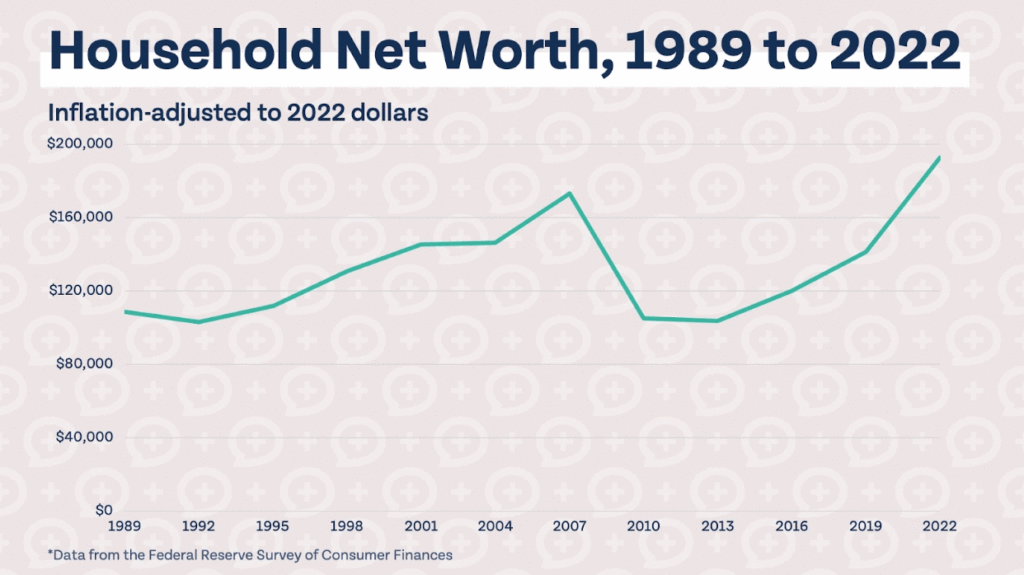
Average Net Worth By Age – How Americans Stack Up | Money Guy
(Chart: U.S. household net worth over decades, inflation-adjusted. Dips happen—recessions, bad decisions—but the trend rewards patience and boring consistency.)
How to Build and Use Your Own Net Worth Calculator
- Grab a free online tool (NerdWallet, Bankrate, or Personal Capital for auto-syncing) or make a simple Google Sheet/Excel.
- List everything honestly—appraise assets at what they’d sell for today, not what you wish.
- Update monthly (takes 15 minutes).
- Set targets: Zero debt outside mortgage by 35? $500k by 40? $1M by 50? Make it specific.
- Review quarterly: What’s growing fastest? What’s dragging? Adjust.
My rules:
- Never celebrate income jumps until net worth reflects them.
- Build that $10k “screw you” fund first—it’s an asset, not a spending pool.
- Focus on boring levers: Max retirement contributions, side hustle profits into index funds, real estate cash flow.
- Ignore the noise—net worth doesn’t care about viral posts or “opportunities.”

The Bottom Line
A net worth calculator strips away the illusions. It shows if you’re climbing the discipline ladder or sliding back into comfort.
Most stay broke even making good money because they never measure the real score. I stopped that game early. Started tracking, started winning.
What’s your number right now? Positive? Negative? Stagnant? Drop it in the comments (or keep it private and just tell me the direction it’s moving). I’ll give you Forge-style feedback—no sugarcoating, just what moves the needle.
Calculate it today. Then do it again next month. The gap between those two numbers? That’s your real progress.
Pay the discipline tax early. The scoreboard doesn’t lie.
— Jaxon Forge Founder, MoneyForge.com