
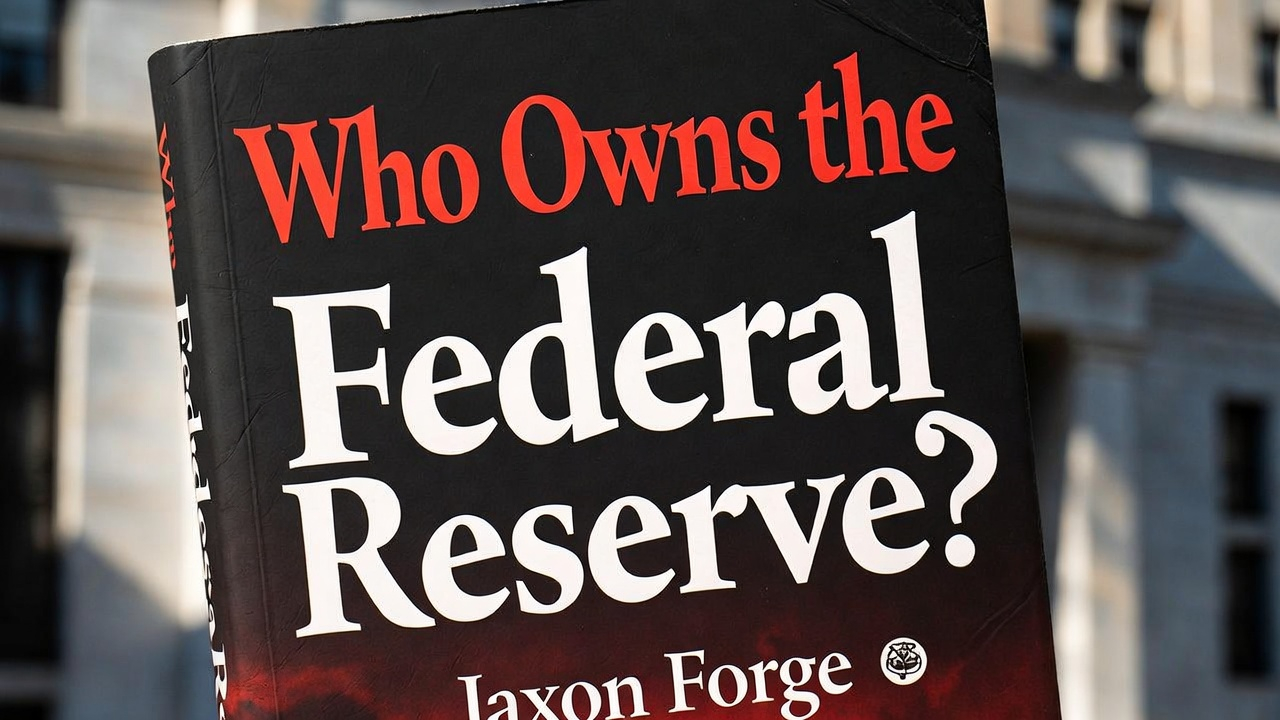
Who Really Owns the Central Bank or the Federal Reserve?
It is one of the most frequently asked, deeply debated, and highly misunderstood questions in modern economics: Who actually owns the Federal Reserve?
If you search the internet, you will find answers ranging from “the U.S. government” to “a secret cabal of private banking families.” The reality, however, is a brilliant—if somewhat complex—hybrid structure designed over a century ago to balance public interest with private sector banking expertise.
The short answer? Nobody “owns” the Federal Reserve in the traditional corporate sense. It is an independent entity within the government. But to truly understand how it works, we have to look at its three-part structure.
1. The Board of Governors: The Public Sector
At the top of the Federal Reserve System sits the Board of Governors in Washington, D.C. This board is an independent agency of the federal government. There is absolutely no private ownership here.
The seven members of the Board are nominated by the President of the United States and confirmed by the U.S. Senate. To ensure political independence, they serve staggered 14-year terms. The Board answers directly to Congress and oversees the entire Federal Reserve System.
2. The 12 Regional Reserve Banks: The “Private” Sector
This is where the confusion about “private ownership” begins. Below the Board of Governors are 12 regional Federal Reserve Banks (e.g., the Federal Reserve Bank of New York, of Dallas, of San Francisco). These regional banks are organized similarly to private corporations.
By law, private commercial banks that are members of the Federal Reserve System are required to hold stock in their regional Federal Reserve Bank. Therefore, these private banks are the “stockholders” of the regional Reserve Banks.
The Truth About Fed “Stock”
Because member banks hold stock, conspiracy theories often claim that these banks “own” the Fed and reap its massive profits. However, the law restricts this ownership strictly:
- The stock cannot be sold on an open market.
- It does not give the member banks voting rights to dictate how the Federal Reserve conducts its monetary policy.
- It pays a fixed statutory dividend (traditionally 6%, though recently capped for larger banks) rather than a share of fluctuating profits.
In essence, this “stock” is more like a mandatory membership fee required to participate in the banking system, rather than true corporate equity.
3. The FOMC: Where Public and Private Meet
The Federal Open Market Committee (FOMC) is the branch of the Fed that actually sets monetary policy (like raising or lowering interest rates). It consists of 12 members: the 7 members of the Board of Governors (public), the president of the New York Fed (quasi-private), and 4 of the remaining 11 Reserve Bank presidents on a rotating basis.
This structure was intentionally designed to ensure that the government retains the majority of control (7 votes to 5), while still allowing the private banking sector to have a voice and provide real-time economic data.
Who Gets the Fed’s Profits?
If private banks don’t get the profits, who does? The American taxpayer.
The Federal Reserve generates billions of dollars in revenue each year, primarily from the interest on the U.S. Treasury bonds and mortgage-backed securities it holds. After paying for its operating expenses and paying the fixed dividend to member banks, the Federal Reserve is required by law to remit all remaining profits directly to the U.S. Treasury.
Conclusion
The Federal Reserve is not a private corporation run for the profit of Wall Street billionaires. It is a decentralized, hybrid institution. It is structurally independent to keep monetary policy insulated from short-term political pressures, but it is ultimately accountable to Congress, and its profits are returned to the U.S. Treasury.