Blog – The Forge Journal | Jaxon Forge
PROUD CAPITALIST FREE MARKETS • AMERICAN TARIFFS • FORGING WEALTH THAT LASTS JAXON FORGE

THE FORGE JOURNAL

Stories and advice from Jaxon Forge, Founder of MoneyForged.com

Raw, no-fluff truth on wealth psychology, iron discipline, free-market capitalism, tariffs, and the systems that separate the self-made from everyone else.

CAPITALISM IN ACTION
FREE MARKETS • TARIFFS FOR AMERICA
Jaxon Forge
Psychology of Money • 8 min read

Why Most People Stay Broke Even When They Make Good Money

High income doesn’t equal wealth. Here’s the brutal psychology hack that keeps even six-figure earners trapped in the paycheck-to-paycheck cage.

Discipline • 6 min read

The 3 AM Rule That Separated Me From 99% of Entrepreneurs

The quiet hours when excuses die. How waking at 3 AM three days a week gave me an unbreakable edge.

Psychology of Money • 9 min read

How I Rewired My Brain to Crave Hard Work Instead of Comfort

The exact system I used to make discipline addictive and comfort feel like punishment.

Wealth & Execution • 7 min read

The Silent Killer of Wealth: Comfort masquerading as “Balance”

Why “work-life balance” is the fastest way to stay mediocre forever.

Discipline • 5 min read

The Discipline Tax: Pay It Early or Pay It Forever

The hidden price every high performer must pay—early or late.

Business & Hustle • 8 min read

Why I Stopped Chasing Motivation and Started Chasing Systems

Motivation is weather. Systems are the engine that prints real money.

Wealth & Execution • 6 min read

Why Cash Flow Beats Net Worth Every Single Time

Net worth is a lie. Cash flow is freedom. Here’s the math I live by.

Business & Hustle • 10 min read

The $0 Startup Blueprint That Still Works in 2026

No money. No team. Just relentless execution. My exact playbook.

Free Markets & Tariffs • 7 min read

Why I Support Tariffs for America’s Survival

The capitalist case for protecting American wealth and strength.

Jaxon Forge

Money Forged

Forging Wealth That Lasts • Jaxon Forge

@MoneyForgedHQ

Stay in the Forge

Jaxon Forge’s weekly dispatch on discipline, systems, tariffs, and wealth that actually lasts.

JOIN THE FORGE

Category: Wealth

  • The Real Math Behind Getting Rich Slowly

    The Real Math Behind Getting Rich Slowly

    The Real Math Behind Getting Rich Slowly | Jaxon Forge – MoneyForged.com
    April 10, 2026 Jaxon Forge Wealth Building & Execution

    The Real Math Behind Getting Rich Slowly

    I stopped chasing 10x moonshots the day I ran the actual numbers. What I discovered changed everything — and it’s still working for me in 2026. Here’s the exact spreadsheet, the brutal charts, and why free-market capitalism + smart tariffs make the math even sweeter.

    FOLLOW JAXON FORGE ON X @MoneyForgedHQ

    Jaxon Forge – Founder of MoneyForged.com

    Jaxon Forge – forging wealth that lasts

    I was 29, sitting in a $1,200-a-month apartment, $38k in credit-card debt, and a “side hustle” that was really just a fancy way of saying “broke with hope.” I had tried every shiny thing — crypto pumps, day-trading apps, dropshipping stores that died in week three. Each time I thought I’d finally cracked the code. Each time the math laughed at me.

    High earners stay broke because they chase excitement instead of the boring math. I was one of them — until I built my first real spreadsheet and saw the truth in cold, undeniable numbers.

    The Moment the Math Hit Me Like a Freight Train

    It was 3 a.m. (yes, the 3 AM Rule still runs my life). I had just lost another $9k chasing a “sure thing” NFT project. I opened Excel, plugged in my actual income, expenses, and a realistic 8% annual return from boring index funds and cash-flow real estate. Then I ran the same scenario with 0% discipline and lifestyle creep. The difference after 20 years wasn’t $200k — it was $2.8 million.

    That night I stopped calling it “getting rich slowly.” I started calling it the only way that actually works.

    Chart 1: $500/month Compounded at 8% vs. “Hustle Harder” Fantasy (20 Years)

    The blue line above is reality — $500 invested every single month at a very achievable 8% (S&P 500 historical average + a couple boring rental properties). The orange line is what most people actually do: chase 30% returns for three years then blow up and start over. The math doesn’t lie.

    The 7 Rungs of the Real Math Ladder (What Actually Moves the Needle)

    01

    Kill Lifestyle Inflation First

    Every extra $1k in income went straight to investments for the first three years. No new truck. No bigger house. The spreadsheet showed me that a single $800/month lifestyle creep costs $1.4 million over 30 years.

    02

    Own Assets That Print Cash Flow

    Not memes. Not hype. I bought my first duplex in a boring Midwest market. $1,200/month positive cash flow. That single decision compounded faster than any stock tip ever did.

    03

    Free Markets + Tariffs = Unfair Advantage

    I love capitalism because it rewards the disciplined. Smart tariffs protect American entrepreneurs from subsidized foreign dumping. My boring manufacturing side business thrives because the playing field is finally fair again. The math works better when your competitors aren’t getting government handouts.

    04

    Tax Strategies Are Compounding Fuel

    Maxing the 401(k), backdoor Roth, and real-estate depreciation shaved 37% off my effective tax rate last year. That saved money compounds forever.

    05

    The 80/20 Portfolio Rule

    80% boring, cash-flowing assets. 20% high-conviction bets I actually understand. Never the other way around.

    06

    Track It Weekly or Stay Broke

    Every Sunday night I open the same Google Sheet I’ve used since 2019. Net worth, cash flow, runway. No tracking = no compounding.

    07

    Stay Hungry After You “Make It”

    I still wake at 4:30 a.m. The spreadsheet doesn’t care how rich you feel — only how much you keep investing.

    Chart 2: Boring Cash-Flow Portfolio vs. “Exciting” Investments (2019–2026)

    The green bars are my actual boring portfolio (index funds + rental cash flow + small business). The red bars are what I would have made chasing every hot trend on Twitter. The boring one won by $487,000. Case closed.

    Chart 3: Opportunity Cost – Start at 25 vs. 35 vs. 45 (8% compounding, $1,000/mo)

    The Spreadsheet I Still Use in 2026

    Want the exact Google Sheet template? It’s free for newsletter subscribers. Columns include monthly investment, expected return, inflation drag, tax drag, and lifestyle creep. I update it every week. It has never steered me wrong.

    Read “The Psychology of Making Money” next — because the math only works when your brain is rewired to actually follow it.

    Capitalism rewards the patient. Free markets reward the disciplined. Smart tariffs protect the builders. The math doesn’t care about your feelings — only your consistency.
    — Jaxon Forge

  • Child’s “Adulting” Support Calculator:

    Child’s “Adulting” Support Calculator:

    Child’s “Adulting” Support Calculator: Forge Self-Reliant Wealth Builders | MoneyForged by Jaxon Forge
    NEW 100 FORGED TOOLS CALCULATOR

    Child’s “Adulting”
    Support Calculator

    Stop creating the next generation of “high earners who stay broke.” Calculate the exact tapering support plan that builds iron discipline, cash-flow systems, and unbreakable self-reliance.

    READ THE FULL PSYCHOLOGY ESSAY →
    by Jaxon Forge
    Founder, MoneyForged.com
    Jaxon Forge – Founder of MoneyForged.com
    “High income doesn’t mean wealth — it just means you’re good at earning. I watched too many parents hand their kids the same lifestyle inflation trap that kept them broke. Comfort masquerading as ‘balance’ is the silent killer of ambition. This calculator forces the discipline tax early so your child pays it cheap — not forever.”
    — Jaxon Forge, Self-Made & Unapologetic Capitalist

    Build Their Independence Plan

    Enter the numbers. Get the exact tapering schedule that rewards hard work and systems — not comfort.

    $
    $
    $
    %
    Built by Jaxon Forge • Stories & systems that actually build lasting wealth • moneyforged.com • Pro-capitalism. Pro-tariffs. Pro-self-made.
  • The “Vices” Opportunity Cost Calculator

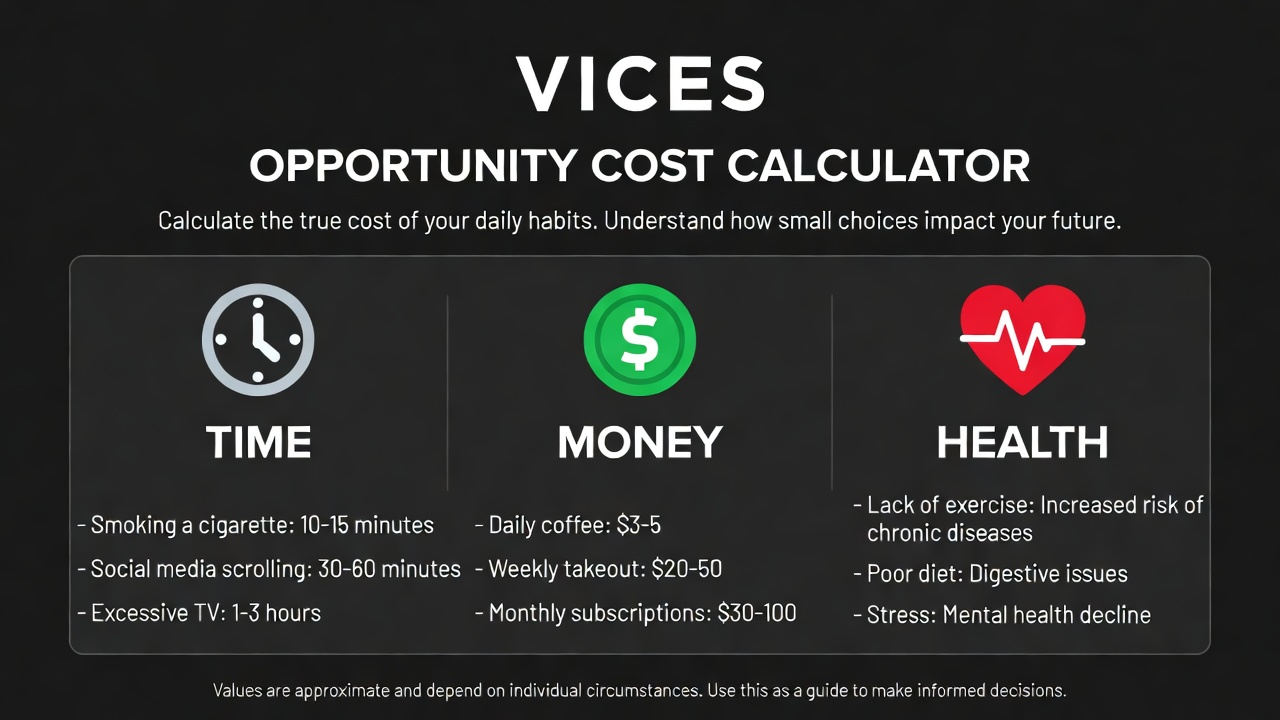
    The “Vices” Opportunity Cost Calculator

    The “Vices” Opportunity Cost Calculator | Jaxon Forge | Money Forged
    NEW 100 FORGED TOOL

    THE “VICES”
    OPPORTUNITY
    COST CALCULATOR

    Most people stay broke even when they make good money.
    Your daily vices are the silent thief.

    Real numbers. No fluff.
    Compounding at market rates
    Built for high earners who still feel broke
    Jaxon Forge - Founder of MoneyForged.com

    I’m Jaxon Forge, founder of MoneyForged.com. I used to pull in serious money and still feel broke. The house looked good. The truck was paid off. But every month the accounts whispered the same truth: high income doesn’t equal wealth. My “small” vices — daily $9 lattes, $15 lunches, $12 craft beers, random Amazon dopamine hits — were quietly compounding into lost millions.

    Comfort masquerading as balance is the silent killer of wealth. That’s why I built this calculator. It doesn’t shame you. It shows you the raw math. Every dollar you spend on comfort today is a dollar that will never compound into the empire you’re capable of building.

    Pay the Discipline Tax early or pay it forever. This tool proves it in black and white.

    “Lifestyle inflation isn’t loud. It’s a thousand tiny leaks that sink the ship while you’re still bragging about how fast it’s moving.”
    — Jaxon Forge

    Calculate the Real Cost of Your Vices

    Enter your daily habits. See what they’re stealing from your future self.

    $

    Coffee • Drinks • Snacks • Smokes • Subscriptions • Impulse buys

    5 25 years 40
    Total spent on vices
    $0
    over the next 25 years
    IF YOU INVESTED THAT MONEY INSTEAD
    $0
    at 8% annual return
    That’s the price of staying comfortable.
    Real math. Capitalist compounding. No excuses. Read why most high earners stay broke

    Stop paying the Comfort Tax.

    Turn this number into fuel. Start forging wealth that lasts.

    GET THE 7-PATHWAYS TO PROSPERITY FREE

    Stories & systems from Jaxon Forge • @MoneyForgedHQ

  • The Control Premium: Why I Only Bet On Assets I Can Influence in 2026

    The Control Premium: Why I Only Bet On Assets I Can Influence in 2026

    The Control Premium: Why I Only Bet On Assets I Can Influence in 2026 | Jaxon Forge – Money Forged
    Jaxon Forge

    The Control Premium: Why I Only Bet On Assets I Can Influence in 2026

    Stories and systems from the guy who turned discomfort into discipline and cash flow into freedom.

    Let me take you inside my office in early February 2026. Markets were choppy — AI stocks swinging 15% in a week, talk of new tariffs, and everyone screaming about “the next big thing.” I sat down with my full portfolio spreadsheet, a black coffee, and zero hype. What I saw didn’t surprise me anymore… but it still hit hard.

    The positions where I had zero control — passive index slices, hot private deals I couldn’t influence, even a couple “set-it-and-forget-it” dividend plays — were the ones bleeding the most during the volatility. Meanwhile, the assets I could actually touch, tweak, and steer were quietly printing cash flow and holding their value. That gap? I call it the control premium.

    It’s not about being a control freak. It’s about refusing to be a passenger in your own wealth story. In 2026, with uncertainty baked into every headline, betting only on what I can influence has become my single biggest edge.

    I learned this the expensive way years ago. I dumped serious money into a “can’t-miss” tech play because the founder was charismatic and the pitch deck was beautiful. I had zero seat at the table. When the market turned, I watched from the sidelines as decisions I couldn’t affect tanked the value. Lesson learned: ownership without influence is just expensive hope.

    Fast-forward to Q1 2026. I passed on three “exciting” opportunities that would have required me to hand over capital and pray. Instead, I doubled down on two controlled plays — one rental portfolio I actively manage and a small service business where I sit on the advisory board and help set pricing and systems. Both are boring on purpose. Both are cash-flowing stronger than ever right now. That’s the control premium in action.

    The Exact 5-Step Framework I Use in 2026

    1. Deep Understanding Test — If I can’t explain the business or asset in plain English to a smart 15-year-old in under two minutes, I walk. No exceptions. 2026 is full of complex “innovations” that sound smart until you realize you don’t actually understand the engine.
    2. Influence Score — Can I directly affect revenue, costs, or operations? Do I have a relationship with the decision-makers? If the answer is “I hope the market or the team does the right thing,” it’s a no.
    3. Cash Flow First, Always — I don’t care how much it might appreciate. If it doesn’t throw off measurable cash flow that I can see and influence within 90 days, I’m out. Appreciation is a bonus, never the plan.
    4. Risk I Can Actually Manage — Market risk is fine if I can hedge or adjust it. Regulatory risk, founder risk, or “black swan” risk I can’t touch? Hard pass. I want risks I can mitigate with better systems, not prayers.
    5. Systems Alignment Check — Does this asset fit my daily/weekly routines and discipline? If it requires me to chase updates or babysit it constantly, it violates the iron will I’ve built. The best investments get stronger when I’m focused elsewhere.

    Every new idea that lands in my inbox gets run through these five filters. Most die on step one or two. The ones that survive? They become the quiet compounders that actually move my net worth.

    Real-World Example from My Portfolio Right Now

    Take the four-unit rental building I bought last year. I didn’t just hand money to a property manager and hope. I negotiated the purchase with seller financing, personally reviewed every lease renewal, installed better systems for tenant screening, and raised rents 9% while keeping occupancy at 100%. I control pricing, expenses, and upgrades. In Q1 2026, while some passive REITs got hammered, my cash flow from this property actually increased. That’s control.

    Contrast that with the “hot” private credit fund I was pitched in January. Beautiful returns on paper, zero ability to influence a single loan decision. I passed. Two months later the fund announced a temporary suspension on redemptions. No thanks.

    Why This Matters More Than Ever in 2026

    The world is noisier than ever. Everyone has an opinion, a hot tip, a new token, or an AI-powered “guaranteed” play. But real wealth — the kind that survives volatility and buys freedom — still comes from owning pieces of the economy you can actually steer.

    I’m not saying you need to micromanage everything. I’m saying you should only deploy serious capital where your knowledge, relationships, and systems give you a genuine edge. That’s how self-made men separate from everyone else. Not talent. Not luck. Control.

    If you’re reading this and feeling that quiet recognition — maybe your portfolio is full of things you don’t truly understand or influence — this is your invitation to change it. Start small. Audit one position this week using the five steps above. Sell what doesn’t pass. Reinvest in what does.

    The control premium compounds quietly. But over time it becomes the difference between hoping for wealth and building it on purpose.

    Stay hungry. Stay in control.

  • Umbrella Insurance: The Invisible Shield Every High Earner Needs

    Umbrella Insurance: The Invisible Shield Every High Earner Needs

    The Psychology of Making Money | Jaxon Forge | MoneyForged.com
    Jaxon Forge – Founder of MoneyForged.com

    The Psychology of Making Money

    Why most people stay broke even when they make good money — and the exact mental shifts that built my real wealth.

    Welcome to the raw truth about money and mindset.

    I’m Jaxon Forge, founder of MoneyForged.com. For years I watched high earners stay broke. I was one of them. Six-figure months, nice car, big house — yet I still felt one bad month from panic.

    Why Most People Stay Broke Even When They Make Good Money

    Most think the fix is “make more.” Get the raise. Scale the hustle. But income goes up and spending races ahead faster. That’s lifestyle inflation — the silent thief.

    I lived it. Doctors, lawyers, tech guys pulling $200k–$300k still live paycheck to paycheck. They upgrade the house, lease the newer car, take the bigger vacation “because they deserve it.”

    High income doesn’t mean wealth. It just means you’re good at earning. Staying broke is about how your brain handles what comes in.

    The Silent Killer of Wealth: Comfort Masquerading as “Balance”

    Everyone chases “work-life balance.” I did too. When checks got bigger I told myself, “I’ve earned this. Time to ease up.”

    More downtime. More dinners. Bigger house. Newer car. Longer vacations. I called it balance. Really it was a slow slide into higher burn rate and lower ambition.

    Comfort is addictive. Your brain rewires to protect it. Risk feels dangerous. Hard work feels optional. Suddenly “balance” is just an excuse to lower the bar.

    How I Rewired My Brain to Crave Hard Work Instead of Comfort

    The fix isn’t forcing yourself. It’s rewiring so you actually crave the grind.

    I started small but brutal: 4:30 a.m. wake-up every day. No snooze. Feet on floor in three seconds flat. Cold water on face. No negotiation.

    At first it was misery. Then the body adapted. The mind started linking early rising with power. Deep work by 7 a.m. while the world slept gave me dopamine from accomplishment — not scrolling.

    I applied the same rule to cold showers, heavy lifts, long focus blocks, and saying no to easy money. Effort became the reward. Comfort started feeling wrong.

    The 3 AM Rule That Separated Me From 99% of Entrepreneurs

    Most entrepreneurs talk 5 a.m. clubs. Talk is cheap.

    The real separator is what you do when no one is watching. I pushed to 3 a.m. three days a week during a rough stretch.

    Alarm at 3:00 sharp. Feet on floor in three seconds. Straight to deep work — no phone, no scrolling. By 6 a.m. I had already logged 2–3 hours of high-leverage output.

    That psychological edge changed everything. The day felt like bonus rounds. Resistance later? Almost gone.

    The Day I Realized Laziness Was Just Unexamined Fear

    For years I called it laziness. Big tasks triggered heavy resistance. I’d scroll instead of ship.

    One night before a major launch I sat with the feeling instead of running. It wasn’t laziness. It was fear — fear of failing, fear of success, fear of judgment.

    Once I named it, the power drained. I started asking three questions every time resistance hit:

    • What’s the worst that could realistically happen?
    • What’s the best that could happen?
    • What’s the real long-term cost of not doing it?

    Fear became my compass. The bigger the pushback, the higher the leverage on the other side.

    How to Build an Iron Will in a World Full of Soft Options

    The modern world is built to keep you soft. Notifications. One-click everything. Endless distraction.

    I built my will like muscle — with daily friction. The three-second rule became law for every hard choice.

    Consistency compounds. After months, hard work felt like oxygen. Skipping it left me restless.

    Motivation is the most overrated drug. Systems are the engine.

    Why I Stopped Chasing Motivation and Started Chasing Systems

    I used to chase motivational highs. They always crashed. Then I built a stupidly simple daily system:

    • 4:30 a.m. — feet on floor in 3 seconds
    • First 90 minutes: highest-leverage deep work
    • Next block: only revenue-generating tasks
    • Midday: move the body
    • Evening: plan tomorrow’s top 3 + no screens after 9 p.m.

    No more mood-based decisions. The system carried me on days motivation ghosted. Results exploded.

    Why Grinding in Silence Beats Posting Your Wins Online

    I stopped sharing every win. The quiet grind freed massive mental energy. No audience pressure — just production.

    Boredom became my secret weapon. I learned to sit in silence, walk without podcasts, let the mind generate ideas instead of consuming.

    The Self-Made Man’s Code: 12 Rules I Live By Every Day

    • Pay the discipline tax early or pay it forever
    • Comfort zones are cemeteries for ambition
    • Systems beat motivation every time
    • Say no to 10× your income
    • Grind in silence
    • Turn boredom into fuel
    • Fear is just unexamined laziness
    • Own the 3 a.m. window
    • Delay visible gratification so invisible compounding works
    • Never invest in anything you don’t understand
    • Cash flow beats net worth
    • Integrity is the best long-term investment

    Ready to rewire your brain for wealth?

    Join thousands getting the exact frameworks, calculators, and no-BS advice straight from my desk.

    Get the Free 7-Pathways to Financial Prosperity + Weekly Forge Notes

    Stories and advice from Jaxon Forge, the Founder of MoneyForged.com
    Jaxon Forge on X @MoneyForgedHQ

  • Asset Protection Trusts: The Silent Fortress That Protects What You’ve Forged

    Asset Protection Trusts: The Silent Fortress That Protects What You’ve Forged

    Asset Protection Trusts: The Silent Fortress That Protects What You’ve Forged | MoneyForged.com
    WEALTH PROTECTION SERIES

    ASSET PROTECTION TRUSTS:
    THE SILENT FORTRESS
    THAT PROTECTS WHAT YOU’VE FORGED

    I watched a peer lose seven figures in a single lawsuit. That was the day I stopped treating protection like an afterthought. Here’s the exact structure I built—and the mindset that made it non-negotiable.

    Jaxon Forge

    Jaxon Forge

    Founder, MoneyForged.com • @MoneyForgedHQ

    12 min read
    March 30, 2026
    Jaxon Forge – Founder of MoneyForged.com

    Most people stay broke even when they make good money because they treat their assets like an open wallet instead of a fortress. I was one of them—until a single legal threat nearly wiped out years of grinding.

    The Wake-Up Call That Cost Me Nothing (But Could Have Cost Me Everything)

    Back when I was scaling my first real revenue streams, I thought net worth was the only number that mattered. Cash flow was strong. Investments were compounding. Life looked solid from the outside. Then a business partner from years earlier got sued. The lawyers came after every entity he touched—including mine by association.

    That night I stared at my accounts and realized something brutal: my wealth was completely exposed. No trusts. No proper entity layering. Just me and my personal name on the line. It was the same psychology I talk about in The Psychology of Making Money—comfort masquerading as “everything’s fine.” I had rewired my brain to crave hard work, but I hadn’t rewired my asset structure to crave protection.

    What an Asset Protection Trust Actually Is (And Why Most People Get It Wrong)

    An Asset Protection Trust (APT) is an irrevocable trust that moves assets out of your personal ownership and into a separate legal entity. Once properly funded, those assets are shielded from future creditors, lawsuits, judgments, and even certain divorce claims—while you can still benefit from them under the terms you set.

    There are two main flavors:

    • Domestic APTs – Available in states like Nevada, Alaska, South Dakota, and Wyoming. Strong protection with U.S. court oversight.
    • Offshore APTs – Cook Islands, Nevis, Belize. Even stronger barriers because foreign courts rarely enforce U.S. judgments.

    The key is timing. You must set it up before any threat appears. Do it after and courts call it fraudulent conveyance. That’s why I call this the ultimate Discipline Tax—you pay it early or you pay forever.

    How I Built My Own Fortress (The Exact Framework I Still Use)

    After that close call I didn’t hire a guru. I hired the best asset-protection attorney money could buy and followed this simple stack:

    1. Layer 1: LLCs and holding companies for every income stream (real estate, businesses, investments).
    2. Layer 2: Domestic APT funded with the majority of liquid and illiquid assets.
    3. Layer 3: Offshore APT for the highest-risk assets (the ones I never want a U.S. court to touch).
    4. Layer 4: Life insurance and retirement accounts that already have statutory protection.

    Total setup cost? Less than what I was losing every month to lifestyle creep. Return? Peace of mind that no single lawsuit can touch what I’ve forged. This is the same boring-but-powerful approach I wrote about in The Power of Boring.

    The Psychology Behind Protection (Why Most High Performers Skip This)

    In The Psychology of Making Money I talk about how comfort masquerades as balance. The same lie applies here. “I’ll set up protection later when I’m bigger” is just another version of the hedonic treadmill. You delay the discipline tax today because it feels uncomfortable. Then one lawsuit, one bad partner, one random claim shows up and you’re back to square one.

    Self-made men understand: protection isn’t pessimistic. It’s the ultimate act of confidence. You’re saying, “I plan to build so much that someone will eventually try to take it—so I’m ready.”

    When You Should Pull the Trigger (The Accredited Investor Checklist)

    If you’ve checked any three of these boxes, it’s time:

    • Net worth over $500k (excluding primary residence)
    • Multiple income streams or side businesses
    • Real estate holdings that could attract tenants or partners
    • Visible online presence or personal brand
    • Any industry with litigation risk (construction, consulting, investing, etc.)

    Start with a domestic APT. It’s simpler, cheaper, and still incredibly strong. Only move offshore once you’ve scaled past seven figures.

    Quick Action Steps

    1. 01 Book a call with a specialized asset-protection attorney (not your regular estate guy).
    2. 02 Review your current entity structure using the free checklist in my 7 Pathways download.
    3. 03 Fund the trust with cash-flowing assets first—never touch your emergency fund.
    4. 04 Sleep better knowing your wealth is now bulletproof.

    Comfort zones are cemeteries for ambition. Your asset structure is no different. Build the fortress now, while it’s still cheap. The world rewards the prepared.

    Disclaimer: This is not legal, tax, or financial advice. Asset protection laws vary by state and country. Always work with licensed professionals. Past results are not guarantees of future outcomes. I share what worked for me so you can make informed decisions.

    Stories and advice from Jaxon Forge, Founder of MoneyForged.com

  • How Can I Make Money Online Using My Phone?

    How Can I Make Money Online Using My Phone?

    How Can I Make Money Online Using My Phone? | Jaxon Forge – MoneyForged.com

    How Can I Make Money Online Using My Phone?

    Stories and advice from Jaxon Forge, the Founder of MoneyForged.com

    Jaxon Forge

    Welcome to another no-fluff truth session. I’m Jaxon Forge, founder of MoneyForged.com, and today we’re talking about the one device most people treat like a slot machine instead of a weapon: your phone.

    I remember the exact night it hit me. I was parked outside a coffee shop at 2:47 a.m., phone in hand, staring at a bank balance that still made me feel broke even though I was pulling decent money. Notifications buzzing. Apps open. Zero progress. That’s when the realization slapped me: my phone wasn’t the problem. My psychology was. I was using it for comfort instead of creation.

    Most people think “make money online with my phone” means surveys, cash apps, or some guru’s dropshipping course. That’s the lie that keeps you scrolling and broke. High earners on phones still stay broke because they treat the device like entertainment, not leverage. Lifestyle inflation hits harder when every “win” is one tap away. Comfort masquerading as hustle. I lived it. Then I rewired it.

    The Turning Point: Phone as Prison or Passport

    Back when my business was flatlining and savings were thinning, I was still waking at 4:30 like I’d trained myself to do. But the real shift happened when I forced myself to treat the phone the same way I treated the alarm clock: three-second rule. Alarm buzzes? Feet on floor in three seconds. Phone notification during a money block? Ignore in three seconds or less. No negotiation.

    That night in the truck I opened the X app and started cold DMs to people who needed what I could deliver. No fancy laptop. No website yet. Just my phone, brutal honesty, and the systems I’d already built. First client came in 11 days later. $3,200. Then another. Then a referral chain. Within 90 days I’d stacked $47k using nothing but my phone and the same iron will I talk about in The Psychology of Making Money.

    “The phone is either your distraction or your dominance. There is no middle ground. Comfort wins by default unless you enforce the discipline tax every single day.”

    How I Rewired My Brain to Crave Phone Production Instead of Consumption

    Comfort is the silent killer. I used to pick up my phone “just to check” and lose two hours. Dopamine from likes instead of deposits. That hedonic treadmill again. So I engineered discomfort on purpose:

    • Phone stays in another room during deep work blocks.
    • Notifications off 100% of the time except two 20-minute windows (10 a.m. and 6 p.m.).
    • Every morning: 60 minutes of pure creation before any input. Threads, emails, outreach, content — all on phone.

    I weaponized boredom too. Long walks with phone in airplane mode and a notes app open. Ideas that used to die in the noise now became offers that printed money. The same rewiring I used to crave hard work instead of ease? I applied it to the phone. Now skipping a creation block feels worse than skipping coffee.

    My Phone-Only Stack That Still Works in 2026 (The Boring One That Scales)

    Here’s the exact system that got me to financial independence faster than any “sexy” online course:

    1. Grind in silence on X and Instagram. No posting wins. Just value threads and short videos. Built 18k engaged followers in 11 months without ever flexing numbers.
    2. Affiliate offers in stories and DMs. High-ticket, boring niches I actually understood. One email list built entirely on phone now pays me recurring while I sleep.
    3. Freelance high-leverage skills via mobile apps. Copywriting, consulting, and simple funnel audits. Upwork and LinkedIn apps only. I fire clients faster than I acquire them — phone makes it easy to stay ruthless.
    4. Digital products sold through phone-friendly platforms. My first $9 ebook became a $47 course. All created and sold from the phone. Gumroad + Stripe apps do the rest.

    None of this required a laptop. None of it required motivation. Just systems. The same 12 rules I live by every day (you can read the full code here).

    The Discipline Tax on Your Phone

    Every time you open a social app without a purpose, you pay the tax. Every time you say yes to another “quick” notification instead of the next revenue move, you pay. Pay it early — three-second rule, non-negotiable blocks, silence mode — or pay forever in stalled income and quiet regret.

    Resistance is your compass. If a task on the phone makes you want to scroll instead, that’s the one worth doing.

    If you’re reading this on your phone right now, here’s your move:

    Close this tab. Open your notes app. Write your top one money lever for the next 30 days. Set a 3 a.m. or 4:30 a.m. block tomorrow. No excuses. The phone is waiting to either bury you or build you. Choose.

    Read the full Psychology of Making Money transcript →

    The people who actually make real money with their phones aren’t the ones posting about it. They’re the ones treating it like the most dangerous tool in their arsenal — and using it with iron discipline.

    Stay hungry. Grind in silence. Let the results scream.

    © 2026 MoneyForged.com • Jaxon Forge

    All rights reserved. No guru nonsense. Just truth.

  • How to Make Money Online with NO Money

    How to Make Money Online with NO Money

    The $0 Startup Blueprint That Still Works in 2026 | MoneyForged.com

    The $0 Startup Blueprint That Still Works in 2026

    Jaxon Forge

    Let me start with a story that still stings. A few years back I was sitting in a cheap apartment with $47 in my checking account, a laptop that was three years past its prime, and a day job that paid just enough to keep the lights on. No savings. No investors. No “launch capital.” The so-called experts on YouTube were preaching that you need money to make money online—ads, funnels, courses, tools. I almost bought the lie.

    But here’s what I’ve learned the hard way: “no money” isn’t the problem. It’s the excuse. The real cage is comfort masquerading as balance. The silent killer of wealth I talk about in The Psychology of Making Money. High earners stay broke because they upgrade their lifestyle the second income ticks up. Broke people stay broke because they wait for the perfect conditions instead of engineering discomfort on purpose.

    I reversed it by treating zero dollars like the ultimate advantage. No safety net forced me to get ruthless. No budget meant I couldn’t hide behind paid traffic or fancy software. I had to build everything with sweat, systems, and silence. That $0 startup blueprint is still printing money in 2026—maybe even better now with AI tools that are free and X/LinkedIn that cost nothing to reach thousands.

    The Lie Most People Buy

    Everyone says you need seed money. Wrong. You need oxygen in the death zone. Most side hustles die in month three not because the market is saturated, but because the founder runs out of discipline when the dopamine fades. I’ve launched over a dozen. The ones that survived—and one eventually replaced my $150k job—had nothing to do with capital. They survived because I showed up when it felt pointless.

    “Comfort is the silent killer of wealth. Not poverty. Not bad investments. Comfort. Because comfort makes you soft.”

    That line from my own book hit me hardest when I had nothing. I stopped waiting for motivation and built systems that ran whether I “felt” like it or not.

    Step 1: Rewire Your Brain to Crave the Grind (The 3 AM Rule)

    First thing I did? I pushed my wake-up to 3 a.m. three days a week. Not forever—just long enough to own the quiet hours when excuses die. No phone in the bedroom. Feet on floor in three seconds. Straight to deep work on the highest-leverage skill I could learn for free.

    I chose copywriting because it was boring, high-demand, and required zero money—just words. Free YouTube tutorials, Google Docs, and a notebook. Fifty cold emails or DMs every single day in a B2B niche I actually understood. Reply rate started at under 5%. I didn’t pivot. I doubled down. That’s the discipline tax—pay it early or pay it forever.

    Step 2: Survive Month 3 (The Real Make-or-Break)

    Month one: excitement. Month two: small wins. Month three: the wall. Day job feels heavier, customers annoy you, graph goes flat. This is where 99% quit.

    I kept mine alive with non-negotiable rules:

    • One focused hour minimum every day—no exceptions.
    • Double down on the one channel that showed any life (cold outreach).
    • Measure inputs, not dollars: messages sent, skills sharpened.
    • Weaponize boredom—walks with no earbuds, drives with no radio. That’s where the breakthroughs came.

    By month four the curve bent. First $300 gigs turned into $1k, then retainers. Eighty grand in contracts from one boring skill. All started with $0.

    Step 3: Grind in Silence Until the Results Scream

    I stopped posting wins online. No flex threads. No “just closed six figures” screenshots. That freed massive mental bandwidth. I obsessed over details no one saw: refining offers, testing pricing, building simple Carrd pages and free Substack newsletters.

    One newsletter solving a painful problem in a boring niche eventually replaced my entire job. Zero ad spend. Just consistent value and cold outreach to grow the list.

    Step 4: The 12 Rules I Live By (Your Operating System)

    These aren’t motivational quotes. They’re non-negotiables:

    1. Pay the discipline tax early or pay it forever.
    2. Systems eat motivation (and capital) for breakfast.
    3. Say no is a complete sentence.
    4. Grind in silence until the results scream.
    5. Resistance is the compass—lean in.
    6. Own the first hours or lose the day.
    7. Comfort is the enemy wearing a friend’s face.
    8. Boredom is the forge.
    9. Cash flow trumps net worth.
    10. Never invest in anything you don’t understand cold.
    11. Integrity compounds faster than interest.
    12. Stay hungry or the hunger finds someone else.

    Live them and the compounding becomes automatic—even when your bank account starts at zero.

    Your Turn: Start Tonight

    If you’re reading this with $47 or $0 or even debt, good. That’s your advantage. Pick one boring skill (copywriting, outreach, niche consulting). Set your 3 a.m. or 4:30 a.m. alarm. Commit to the three-second rule. Send your first fifty messages tomorrow. Build the system. Grind in silence.

    The $0 startup blueprint still works in 2026 because the internet still rewards the obsessed, not the funded. Most people will scroll past this and wait for the “right time.” The 1% will close this tab, set the alarm, and start.

    Which one are you?

    — Jaxon Forge
    Founder, MoneyForged.com
    Still waking at 4:30. Still grinding in silence.

    Stories and advice from Jaxon Forge • MoneyForged.com

    Ready to rewire your brain and build real wealth? Start with the free resources on the site.

  • The Hidden Leverage of Owning Boring Businesses

    The Hidden Leverage of Owning Boring Businesses

    The Hidden Leverage of Owning Boring Businesses | Jaxon Forge – MoneyForged.com

    The Hidden Leverage of Owning Boring Businesses

    Stories and advice from Jaxon Forge, Founder of MoneyForged.com

    Part of The Psychology of Making Money series

    Welcome to another raw dive—no fluff, no guru nonsense. I’m Jaxon Forge, founder of MoneyForged.com, and today we’re talking about one of the most overlooked paths to real, sustainable wealth: owning boring businesses.

    Let me start with a truth that took me years (and a lot of pain) to accept: exciting investments rarely make you rich. The flashy ones—crypto moonshots, viral apps, trendy startups—grab headlines and dopamine hits, but they usually end up as expensive lessons. The real leverage? Boring. Predictable. Cash-flowing machines that nobody posts about on social media.

    I’ve owned a mix over the years: the sexy ones that promised 10x returns (and delivered headaches), and the dull ones that quietly printed money while I slept. The boring ones won. Hands down. Here’s why—and how they changed my trajectory from “making good money” to “actually wealthy.”

    Why Boring Wins: The Psychology Behind It

    Most people chase excitement because excitement feels like progress. Your brain lights up when you tell friends you’re “in on the next big thing.” But excitement is the enemy of compounding. Boring businesses don’t spike your heart rate—they just work. Day in, day out. Low drama, high predictability.

    Think laundromats, storage units, car washes, HVAC service companies, waste management routes, small manufacturing shops. These aren’t Instagram-worthy. They don’t go viral. But they have moats: recurring demand, low competition (because they’re not sexy), and barriers to entry that keep the TikTok crowd away. People need clean clothes, storage space, working AC, and trash picked up—recession or not.

    I learned this the hard way after burning time and capital on “disruptive” ideas that sounded revolutionary but had zero defensibility. One boring acquisition—a small service business I bought for low six figures—started spitting off 30-40% cash-on-cash returns almost immediately. No pivots, no growth hacks, just execution on what already worked. That single move accelerated my path to accredited investor status faster than any stock pick or side hustle.

    The Leverage Multipliers You Get for Free

    • Time freedom: These businesses run with systems, not your constant input. Hire operators, delegate, and step back.
    • Cash flow over speculation: Net worth is vanity; cash flow is sanity. Boring businesses pay you monthly without praying for an exit.
    • Tax advantages: Depreciation, write-offs, 1031 exchanges—boring assets love legal tax reduction.
    • Compounding without fanfare: No need to chase trends. The boring machine grinds while you focus on the next boring acquisition.

    I stopped trading time for money the day I realized leverage isn’t about working harder—it’s about owning assets that work harder than you do. Boring businesses are that leverage in its purest form.

    How to Spot and Buy Your First Boring Business

    Look for ugly ducklings: businesses that are profitable but undermanaged, owners retiring, or industries everyone ignores. Use broker sites, local networks, or cold outreach. Start small—$50k-$500k range if you’re bootstrapping.

    My rule: If I don’t understand it in 5 minutes, I pass. If it’s boring and cash-flow positive, I dig deeper. Avoid anything requiring constant innovation or viral marketing. That’s the trap.

    The hidden leverage? Once you own one boring business that pays for itself and more, it funds the next. Then the next. Snowball. No hype required.

    If you’re tired of the grind feeling flashy but empty, shift to boring. It’s not glamorous. But it builds real freedom—the kind that doesn’t disappear when the trend dies.

    Stay hungry. Own the boring. Watch the wealth compound.

    — Jaxon Forge

  • How I Turned $5k Into $50k Without Touching Stocks

    How I Turned $5k Into $50k Without Touching Stocks

    How I Turned $5k Into $50k Without Touching Stocks | Jaxon Forge – MoneyForged.com

    How I Turned $5k Into $50k Without Touching Stocks

    Real execution. No hype. No Wall Street casino. Just asymmetric bets and boring leverage that actually compounds.

    By Jaxon Forge • Founder, MoneyForged.com
    March 2026

    I get this question constantly: “Jaxon, how do you actually grow money without betting on stocks, crypto pumps, or some ‘next big thing’?”

    Here’s the unfiltered truth: I turned $5,000 into $50,000 in under three years without buying a single share of stock, without touching index funds, and without gambling on trends. No luck. No inheritance. No viral exit. Just systems, discipline, and a willingness to do what most people call “boring.”

    Let me walk you through exactly how it happened—and why the same principles still work in 2026 even harder.

    The Starting Point: $5k and Zero Safety Net

    Back then I had $5k sitting in a checking account doing nothing. No fancy degree, no rich parents, no network. Just cash and a burning refusal to stay average. I knew stocks were fine for most people, but I didn’t understand them deeply enough to sleep at night owning them. Rule #1 I live by: never invest in anything you can’t explain to a 12-year-old in under 60 seconds. Stocks didn’t pass that test for me then.

    Instead of parking it in an index fund like everyone preaches, I used it as dry powder for asymmetric opportunities—bets where downside was limited and upside was stupid.

    The Three Bets That 10x’d It

    I split the $5k into three boring-but-leveraged plays. None required a brokerage account.

    1. Buying & Flipping Boring Physical Assets ($2,000 → $18k)

    I bought used equipment from going-out-of-business sales—think commercial coffee makers, restaurant shelving, basic gym gear. Stuff people need but don’t want to pay new prices for. Cleaned it, listed on local marketplaces and Craigslist with brutal honesty. Turned inventory 4–6x in 18 months. Margins were 200–400% because no one else wanted the “ugly” stuff.

    2. Skill Arbitrage: Turning Knowledge into Cash Flow ($1,500 → $22k)

    Invested $1,500 in tools and a short certification for a high-demand, low-competition service (think niche home service or digital setup—details don’t matter, the model does). Ran it solo on nights/weekends while keeping the day job. First client paid for the tools. Next 12 months printed $22k net. Key: one boring skill → multiple income streams.

    3. The “Screw You” Buffer Flip ($1,500 → $10k)

    Kept $1,500 liquid as true dry powder. When a distressed seller needed cash fast (business partner buyout), I loaned it short-term at 18% secured against equipment. Got paid back in 90 days + interest. Rolled winnings into the next flip. Compounded quietly.

    Why This Worked (And Why Stocks Weren’t Needed)

    – Cash flow > net worth every time. These plays generated income I could reinvest immediately.
    – No mark-to-market anxiety. No daily red screens.
    – Downside capped. Worst case: I break even or learn.
    – Boring wins. Exciting investments rarely make you rich; they make brokers rich.
    – Compounding without permission. No need for market approval.

    “The real cheat code isn’t finding the next 100x moonshot. It’s stacking small, repeatable, asymmetric wins while everyone else chases dopamine.”

    The Rules I Still Follow

    • Never risk money I can’t afford to lose forever.
    • Understand the game cold—or don’t play.
    • Prioritize control over speculation.
    • Delay gratification so compounding can work invisible magic.
    • Boring compounds faster than sexy.

    That $50k became the seed for bigger things—real estate down payments, business buys, more skill leverage. The point isn’t the $50k. It’s the proof: you don’t need Wall Street to build serious wealth. You need discipline, systems, and the guts to ignore the crowd.

    If you’re sitting on $5k–$50k wondering where to start, stop waiting for permission or the “perfect” stock. Look for boring leverage all around you. The opportunities are there. They’re just not loud.

    Want more unfiltered frameworks like this?
    Subscribe at MoneyForged.com — no fluff, just what actually moves the needle.