
Blog – The Forge Journal | Jaxon Forge
PROUD CAPITALIST FREE MARKETS • AMERICAN TARIFFS • FORGING WEALTH THAT LASTS JAXON FORGE

THE FORGE JOURNAL

Stories and advice from Jaxon Forge, Founder of MoneyForged.com

Raw, no-fluff truth on wealth psychology, iron discipline, free-market capitalism, tariffs, and the systems that separate the self-made from everyone else.

CAPITALISM IN ACTION
FREE MARKETS • TARIFFS FOR AMERICA
Jaxon Forge
Psychology of Money • 8 min read

Why Most People Stay Broke Even When They Make Good Money

High income doesn’t equal wealth. Here’s the brutal psychology hack that keeps even six-figure earners trapped in the paycheck-to-paycheck cage.

Discipline • 6 min read

The 3 AM Rule That Separated Me From 99% of Entrepreneurs

The quiet hours when excuses die. How waking at 3 AM three days a week gave me an unbreakable edge.

Psychology of Money • 9 min read

How I Rewired My Brain to Crave Hard Work Instead of Comfort

The exact system I used to make discipline addictive and comfort feel like punishment.

Wealth & Execution • 7 min read

The Silent Killer of Wealth: Comfort masquerading as “Balance”

Why “work-life balance” is the fastest way to stay mediocre forever.

Discipline • 5 min read

The Discipline Tax: Pay It Early or Pay It Forever

The hidden price every high performer must pay—early or late.

Business & Hustle • 8 min read

Why I Stopped Chasing Motivation and Started Chasing Systems

Motivation is weather. Systems are the engine that prints real money.

Wealth & Execution • 6 min read

Why Cash Flow Beats Net Worth Every Single Time

Net worth is a lie. Cash flow is freedom. Here’s the math I live by.

Business & Hustle • 10 min read

The $0 Startup Blueprint That Still Works in 2026

No money. No team. Just relentless execution. My exact playbook.

Free Markets & Tariffs • 7 min read

Why I Support Tariffs for America’s Survival

The capitalist case for protecting American wealth and strength.

Jaxon Forge

Money Forged

Forging Wealth That Lasts • Jaxon Forge

@MoneyForgedHQ

Stay in the Forge

Jaxon Forge’s weekly dispatch on discipline, systems, tariffs, and wealth that actually lasts.

JOIN THE FORGE

Category: Wealth

  • The Tax Strategies That Saved Me Six Figures Legally

    The Tax Strategies That Saved Me Six Figures Legally

    The Tax Strategies That Saved Me Six Figures Legally | MoneyForged.com

    The Tax Strategies That Saved Me Six Figures Legally

    I’m Jaxon Forge, founder of MoneyForged.com, and if you’ve been following the grind on the site or digging into “The Psychology of Making Money,” you know I don’t peddle shortcuts or shady loopholes. What I share is battle-tested, 100% legal moves that actually moved the needle for me when my business started printing real money. We’re talking six-figure savings over a few years—money that went straight back into compounding assets instead of Uncle Sam’s pocket.

    This isn’t theory. Back when I crossed into consistent high six figures (and later seven), my CPA showed me the bill and it felt like a gut punch. Revenue was up, but after taxes, it didn’t feel like freedom—it felt like I was working for the government half the year. I got ruthless about optimization without crossing lines. Here’s what actually worked, in the order I implemented them, and why they stacked to save me serious cash.

    First, I restructured the business entity the right way. I started as a sole prop—simple, but brutal on self-employment taxes (15.3% on every dollar of profit). Switching to an S-Corp election changed everything. I paid myself a reasonable salary (what the IRS would call “fair” for my role—don’t lowball it or they come knocking), and the rest flowed through as distributions, dodging self-employment tax on that portion. For someone pulling mid-six figures in profit, this alone shaved tens of thousands annually in FICA taxes. Add the permanent Qualified Business Income (QBI) deduction—now boosted under recent laws—and you’re effectively taxing a big chunk of pass-through income at a lower effective rate. No more bleeding 15.3% on the full pie—huge unlock.

    Next, I maxed out every tax-advantaged retirement vehicle I could touch. Solo 401(k) or SEP IRA became non-negotiable. As a self-employed guy, I could shove in massive pre-tax contributions—up to around $70k+ in recent years (with catch-up limits if you’re older). That dropped my taxable income hard while building wealth tax-deferred. I layered in HSA contributions too (if you have a high-deductible health plan)—triple tax-free: deduct now, grow tax-free, withdraw tax-free for medical. For high earners, these aren’t small potatoes; they compound into six figures of saved taxes over time because you’re reducing current brackets and letting money grow untouched.

    Then came aggressive business deductions and depreciation plays. I stopped treating expenses like personal hits and started tracking everything legit: home office (portion of rent/mortgage, utilities, internet), vehicle mileage or actual expenses if business-heavy, equipment, software, marketing, professional fees, travel for client meetings or conferences. But the real accelerator? Section 179 and bonus depreciation. With recent updates restoring 100% immediate expensing on qualifying assets (computers, vehicles under limits, machinery, even some improvements), I timed purchases to front-load deductions. Bought a new rig for the business? Deduct the full cost in year one instead of spreading it. That wiped out taxable income in fat years and saved me five-to-six figures in deferred tax hits.

    Charitable giving got strategic too—not just feel-good donations, but bunching them into donor-advised funds or appreciated stock transfers. Donate stock that’s up big? Avoid capital gains tax entirely, deduct fair market value, and the charity gets the full amount. For high earners phased out of itemized deductions otherwise, this keeps the write-off alive and moves money to causes I care about while slashing the bill.

    I also got serious about income timing and deferral. Cash-basis business? Delay invoicing big clients into January if it pushes income to a lower-bracket year or takes advantage of bracket adjustments. Defer bonuses or distributions. On the flip side, accelerate deductions—prepay expenses, make January’s rent payment in December. Small moves, but when you’re in the top brackets, they compound fast.

    Finally, I hired pros early—CPA who specializes in entrepreneurs, not just a tax filer—and reviewed quarterly. No waiting for April surprises. We modeled scenarios: “If I buy this asset, contribute max to retirement, elect S-Corp tweaks—what’s the net save?” That alone prevented overpaying by catching missed deductions or credits.

    Look, none of this is sexy. No crypto tricks, no offshore nonsense—just boring, consistent execution. But it freed up capital to reinvest in boring businesses, index funds, real estate—stuff that compounds quietly. The result? I kept six figures more over the years, all legally, and built real net worth instead of just higher income statements.

    If you’re pulling good money but the tax man still feels like your biggest partner, start here: audit your entity, max retirement, hunt every deduction, time income/expenses, and get a sharp advisor. Pay the planning tax now—it’s way cheaper than the alternative.

    Stay grinding in silence. The numbers will speak eventually.

    — Jaxon Forge
    MoneyForged.com
    Forge Your Wealth. No Excuses.

  • 7 Passive Income Ideas (No 24/7 Online Grind)

    7 Passive Income Ideas (No 24/7 Online Grind)

    7 Passive Income Ideas That Don’t Require You to Be Online 24/7 | Jaxon Forge – MoneyForged.com

    7 Passive Income Ideas That Don’t Require You to Be Online 24/7

    By Jaxon Forge, Founder of MoneyForged.com

    March 2026 • Real talk from a guy who used to chase motivation and ended up building systems instead.

    Passive income isn’t about getting rich quick or posting daily reels. It’s about setting up boring, repeatable machines that spit out cash flow while you sleep, travel, or just live without a screen glued to your face. I learned this the hard way—after years of lifestyle inflation disguised as “balance,” I realized true wealth comes from streams that don’t demand your constant attention. No TikTok lives, no 24/7 customer service, no doom-scrolling for trends. Just disciplined setup, then let compounding do the heavy lifting.

    I still wake at 4:30 a.m. because the grind never stops—but the money does its job without me micromanaging it. These 7 ideas are the ones I personally run or have run, focused on low-maintenance, real-world leverage. They’re not sexy. They’re effective.

    1. Dividend-Paying Stocks & Index Funds (The Compounding Cheat Code)

    Buy quality companies or broad-market ETFs that pay reliable dividends. Reinvest them automatically. I avoid anything I don’t understand—no meme stocks, no hype coins. Cash hits the account quarterly without me lifting a finger. It’s boring, it’s unsexy, and it’s why most self-made wealth compounds quietly. Start small, stay consistent. The market doesn’t care if you’re online or offline.

    2. Rental Real Estate (Single-Family or Small Multi-Family)

    Buy properties in stable areas, hire a property manager (yes, pay the 8–10%—it’s worth it), and collect rent. Cash flow after mortgage, taxes, and maintenance is pure passive. I focus on “boring” locations with strong tenant demand. No Airbnb drama, no nightly bookings. One-time setup, monthly deposits. This beat net worth obsession every time—cash flow buys freedom.

    3. Peer-to-Peer Lending or Private Notes

    Lend money through platforms (or directly via secured notes) at 8–12% returns. Vet borrowers carefully, diversify, and let interest compound. I only do what I understand—secured against real assets. No daily management. Money works while I walk 10k steps or read biographies.

    4. Owning Boring Businesses (Laundromats, Car Washes, Storage Units)

    Acquire or start low-competition, recession-resistant ops. Hire operators or use basic systems. These print money with minimal oversight. I love them because excitement rarely makes you rich—boring does. One laundromat can net $3–8k/month after setup. No social media required.

    5. Vending Machines or ATMs

    Place machines in high-traffic spots (offices, apartments, gas stations). Restock/refill every few weeks or outsource it. Cash collection is straightforward. Low entry, high margins once placed. It’s the ultimate “set it and forget it” for hands-off income.

    6. Royalties from Intellectual Property (Books, Music, Patents)

    Create once, earn forever. I self-published content that still pays—ebooks, courses (evergreen, not live), or even stock photos/music if that’s your lane. Platforms handle delivery and payments. Upfront work, lifetime tail. No daily posting grind.

    7. My $10k “Screw You” Fund → High-Yield Savings + Treasuries Ladder

    Not glamorous, but essential. Park cash in high-yield accounts or short-term Treasuries. Earn 4–5%+ risk-free. It compounds quietly and gives unbreakable optionality. Everyone needs this buffer before chasing sexier streams. Freedom starts here—no notifications, no logins required daily.

    The Real Math: Why These Work Long-Term

    Most people chase shiny (crypto pumps, viral courses, dropshipping empires) and burn out. I avoided that trap by sticking to boring. These ideas require upfront discipline—research, capital allocation, system-building—but once running, they demand almost zero daily input. Cash flow > net worth flex. Pay the discipline tax early: delay gratification on upgrades, fund these first. Comfort masquerading as balance will kill your momentum otherwise.

    Start with one. Build the system. Let it compound. That’s how I went from feeling broke at six figures to actual freedom. No 24/7 online grind required.

    Want More Unfiltered Truth?

    Read the full “Psychology of Making Money” breakdown or join the conversation at MoneyForged.com. Stay hungry. Pay the tax now.

    © 2026 MoneyForged.com | Stories & Systems from Jaxon Forge | No fluff. Just results.
  • The Side Hustle Stack That Got Me to FI Faster

    The Side Hustle Stack That Got Me to FI Faster

    The Side Hustle Stack That Got Me to FI Faster | Jaxon Forge – MoneyForged.com

    The Side Hustle Stack That Got Me to FI Faster

    Stories and systems from the guy who stopped chasing motivation and started stacking boring income streams until freedom showed up early.

    Most people think side hustles are about finding the next shiny app, viral TikTok gig, or “passive” dropshipping store that makes you rich while you sleep. I used to believe that too—until I watched wave after wave of hype die in month three. The real acceleration to financial independence (FI) came when I stopped chasing excitement and started stacking boring, repeatable, low-drama income streams that compound quietly while I sleep.

    Back when lifestyle creep had me feeling broke despite six-figure months (you read that part in the PDF—comfort masquerading as balance), I realized high income alone wasn’t building freedom. It was just funding a more expensive cage. The antidote? Force extra cash flow into investments first, not upgrades. But to widen that gap faster, I needed more inflows that didn’t trade more of my time.

    The Stack That Actually Moved the Needle

    Here’s what I built—no fluff, no 2026 predictions, just what worked for me:

    1. One Core Boring Skill Turned Into Multiple Streams (The Foundation)

    I took one unsexy skill I already had (consulting/advising in my niche—nothing glamorous) and packaged it three ways:

    • High-ticket 1:1 retainers (recurring, low volume, high margin)
    • One-time project audits (quick cash injections)
    • Digital templates / frameworks sold evergreen (zero extra work after creation)

    One skill → three streams. No new learning curve. Just repackaging what I already knew how to do well.

    2. The $10k “Screw You” Fund Rule Applied to Hustles

    Every side dollar went straight to the emergency fund first until it hit $10k liquid. Only then did the overflow go to index funds, real estate notes, or boring business buys. This killed the panic of “one bad month = scramble” and let me take bigger swings without fear.

    3. Systems Over Motivation (The Real Cheat Code)

    “I quit chasing motivation the day I realized emotions are weather. You don’t build FI on weather—you build it on systems.”

    My daily non-negotiables fed the stack automatically:

    • 4:30 a.m. wake-up → first 90 min deep work on revenue tasks (cold outreach or content that sells the digital stuff)
    • Revenue block only — no distractions, no “research” rabbit holes
    • Grind in silence — no posting wins online. The quiet compounded faster than any thread.

    4. The Boredom Weapon

    Instead of filling dead time with podcasts or scrolling, I let boredom force ideas. Walks without earbuds turned into new funnel tweaks or client outreach scripts. Boredom became the secret accelerator—most hustles die because people run from the flat days instead of leaning in.

    Why This Stack Beat Everything Else

    It wasn’t sexy. No crypto flips, no viral content plays, no 24/7 online grind. But it was:

    • Low overhead (mostly time + existing skills)
    • Recurring / semi-passive after setup
    • Scalable without hiring (one-man empire model)
    • Compounded into FI faster because every extra dollar went to assets, not lifestyle

    The result? I hit FI years ahead of schedule—not because I worked harder in bursts, but because I worked consistently on systems that printed while I slept. Comfort tried to creep back in; I treated it like the enemy and kept the edge sharp.

    Want the full playbook? Start with the psychology first—read the rest of The Psychology of Making Money. Then build your own stack. Freedom isn’t found in motivation. It’s forged in silence, one boring system at a time.

    © 2026 Money Forged. All rights reserved. Stories and advice from Jaxon Forge.

    Follow on X @MoneyForgedHQ for more raw wealth truths.

  • The 80/20 Portfolio: What Actually Moves the Needle for Accredited Investors

    The 80/20 Portfolio: What Actually Moves the Needle for Accredited Investors

    The 80/20 Portfolio: What Actually Moves the Needle for Accredited Investors | Jaxon Forge – MoneyForged.com

    The 80/20 Portfolio: What Actually Moves the Needle for Accredited Investors

    I’ve never believed in spreading yourself thin across a hundred “opportunities” just because some guru preaches diversification. Most portfolios look impressive on paper—dozens of holdings, fancy pie charts, low fees—but when you strip away the noise, 80% of the real wealth creation comes from just 20% of the decisions. The rest is theater. Comfort masquerading as prudence.

    After building and losing more than most people ever touch, here’s what I’ve learned the hard way: the needle-movers for accredited investors aren’t sexy trends or 50-position ETFs. They’re boring, concentrated bets on what you deeply understand, combined with ruthless elimination of everything else.

    The Lie of Over-Diversification

    Wall Street loves telling you to own everything so you own nothing that hurts too bad. But dilution is the enemy of outsized returns. When I hit accredited status, I looked at my early portfolio—spread across stocks, funds, a little real estate, some crypto experiments—and realized I was paying fees and taxes on mediocrity. The 80/20 truth hit: a handful of high-conviction positions were doing almost all the heavy lifting. The rest were just noise dragging down compounding.

    I cut it back hard. Focused on the vital few: assets with asymmetric upside, strong cash flow, and moats I could actually evaluate. No more “one of everything” syndrome. The result? Simpler tracking, lower stress, and acceleration in net worth that felt exponential compared to the diversified version.

    My Personal 80/20 Framework

    Here’s the structure that still guides me—no magic, just math and discipline:

    • 80% Core Compounders: Boring businesses or index exposure to proven winners. Think cash-flow machines: real estate (direct or REITs I understand), dividend aristocrats, or broad market funds with low turnover. These do the steady, unsexy work of compounding over decades. They aren’t flashy, but they print money while you sleep.
    • 20% High-Conviction Bets: The asymmetric plays where I have real edge—knowledge, network, or timing. Could be private equity deals, specific stocks I’ve studied for years, or opportunistic real estate. These are where the home runs live, but only because I limit them to 20%. Anything more turns conviction into gambling.

    Why 80/20 and not 60/40 or 90/10? Because it forces focus without reckless concentration. The 80% protects you from ruin; the 20% gives you the shot at serious wealth. Most people flip it—80% speculation and 20% safety—and wonder why they stay stuck.

    What Actually Moves the Needle

    Not more holdings. Not chasing the next hot sector. The needle-movers are:

    1. Deep Understanding: I never invest in what I can’t explain to a 12-year-old. If I don’t get the business model, cash flow, and risks cold, it’s out.
    2. Cash Flow Over Speculation: Growth is great, but cash flow is king. Assets that pay me regardless of market mood build real freedom faster.
    3. Ruthless Pruning: Review quarterly. If something doesn’t justify its place in the 80% or 20%, cut it. No sentimentality.
    4. Tax Efficiency First: Structure everything to minimize drag—Roth conversions, opportunity zones, 1031s when possible. Taxes kill compounding worse than bad picks.
    5. Patience as Leverage: The real edge is holding winners longer than the market expects. Most people sell too early because boredom sets in. I let compounding do the work.

    This isn’t about being smarter than everyone else. It’s about being more focused. The market rewards concentration in understanding, not in positions.

    The Silent Killer Here Too

    Comfort again. The comfort of “being diversified” lets you sleep easy while your returns sleep too. Real wealth requires the discomfort of saying no to 80% of what looks good so the 20% can explode. It’s the discipline tax—pay it early, or pay it forever in mediocre results.

    If you’re accredited and still feel like your portfolio is treading water, audit it tonight. Ask: What’s actually moving the needle? Be brutal. Cut the fat. Double down on the winners. The gap between good and great is rarely talent—it’s ruthless focus on the vital few.

    Stay hungry. Grind in silence. Compound relentlessly.

    — Jaxon Forge

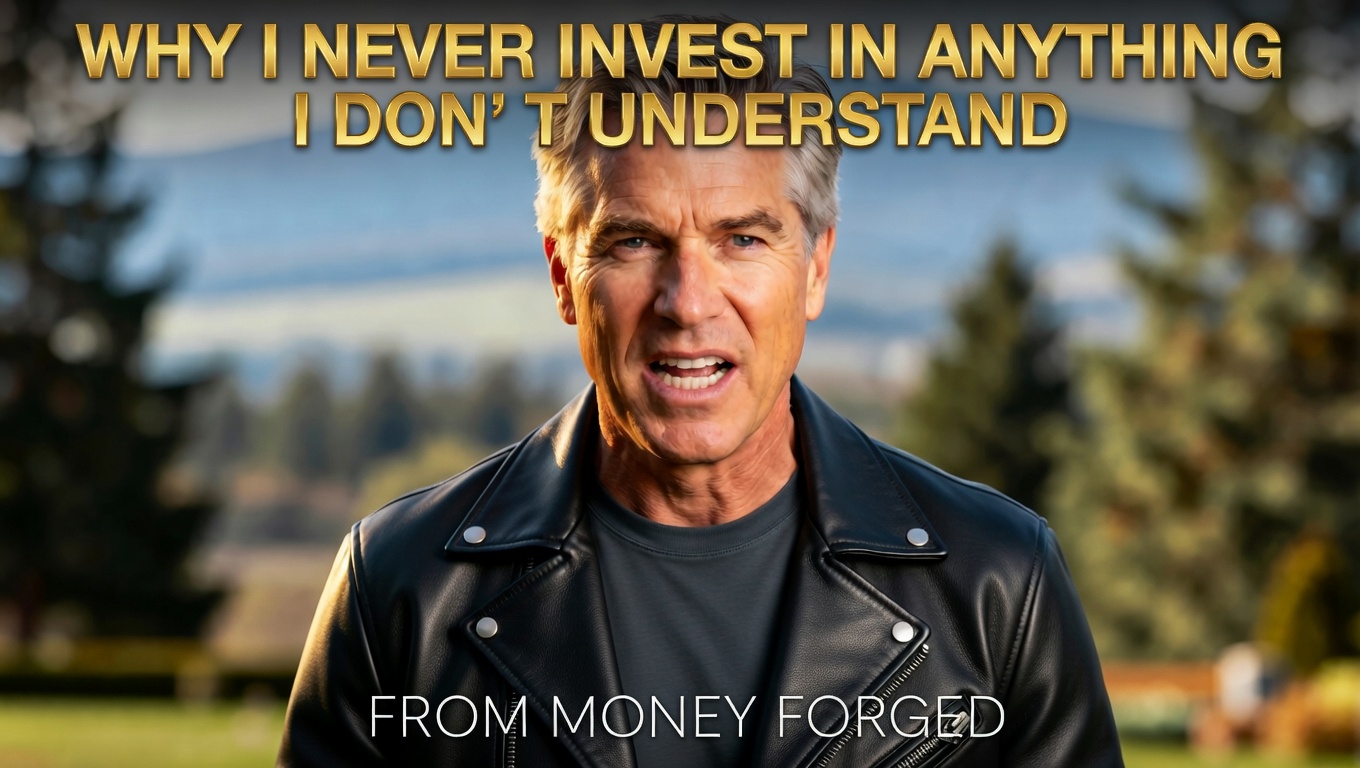
  • Why I Never Invest in Anything I don’t Understand

    Why I Never Invest in Anything I don’t Understand

    Why I Never Invest in Anything I Don’t Understand (And You Shouldn’t Either) | Jaxon Forge – MoneyForged.com

    Why I Never Invest in Anything I Don’t Understand (And You Shouldn’t Either)

    The graveyard of wealthy people is filled with “I trusted the expert” stories. My rule is brutal but simple: I never invest in anything I don’t understand—and you shouldn’t either.

    I learned this the hard way in my 20s. Fresh off my first real money, I had a buddy—smart guy, connected—who kept talking up this “can’t-miss” real estate syndication deal. Private placement, multifamily properties, “passive income,” the whole pitch sounded polished. He said the operator was a pro, numbers looked solid on the deck, and “you just wire the money and collect checks.” I didn’t fully grasp the cap rates, the debt structure, the exit strategy, or how the waterfalls really worked. But I trusted the expert. I put in $50k—big chunk of my net worth at the time.

    Two years later, the project tanked. Bad management, market shift, hidden fees that weren’t so hidden in the fine print. My capital? Gone. Not reduced—wiped. The operator walked away fine; I was left staring at a tax loss carryforward and a lesson burned into my brain: complexity is camouflage for risk.

    That mistake cost me more than money. It cost time, confidence, and momentum. I spent months replaying it, angry at myself for outsourcing my judgment. From that day forward, I made the rule non-negotiable: if I can’t explain the investment to a sharp 12-year-old in plain English, I don’t touch it. No exceptions.

    Why Most People Get Burned Chasing What They Don’t Get

    High earners love “sophisticated” investments because they feel sophisticated. Private equity funds, hedge strategies, crypto DeFi plays, structured notes, angel deals in startups they barely understand—these things come wrapped in jargon and exclusivity. The pitch is always the same: “This is what the smart money does. You’re in the club now.”

    But here’s the reality: if you don’t understand it, you’re not in the club—you’re the mark.

    • Opacity hides fees and misaligned incentives. When the deal is too complicated to unpack, the promoter can bury expenses, preferred returns, or performance fees that eat your upside first.
    • You can’t spot red flags. If you don’t know how the machine works, you miss the warning signs: unsustainable leverage, promoter skin in the game that’s paper-thin, or assumptions that only hold in perfect conditions.
    • You surrender control. Investing blind means relying on someone else’s decisions. When things go south (and they do), you have zero leverage to fix it or exit early.
    • Emotional attachment kills rational exits. Once you’re in something you don’t understand, fear of looking stupid keeps you in longer than you should stay.

    I’ve seen doctors lose seven figures in “tax-advantaged” oil partnerships they never audited. Tech execs blow savings on venture funds chasing the next unicorn without reading the LPA. Even accredited investors fall for it because ego whispers, “I’m too smart to get played.” Ego is expensive.

    My Personal Filter: The “Explain It or Skip It” Test

    Every potential investment runs through this checklist. If it fails any point, I walk—no debate.

    1. Can I explain the core money flow in one paragraph? How does cash actually come in, get processed, and go out to me? If it takes spreadsheets and buzzwords, pass.
    2. Do I understand the risks—really? Not the glossy “risk factors” section. The actual downside scenarios: what happens in a recession, interest rate spike, or operator screw-up?
    3. Is the edge obvious and repeatable? Why does this beat boring index funds or cash-flow real estate I can underwrite myself? If the advantage relies on “genius management,” I’m skeptical.
    4. Can I track it without a middleman? If I need a portal, manager reports, or K-1s riddled with mystery lines to know how I’m doing, it’s too opaque.
    5. Would I happily put 100% of my liquid net worth in it? Extreme test, but if the answer’s no because “it’s diversified,” then why am I putting any in?

    This filter kills 95% of opportunities. That’s the point. The ones that survive are usually boring, understandable, and compounding quietly while everyone else chases shiny objects.

    What I Stick To (And Why It Works)

    Direct real estate I underwrite myself or with partners I’ve vetted for years.

    Public equities where I know the business model cold (boring compounders, not hype stocks).

    Private deals only when I’ve modeled every line and know the people personally.

    Cash-flowing businesses or notes where I control or heavily influence outcomes.

    No mystery boxes. No “trust the process” funds. No investments where someone else holds the keys to my money.

    The payoff? Peace. Speed of decision-making. No sleepless nights wondering if the “expert” is blowing smoke. And most importantly—real wealth that compounds without hidden leaks.

    If you’re reading this and have money sitting in something you half-understand, ask yourself: would I explain this to my kid as “smart”? If not, get out. Cut the loss, take the lesson, and redirect to what you actually get.

    Understanding isn’t optional. It’s the moat between building wealth and becoming another cautionary tale.

    Stay sharp. Forge ahead.

    © 2026 Jaxon Forge | MoneyForged.com | Raw stories from the trenches of building real wealth

    Part of the Wealth Building & Execution series

  • How I Built My First $100k Net Worth Without a Fancy Degree

    How I Built My First $100k Net Worth Without a Fancy Degree

    How I Built My First $100k Net Worth Without a Fancy Degree | Jaxon Forge – MoneyForged.com

    How I Built My First $100k Net Worth Without a Fancy Degree

    No Ivy League. No trust fund. Just ruthless focus and one boring skill scaled into multiple income streams.

    Welcome to the raw side of wealth building. I’m Jaxon Forge, and at MoneyForged.com we don’t do fluff or guru hype—just the unfiltered truth about forging real financial freedom.

    People love to blame their lack of a fancy degree or rich parents for staying broke. I get it—I didn’t have either. No elite network handed me opportunities. No safety net caught me when I stumbled. What I did have was an obsession with results over excuses, and one repeatable skill I hammered until it paid off in ways most people never see.

    It started small. In my 20s, I was trading time for money like everyone else—decent paycheck, but zero trajectory toward freedom. Bills ate everything. Savings? Laughable. Then I picked one boring, unsexy skill (details don’t matter as much as the principle—pick something people pay for consistently, that doesn’t require constant reinvention). I didn’t chase shiny trends or viral ideas. I got brutally good at one thing and turned it into leverage.

    First $10k came slow—side hustle hours after the day job. Then I systematized it: processes, templates, outreach that ran on autopilot. Revenue doubled, then tripled. I stopped trading hours and started stacking streams—same skill repackaged: consulting, productized service, digital delivery, affiliate angles. No overnight genius moment. Just compounding effort while everyone else chased the next hack.

    By the time I hit $100k net worth, the math looked simple on paper: consistent saving + aggressive investing in boring assets + zero lifestyle inflation. But the psychology was the real work. I treated every dollar like a soldier—deployed to build, not to flex. Friends upgraded cars and houses. I upgraded my emergency fund, tax-advantaged accounts, and skill stack. They looked rich. I was rich—quietly, invisibly, compounding.

    The biggest lesson? Wealth without a degree isn’t about luck or talent. It’s about paying the discipline tax early: delay gratification, grind in silence, build systems that outlast motivation. One boring skill, ruthless execution, multiple streams. That’s the blueprint. No fancy credentials required.

    If you’re sitting there with potential but no pedigree, this is your proof: start with one thing, own it, scale it, protect the gains. The first $100k is the hardest. After that, momentum does the heavy lifting.

    Stay hungry. Pay the tax now—it’s cheaper than paying forever later.

    — Jaxon Forge
    MoneyForged.com
    Grinding with you.

    © 2026 MoneyForged.com | Stories and advice from Jaxon Forge

  • The Power of Boring: Why Exciting Investments Rarely Make You Rich

    The Power of Boring: Why Exciting Investments Rarely Make You Rich

    The Power of Boring: Why Exciting Investments Rarely Make You Rich | Jaxon Forge

    The Power of Boring: Why Exciting Investments Rarely Make You Rich

    Private equity in a laundromat chain made me more than any meme stock ever could. Boring wins. Here’s why.

    I used to chase the rush. Meme stocks, crypto pumps, the next “10x” trend everyone was yelling about on X. I’d watch the charts light up, feel that dopamine hit, and think: this is how wealth gets built. Fast. Loud. Exciting.

    Then reality hit. Most of those bets flamed out. I lost more than I care to admit on things that looked sexy on the timeline but had zero fundamentals. Meanwhile, the quiet deal I did in a chain of laundromats—yeah, washing machines and dryers—kept printing cash month after month. No hype. No volatility. Just boring, predictable money.

    That was the lesson: exciting investments rarely make you rich. They make for good stories and bad bank accounts. Boring ones build empires.

    Why “Exciting” Is Usually Code for “Risky and Overpriced”

    Everyone wants the home run. The viral stock, the coin that moons, the startup that gets acquired overnight. But here’s what I’ve seen after years in the game: the more exciting something looks, the more it’s priced for perfection—and the more likely it crashes when reality shows up.

    I avoided the crypto hype cycles not because I was scared, but because I didn’t understand them deeply enough. Same with most “hot” opportunities. If I can’t explain it simply to a 12-year-old, I’m not touching it. That’s rule one from my own playbook: never invest in anything you don’t understand.

    “The Power of Boring isn’t about being lazy. It’s about choosing assets that compound while you sleep, not ones that keep you up at night checking prices.”

    The Laundromat Chain That Changed Everything

    A few years back, I got the chance to roll into a small chain of laundromats through a private equity-style structure—pooled capital, smart operators, focus on cash flow. No glamour. People need clean clothes. Machines run 24/7. Overhead is low once set up. Customers come back forever.

    The returns? Steady 20-30% cash-on-cash in good locations, with upside from efficiency tweaks and add-ons like vending or drop-off services. Compare that to meme stocks: one good week feels amazing, then it’s gone. This boring play paid for itself in under 4 years and keeps paying.

    Modern laundromat storefront - boring business example

    A clean, efficient laundromat: not sexy, but recession-proof and cash-flow heavy.

    Inside a laundromat with dryers running - steady wealth builder

    Repeat customers, low drama, high margins. This is what boring wealth looks like.

    Boring Wins Because It Compounds Without Drama

    Look at my list of personal investments: boring businesses, real estate cash flow, index funds I actually understand, private deals in essential services. No gambling on trends. Why? Because cash flow beats net worth every time. A laundromat throws off money every week—money I can reinvest, pay down debt with, or stack into the next boring winner.

    The hidden leverage? Owning boring businesses. They have moats: location, necessity, low competition from flashy entrepreneurs who chase the next shiny thing. Diversification is overrated when you own things you understand deeply. I’d rather go deep on 3-5 boring winners than spread thin across 50 hype plays.

    The Psychology Tie-In: Comfort in the Grind

    This ties back to everything I’ve written about: comfort is the silent killer. Chasing exciting investments feels good—like balance, like progress. But it’s lifestyle inflation for your portfolio. You upgrade to “better” bets, burn brighter, then crash harder.

    Real wealth comes from craving the boring grind: due diligence on unsexy deals, patience while cash compounds, saying no to FOMO. Rewire your brain like I did—make hard, consistent choices feel rewarding. Systems over motivation. Boring over brilliant.

    If you’re still chasing the rush, ask yourself: is this building freedom, or just feeding the hedonic treadmill?

    Stay hungry. Build quiet. Forge your money.
    More raw truth at MoneyForged.com
    Follow me on X: @MoneyForgedHQ
    © 2026 Jaxon Forge | MoneyForged.com | All rights reserved.
  • Why Cash Flow Beats Net Worth Every Single Time

    Why Cash Flow Beats Net Worth Every Single Time

    Why Cash Flow Beats Net Worth Every Single Time | Jaxon Forge – MoneyForged

    Why Cash Flow Beats Net Worth Every Single Time

    Net worth is a scoreboard. Cash flow is oxygen. I stopped chasing vanity numbers and started obsessing over what actually hits my bank account.

    Read more →

    Welcome to another raw cut from “The Psychology of Making Money.” I’m Jaxon Forge, and if you’ve been around here, you know I don’t do fluff. No guru vibes. Just the uncomfortable truths that separate the men who build real freedom from the ones who look rich but feel broke.

    A few years back I was clearing six figures consistently. Decent checks, nice-looking life from the outside. But every month-end I’d stare at the accounts and feel that familiar knot—where did it all go? Why did one slow month feel like the edge of a cliff?

    I wasn’t stupid with money. No Lambos, no dumb flexes. But the truth hit hard: high income isn’t wealth. It’s just earning power. Staying broke—even when the numbers look good—is a psychology problem. And the biggest lie is thinking net worth is the goal.

    Net worth is a vanity metric. It’s a Polaroid of your financial life at one frozen moment: assets minus liabilities. Looks impressive on a spreadsheet, makes you feel smart at parties. But it doesn’t pay bills when revenue dries up. It doesn’t buy freedom if everything’s tied up in illiquid paper gains or a house you can’t eat.

    Cash flow is oxygen. It’s what flows in every month—predictable, usable, stackable. It’s what lets you sleep when a client ghosts or a deal stalls. I learned this the hard way after watching “successful” friends upgrade everything the second income spiked—bigger house, newer car, longer vacations—and then panic when cash slowed. Their net worth crept up on paper. Their bank account stayed anorexic.

    “Lifestyle inflation is the silent thief. Income goes up, spending goes up faster. Comfort masquerades as balance, and suddenly you’re trading potential freedom for the illusion of ‘I’ve made it.’”

    I reversed it by getting ruthless. Any new money—raise, bonus, deal—had to fund cash flow first: extra principal paydown, more income-producing assets, bigger emergency fund, skill upgrades that generate more cash. Comfort upgrades? Delayed. Visible stuff last.

    Friends looked richer with the shiny toys. I looked boring driving the same truck. But year after year, my cash flow widened the gap. Theirs stayed flat or worse—because net worth doesn’t breathe. Cash flow does.

    The shift wasn’t sexy. It was systems over motivation. I built rules: revenue-generating activities first block every day, no exceptions. Grind in silence—no posting wins for dopamine. Treat boredom as fuel, not enemy. Crave the hard thing so comfort feels wrong.

    Because here’s the brutal math: net worth can look fat while you’re one bad quarter from scrambling. Cash flow keeps you antifragile. It compounds quietly. It buys options. It turns money from a scoreboard into actual power.

    If you’re sitting there with a decent net worth but still feel the quiet panic—upgrade less, obsess more over inflows. Pay the discipline tax early. Stay hungry. Cash flow isn’t sexy. It’s survival. And eventually, it’s everything.

    Stories and unfiltered advice from Jaxon Forge • @MoneyForgedHQ • MoneyForged.com

  • The Compounding Cheat Code Most People Ignore

    The Compounding Cheat Code Most People Ignore

    The Compounding Cheat Code Most People Ignore | Jaxon Forge – MoneyForged.com

    The Compounding Cheat Code Most People Ignore

    Most treat compounding like a cute savings account trick. I treat it like a weapon. Here’s how I used it to 10x faster than the average high earner—without gambling on trends, chasing motivation, or falling for guru BS.

    By Jaxon Forge, Founder of MoneyForged.com

    Everyone knows compounding is powerful. Einstein supposedly called it the 8th wonder of the world. But 99% of people treat it like background noise—something that happens magically in a 401(k) if you’re “lucky” and patient. They miss the cheat code entirely.

    I didn’t. I weaponized it. Not with fancy algorithms or crypto moonshots. With boring, ruthless consistency that most high earners laugh at—until their net worth flatlines while mine kept stacking.

    High income doesn’t compound wealth. Delayed gratification does. Systems do. Paying the discipline tax early does. Comfort masquerading as “balance”? That kills compounding faster than any market crash.

    “You make more money, so you upgrade. The house gets bigger. The car gets newer. The vacations get longer. You call it balance. I call it the silent killer of wealth. Comfort zones are cemeteries for ambition—and they bury your compounding potential alive.”

    In my 20s, I made the classic mistake: earned well, spent better. Lifestyle inflation ate every raise. Net worth barely budged. Then I flipped it. Every extra dollar went to principal payments, boring index funds, cash-flowing assets—before it touched comfort. I delayed the visible wins so the invisible math could explode.

    The real cheat code isn’t just starting early (though that’s massive). It’s protecting the snowball. No unnecessary withdrawals. No ego upgrades. No “just this once” exceptions. Treat every dollar like a soldier in your army—deploy it to fight for more dollars, not to buy temporary dopamine.

    I avoided the hype (crypto, NFTs, hot stocks) because I didn’t understand them deeply enough. Instead, I stacked boring winners: dividend growers, real estate cash flow, skill-based income streams. Compounding turned $5k into serious money without touching Wall Street roulette.

    Want the full breakdown? How I structured my 80/20 portfolio, the exact rules for my “Screw You” fund, why cash flow beats net worth every time, and the mental models that let me ignore noise while the math worked overtime…

    (Unlock the unfiltered timeline from $0 to accredited investor status, plus the systems that keep the edge sharp even after the money starts flowing.)

    Stories and raw advice from Jaxon Forge, founder of MoneyForged.com. Building unbreakable wealth through discipline, systems, and boring execution. © 2026 MoneyForged.com