Blog – The Forge Journal | Jaxon Forge
PROUD CAPITALIST FREE MARKETS • AMERICAN TARIFFS • FORGING WEALTH THAT LASTS JAXON FORGE

THE FORGE JOURNAL

Stories and advice from Jaxon Forge, Founder of MoneyForged.com

Raw, no-fluff truth on wealth psychology, iron discipline, free-market capitalism, tariffs, and the systems that separate the self-made from everyone else.

CAPITALISM IN ACTION
FREE MARKETS • TARIFFS FOR AMERICA
Jaxon Forge
Psychology of Money • 8 min read

Why Most People Stay Broke Even When They Make Good Money

High income doesn’t equal wealth. Here’s the brutal psychology hack that keeps even six-figure earners trapped in the paycheck-to-paycheck cage.

Discipline • 6 min read

The 3 AM Rule That Separated Me From 99% of Entrepreneurs

The quiet hours when excuses die. How waking at 3 AM three days a week gave me an unbreakable edge.

Psychology of Money • 9 min read

How I Rewired My Brain to Crave Hard Work Instead of Comfort

The exact system I used to make discipline addictive and comfort feel like punishment.

Wealth & Execution • 7 min read

The Silent Killer of Wealth: Comfort masquerading as “Balance”

Why “work-life balance” is the fastest way to stay mediocre forever.

Discipline • 5 min read

The Discipline Tax: Pay It Early or Pay It Forever

The hidden price every high performer must pay—early or late.

Business & Hustle • 8 min read

Why I Stopped Chasing Motivation and Started Chasing Systems

Motivation is weather. Systems are the engine that prints real money.

Wealth & Execution • 6 min read

Why Cash Flow Beats Net Worth Every Single Time

Net worth is a lie. Cash flow is freedom. Here’s the math I live by.

Business & Hustle • 10 min read

The $0 Startup Blueprint That Still Works in 2026

No money. No team. Just relentless execution. My exact playbook.

Free Markets & Tariffs • 7 min read

Why I Support Tariffs for America’s Survival

The capitalist case for protecting American wealth and strength.

Jaxon Forge

Money Forged

Forging Wealth That Lasts • Jaxon Forge

@MoneyForgedHQ

Stay in the Forge

Jaxon Forge’s weekly dispatch on discipline, systems, tariffs, and wealth that actually lasts.

JOIN THE FORGE

Author: Jaxon Forge

  • Why 72 Month Vehicle Loans Are Crazy

    Why 72 Month Vehicle Loans Are Crazy

    Why 72 Month Loans Are Crazy | Jaxon Forge – MoneyForged.com

    Why 72 Month Loans Are Crazy

    Jaxon Forge – Founder of MoneyForged.com

    I almost signed the papers on a 60-month truck loan fifteen years ago. The salesman leaned in with that fake-friendly grin and said, “Only $612 a month, Mr. Forge. You can swing that easy.” On paper it looked harmless. My income was climbing. I wanted the big diesel with the chrome package. But something in my gut screamed stop. I walked out, paid cash for a used ¾-ton with 80k miles, and never looked back. That single decision saved me tens of thousands and kept my cash flow free. Today, 72-month loans are everywhere—and they’re pure financial poison.

    The Brutal Math That Proves 72 Months Is Financial Suicide

    Let’s kill the fantasy with real numbers. Say you’re eyeing a $45,000 truck at 8% APR (the average rate I’m seeing in 2026 dealerships). Here’s what happens:

    Loan TermMonthly PaymentTotal PaidInterest PaidReal Cost Over 6 Years
    72 months$789$56,808$11,808+26% of sticker price in interest
    36 months (what I recommend)$1,410$50,760$5,760You own it outright in 3 years
    Cash (no loan)$0$45,000$0You keep the $11,808 + freedom

    That $11,808 in interest? It’s not “just the cost of financing.” That money could have been compounding in a boring index fund at 10% for the next decade and turned into over $30,000. But instead it vanished into a bank’s pocket while you drove a depreciating asset. That’s not a loan. That’s a wealth transfer disguised as “affordable payments.”

    “Low monthly payments feel like freedom until you realize you’re chained to the payment for six damn years while the truck loses value every single month.”

    The Psychology Trap: Why Your Brain Begs for 72-Month Loans

    This is where the real damage happens—in your head. The salesman knows exactly what he’s doing. He sells you on the monthly number, not the total price. Your brain lights up because $789 feels doable. It feels like “balance.” You tell yourself you deserve the bigger truck after all those long hours. That’s the same hedonic treadmill I wrote about in The Psychology of Making Money. Comfort masquerading as balance is the silent killer of wealth.

    I lived it. Early in business I let a 48-month lease sneak in because the payment fit my new income. Six months later I hated the truck, but I was upside-down by $9k. Lifestyle inflation had me by the throat. Every raise I got? Instantly absorbed by a nicer ride, bigger insurance, and that monthly anchor. Cash flow? Non-existent. Investments? Starved. I was making good money but still felt broke.

    The Discipline Tax in Action:
    Pay the higher monthly now (or pay cash) and you own the asset free and clear. Skip it and you pay the tax forever—higher insurance, endless interest, and the constant psychological weight of debt.

    How 72-Month Loans Murder Cash Flow (While Net Worth Looks Fine)

    Cash flow beats net worth every single time. A shiny $45k truck on a 72-month loan shows up on your balance sheet as an “asset.” In reality it’s a $789/month liability that destroys your ability to invest, build emergency funds, or seize opportunities. I run my one-man empire on systems, not motivation. One of those systems is zero long-term auto debt. Because when cash flow is locked in payments, you can’t compound. You can’t buy the next boring business. You can’t weather the next oil shock or tariff-driven price spike.

    I rewired my brain to crave hard work instead of comfort. Part of that was refusing the easy monthly payment. The 3 AM Rule helped: I was up at 3 a.m. three days a week running the numbers on every big purchase. The math never lied. Long loans always lost.

    My 4-Step “72-Month Trap Avoidance Protocol” – Use It Today

    1. Run the real numbers. Always calculate total cost, not monthly. I keep a simple spreadsheet: sticker price + interest + insurance + fuel + maintenance for 72 months.
    2. Force the discipline tax. Whatever the 72-month payment is, I make myself pay double that amount in cash or on a 36-month max loan. If I can’t, I can’t afford the vehicle.
    3. Choose boring over exciting. A reliable 3-year-old truck that I can pay off in 24 months beats a brand-new status symbol every time. Boring beats exciting in cars just like in real estate and business.
    4. Build the cash-flow buffer first. I keep six months of all expenses (including car) in liquid cash before I ever sign anything. Debt feels different when you have options.

    The Self-Made Man’s Code: Own Your Transportation, Don’t Lease Your Freedom

    Capitalism rewards those who control their costs. Free markets gave us incredible trucks and cars, but predatory financing turned them into wealth shredders. Tariffs on imported steel and parts are raising prices right now—don’t compound that pain with a 72-month anchor. I still drive the same truck I bought cash years ago. It’s paid for, reliable, and every dollar I don’t send to the bank goes into my compounding machine.

    Most people stay broke even when they make good money because they finance lifestyle instead of assets. Don’t be most people. Pay the discipline tax early. Rewire for hard work. Choose systems over motivation. And never, ever sign a 72-month loan.

    The next time a salesman slides that contract across the desk and whispers “only $XXX a month,” remember this page. Walk out. Buy less car. Own it faster. Watch your cash flow explode and your real net worth finally move.

    Pro-capitalism. Pro-tariffs. Pro-discipline. Pro-freedom.

    — Jaxon Forge | Founder, MoneyForged.com | @MoneyForgedHQ on X
  • From Participation Trophies to $94 Billion GDP Drain: How DEI’s Comfort Culture Destroyed Merit and American Wealth

    From Participation Trophies to $94 Billion GDP Drain: How DEI’s Comfort Culture Destroyed Merit and American Wealth

    From Participation Trophies to $94 Billion GDP Drain: How DEI’s Comfort Culture Destroyed Merit and American Wealth
    Jaxon Forge

    From Participation Trophies to $94 Billion GDP Drain:
    How DEI’s Comfort Culture Destroyed Merit and American Wealth

    It started with plastic trophies at recess and ended with unqualified executives tanking productivity. Here’s the unfiltered truth on how the silent killer of comfort turned into a $94 billion wealth destroyer.

    @MoneyForgedHQ on X

    I was eleven years old the day they handed out participation trophies after our Little League championship. My team got crushed 14-2. I struck out four times. Yet every kid walked away with the same shiny plastic statue. No winners. No losers. Just “everyone’s a champion.” That moment stuck with me like a bad investment. I didn’t know it then, but I was watching the birth of the comfort culture that would later seep into boardrooms, government contracts, and hiring practices under the name DEI.

    Fast forward thirty years. I’m running a multi-million-dollar operation, hiring talent, watching cash flow, and building real wealth the old-fashioned way—through merit, discipline, and results. Then DEI shows up in vendor requirements, HR policies, and even my own industry associations. Suddenly the best candidate isn’t always the one who gets the job. The numbers don’t lie. And neither does the 2026 White House Economic Report.

    $94 BILLION
    — the exact GDP hit from DEI policies in 2023 alone.
    0.34% of total output. 2.7% lower productivity in heavy-DEI industries.
    Identity-based promotions over merit = measurable wealth destruction.

    The Psychology That Started It All: Comfort as the Silent Killer

    I’ve written before about comfort masquerading as balance. This is the root. Participation trophies taught an entire generation that effort doesn’t matter—only showing up does. No consequences. No scoreboard. No discipline tax. Just endless praise for existing. That mindset didn’t stay on the playground. It grew up and walked into corporate America wearing a suit and carrying a DEI training manual.

    When you remove the sting of failure in childhood, you train the brain to expect the same in adulthood. Hard work becomes optional. Merit becomes “problematic.” Systems over motivation? Forget it. The new system is feelings over facts. And the cost is now showing up in national GDP numbers.

    “Comfort zones are cemeteries for ambition. You don’t die in them overnight—you just slowly stop growing until one day you realize the version of you that could have built real wealth is buried under layers of ‘deserved’ ease.”

    I lived this transition in my own businesses. Early on I hired strictly on skill and output. Revenue compounded. Cash flow beat net worth every quarter. Then the DEI mandates hit supply-chain contracts. Suddenly I was pressured to “diversify” my vendor list regardless of performance. One vendor cost me six figures in delays because they couldn’t deliver on time. Merit had been replaced by checkboxes. I fired them, took the short-term hit, and rewired my brain to crave the hard truth again: results or nothing.

    How Participation Trophies Became Boardroom Policy: The DEI Infiltration

    It didn’t happen overnight. First came the 1990s self-esteem movement. Then the 2010s corporate virtue signaling. By the 2020s, DEI was baked into hiring, promotions, and capital allocation. The White House 2026 report is crystal clear: in industries with heavy DEI adoption, productivity fell 2.7% because promotions went to identity quotas instead of proven performers.

    I watched it destroy companies I used to respect. A major defense contractor lost key talent because the best engineers were passed over for “diversity targets.” A Fortune 500 bank I advised quietly admitted their DEI hiring wave created teams that couldn’t close deals. The psychology is the same as the trophy: when you reward presence over performance, you get mediocrity at scale.

    Free markets demand merit. Capitalism rewards the producer. Tariffs protect American merit-based industries from foreign dumping. DEI does the opposite—it imports failure from within. It’s the ultimate anti-capitalist tax on excellence.

    The Real Math: $94 Billion and Counting

    According to the 2026 White House Economic Report, DEI compliance and its downstream effects shaved $94 billion off U.S. GDP in 2023. That’s not theory. That’s forgone wealth—missed compounding, lower tax revenue, weaker innovation, and slower wage growth for the people who actually produce.

    Break it down: 0.34% of GDP lost to slower growth in DEI-heavy sectors. That number will compound. In five years it could easily top half a trillion in cumulative damage. Meanwhile, the self-made men and women grinding at 3 a.m. are carrying the entire economy on their backs while the comfort class lectures them about “equity.”

    The Merit Restoration Framework I Use in Every Business

    1. 3 AM Rule – Own the quiet hours before excuses wake up. No DEI committee meeting will ever outwork deep focus at 3 a.m.
    2. Discipline Tax Paid Daily – Hire, promote, and fire based on output only. Pay the discomfort now or pay the GDP bill later.
    3. Cash Flow First, Virtue Second – Every dollar must earn its keep. DEI doesn’t pay invoices—results do.
    4. Rewire for Hard Work – Train your team to crave friction. Boring systems beat exciting slogans every single time.

    Why Cash Flow Beats Net Worth—And Why DEI Kills Both

    I’ve said it a hundred times: cash flow beats net worth every single time. DEI destroys cash flow by inserting unqualified people into critical roles. One bad VP of operations hired for optics can stall an entire supply chain. I’ve seen it. The psychology is identical to lifestyle inflation: you feel good in the moment, but the silent killer is eroding your foundation.

    I rewired my own brain years ago to crave hard work instead of comfort. I still wake at 4:30 a.m. most days. I still fire clients faster than I acquire them if they don’t value merit. The result? My businesses generate recurring revenue that compounds while DEI companies bleed talent and efficiency.

    The Self-Made Man’s Antidote: Systems Over Motivation

    Motivation is for amateurs. Systems are for builders. I built a simple system: every hiring decision gets a blind skills test. Every promotion requires measurable ROI. No feelings. No quotas. Just results. That system has survived three recessions and multiple DEI waves.

    The comfort culture wants you soft. It wants you to believe “diversity” is a substitute for excellence. It isn’t. Real diversity of thought comes from merit—people who earned their seat through sweat, not checkboxes.

    If you’re reading this and feeling that quiet recognition in your gut—that your industry or company is sliding into the same mediocrity—start today. Pay the discipline tax. Demand merit. Champion free markets. Reject the participation-trophy mindset at every level.

    Because the $94 billion GDP hole is just the beginning. The real cost is the lost ambition of an entire generation taught that showing up is enough. We built this country on the opposite principle. It’s time to reclaim it.

    Stay ruthless. Stay excellent. The scoreboard is still real—even if the comfort class pretends it isn’t.

    © 2026 MoneyForged.com • All Rights Reserved

    PrivacyTerms

    Pro-capitalism. Pro-tariffs. Pro-discipline. Pro-freedom.

    — Jaxon Forge | Founder, MoneyForged.com | @MoneyForgedHQ on X
  • Budget Fitness Routines in 2026: Build an Iron Will Without Spending a Fortune

    Budget Fitness Routines in 2026: Build an Iron Will Without Spending a Fortune

    Budget Fitness Routines in 2026: Build an Iron Will Without Spending a Fortune

    Budget Fitness Routines in 2026: Build an Iron Will Without Spending a Fortune

    Jaxon Forge, Founder of MoneyForged.com

    By Jaxon Forge | Founder, MoneyForged.com | @MoneyForgedHQ on X

    Most men blame money for their soft bodies and weaker minds. “I can’t afford a gym membership.” “Equipment is too expensive.” That’s comfort masquerading as logic. I built my current physique and unbreakable daily discipline on routines that cost less than $15 a month — sometimes literally zero. Budget fitness isn’t settling. It’s the ultimate discipline tax paid in sweat instead of dollars.

    Here are the exact no-fluff, battle-tested budget fitness routines I still use in 2026. They rewire your brain to crave hard work, protect your cash flow, and deliver results that compound faster than any fancy program.

    The Core Philosophy: Discipline Over Equipment

    Expensive gyms sell motivation. Budget training forces systems. When you have nothing but your body and the ground, excuses die fast. That mental edge transfers directly to business — you stop waiting for perfect conditions and start executing with what you have.

    “A man who can’t get strong with just his bodyweight will never build real wealth. Comfort always finds a way to hide behind a price tag.”

    Routine 1: The 4 AM Iron Protocol (Zero Equipment)

    5 Days Per Week — 35–45 Minutes

    • Warm-up (5 min): Jumping jacks, bodyweight squats, arm circles
    • Push: 5 sets of Push-ups (standard → diamond → archer as you progress)
    • Pull: 5 sets of Inverted Rows under a sturdy table or playground bar (or towel rows on door)
    • Legs: 5 sets of Squats + Lunges (alternating legs)
    • Core: 3 rounds of Plank (60–120 sec), Leg Raises, Russian Twists
    • Finisher: 10–15 min brisk walk or run outside

    Progression rule: Add reps or slow the tempo every week. Never miss the 4 AM start — that’s the real workout.

    Routine 2: The Budget Garage Grind (Under $100 One-Time Investment)

    3–4 Days Per Week — Full Body Strength

    Buy once: Adjustable dumbbells (used on Marketplace ~$60), resistance bands ($15), pull-up bar ($25).

    • A. Squat variation – Goblet squats or Bulgarian split squats – 4×8-12
    • B. Horizontal Push – Dumbbell bench or floor press – 4×8-12
    • C. Horizontal Pull – Dumbbell rows or band rows – 4×10-15
    • D. Vertical Push – Overhead press – 4×8-12
    • E. Core + Conditioning – Farmer carries + burpees or mountain climbers

    Routine 3: The Travel / Minimalist Destroyer (Hotel or Park)

    Anywhere, Anytime — 20–30 Minutes

    • 10 rounds for time:
      10 Push-ups
      15 Air Squats
      20 Mountain Climbers (per leg)
      30-second Plank

    Do this in a hotel room at 5 AM before the conference starts. No excuses. No travel derailment.

    Real 2026 Cost Breakdown

    Monthly fitness spend: $0 – $18

    • Zero-equipment routine: $0
    • Basic garage setup (one-time): under $100
    • Used adjustable dumbbells + bands: $75 total
    • Park workouts or bodyweight: literally free

    Compare that to $150+/month gym memberships most men pay and never use. Cash flow beats net worth — every dollar you don’t waste on unused memberships compounds somewhere else.

    The Psychology: Rewire Your Brain to Crave the Grind

    Budget fitness removes every comfort crutch. No fancy machines to hide behind. No air-conditioned comfort. Just you, gravity, and the clock. That daily discomfort is the exact training your nervous system needs to stop fearing hard work in business.

    I still wake at 4:30 AM, hit the floor for push-ups before coffee, and walk or run outside regardless of weather. The habit compounds faster than any stock. My energy, focus, and decision-making have never been sharper.

    Action Steps — Start Today

    1. Choose one routine above and commit for 30 days — no negotiation.
    2. Set your alarm 30 minutes earlier tomorrow. Feet on floor in 3 seconds.
    3. Track every session in a simple notebook. Review weekly like your P&L.
    4. Walk or run outside at least 4 days per week — this is non-negotiable mental conditioning.
    5. Tell no one for the first 60 days. Grind in silence.

    Continue Forging Your Edge

    Final Truth

    You don’t need a gym to get strong. You need the willingness to pay the discipline tax when it’s still cheap. Budget fitness routines strip away every excuse and leave only the raw truth: either you own the discomfort or comfort owns you.

    Start tomorrow at 4:30 AM. No equipment. No excuses. Just sweat and systems.

    Comfort is the silent killer. Budget training is the cure.

    © 2026 MoneyForged.com — Forging Wealth That Lasts

    Privacy Policy | Terms and Conditions

    Pro-capitalism. Pro-tariffs. Pro-discipline. Pro-freedom.

    — Jaxon Forge | Founder, MoneyForged.com | @MoneyForgedHQ on X

  • How to Golf on a Budget in 2026: Forge Discipline Without Going Broke

    How to Golf on a Budget in 2026: Forge Discipline Without Going Broke

    How to Golf on a Budget in 2026: Forge Discipline Without Going Broke

    How to Golf on a Budget in 2026: Forge Discipline Without Going Broke

    Jaxon Forge, Founder of MoneyForged.com

    By Jaxon Forge | Founder, MoneyForged.com | @MoneyForgedHQ on X

    Most men think golf is only for rich guys in country clubs. That’s exactly the lie that keeps them soft and broke. I built serious wealth while playing hundreds of rounds for under $40 each — sometimes as low as $12. Golf on a budget isn’t a compromise; it’s the ultimate discipline tax paid daily. It forces you to hunt value, manage risk, and stay hungry. Exactly the skills that separate self-made men from everyone else.

    Here’s my complete no-fluff system for golfing on a budget in 2026 without sacrificing quality or the mental edge you need to forge real wealth.

    1. Stop Paying Retail — The Real Cost of “Premium” Golf

    New clubs, new bag, new shoes, new balls — that’s how most weekend warriors blow $2,000+ before they even tee off. I still play with a set I bought used for $380 in 2019. My driver is 8 years old. My putter is older than some of my employees.

    Rule #1: Never buy new unless it’s on massive clearance. Use eBay, Facebook Marketplace, 2nd Swing, and PGA Value Guide. Last month I picked up a barely-used Titleist T100 set for $650 that retails at $1,400.

    2. Where to Actually Play Cheap (Real 2026 Numbers)

    Budget Play Options:
    • Municipal and public daily-fee courses: $18–$45 weekday mornings
    • Twilight rates after 3pm: often 40-60% off
    • County courses and university golf courses: frequently under $30
    • Executive / par-3 tracks: $12–$25 for 18 holes with full practice facilities
    • Replay rates and punch cards: stack them for even lower per-round cost

    My 2026 average round cost: $27 including cart when I want one. Walking drops it to $18–$22.

    Pro tip: Book first tee times on weekdays. Courses are empty, rates are lowest, and you own the morning like the 3 AM Rule demands.

    3. Gear Hacks That Save Thousands Without Sacrificing Performance

    • Balls: Buy used Titleist Pro V1s by the dozen on Lost Golf Balls or eBay — $18/dozen instead of $50.
    • Gloves: Rotate 3–4 cheap synthetic gloves. They last longer than you think when you don’t leave them in the sun.
    • Shoes: Buy last year’s models on clearance. I’m still wearing FootJoys from 2023 that cost me $65.
    • Tees & markers: Dollar store bulk packs. Stop buying branded junk.

    4. The Budget Golfer’s Daily Discipline Framework

    1. Pre-round system — Pack the night before. No morning decisions. Same as prepping your highest-leverage business tasks.
    2. Walking only — Push cart or carry. Burns calories, builds mental toughness, and saves $15–$25 per round.
    3. No range balls before the round — Warm up with your own balls on the practice green or a quick chipping area.
    4. Track every round brutally — Notebook review after every 9 or 18. This is where the real compounding happens.
    5. Play early, play often — 3–4 budget rounds per month beats one fancy country club round every quarter.

    5. Real Math: My Budget Golf Numbers (2025–2026)

    52 rounds played • Average cost per round: $27 • Total golf spend: $1,404

    During that same period my business generated an additional $187,000 in revenue directly traceable to the clarity and discipline I built on those early-morning public tracks.

    Return on investment? Insane. Because golf on a budget forces you to pay the discipline tax when it’s still cheap.

    “Expensive golf makes you soft. Cheap golf makes you dangerous. Choose danger.”

    6. Advanced Budget Moves for 2026

    • Join local golf associations for member rates and tournaments
    • Use GolfNow “Hot Deals” and teeoff.com for last-minute discounts
    • Play winter rates in warmer climates or shoulder seasons everywhere else
    • Build relationships with local pros — many will let serious regulars hit balls for free or cheap

    The Bottom Line: Budget Golf Is Wealth Training

    Golf doesn’t have to be expensive to be effective. In fact, the cheaper you make it, the more honest the discipline tax becomes. No excuses about “I can’t afford it.” You either find the way or you admit comfort is still winning.

    Start this week: Book the cheapest early weekday tee time you can find. Walk the course. Leave the phone in the car. Take notes after the round. Do it consistently and watch what happens to both your game and your bank account.

    Continue Forging Your Edge

    Comfort is the silent killer. Budget golf is the antidote. Now go book that cheap tee time and start forging.

    © 2026 MoneyForged.com — Forging Wealth That Lasts

    Privacy Policy | Terms and Conditions

    Pro-capitalism. Pro-tariffs. Pro-discipline. Pro-freedom.

    — Jaxon Forge | Founder, MoneyForged.com | @MoneyForgedHQ on X

  • Horse Racing – The King of Sports | Lessons in Discipline, Risk & Wealth Psychology

    Horse Racing – The King of Sports | Lessons in Discipline, Risk & Wealth Psychology

    Horse Racing – The King of Sports | Lessons in Discipline, Risk & Wealth Psychology | Jaxon Forge

    Money Forged

    Forging Wealth That Lasts

    Jaxon Forge
    By Jaxon Forge • Founder, MoneyForged.com • April 16, 2026

    Horse Racing – The King of Sports

    What years at the track taught me about discipline, risk, cash flow, and the quiet psychology that actually builds lasting wealth.

    My First Real Lesson at the Rail

    I didn’t grow up around horses. My introduction came later, standing at a mid-tier track on a weekday afternoon. What struck me immediately wasn’t the glamour — it was the precision. Trainers arriving before dawn, grooms working stalls, jockeys studying the program with quiet focus. Every detail mattered. One missed workout, one overlooked vet note, and the result showed up on the tote board for everyone to see.

    That day I started paying attention not just to the races, but to the systems behind them. The best operations ran like disciplined businesses: consistent routines, clear data, and zero tolerance for excuses when the gate opened.

    Discipline That Shows Up Before the Cameras

    Horse racing forces discipline long before the public sees it. Horses don’t care about motivation. They need daily gallops, proper feeding, steady conditioning, and constant monitoring. Trainers who cut corners get exposed quickly — their horses fade in the stretch or break down entirely.

    I took that lesson into my own work. When I started treating my morning routine and revenue tasks with the same non-negotiable consistency I saw at the barn, my results stabilized. The early 4:30 a.m. blocks that once felt optional became the foundation that carried everything else.

    The real discipline tax in racing — and in business — is paid in the dark hours when no one is watching. Skip it and the weakness shows up when it matters most.

    Over time I learned to observe my own resistance the same way a trainer reads a horse’s body language. Discomfort wasn’t something to avoid; it was data. Pushing through it quietly rewired how I approached hard work.

    Risk Management the Track Way

    At the betting window, emotion is expensive. The crowd chases pretty horses, hot streaks, and names they recognize. The sharper players focus on value — odds that don’t match the real probability based on past performances, trainer patterns, track conditions, and pace scenarios.

    I adopted a simple personal rule after too many losing afternoons: never risk more than 2% of my session bankroll on any single race. It felt restrictive at first, but it kept me in the game long enough for the math to work. The same principle applied to business decisions — protecting the core capital while still taking calculated shots.

    Comfort often shows up as overconfidence. I watched bettors double down after a loss because “this one feels right.” That same pattern appears in lifestyle creep: one emotional purchase leads to another until the cash flow is gone.

    Cash Flow Over Flash — What Owners Actually Learn

    Many owners chase the dream of a big stakes horse. The reality is that most serious money in racing comes from steady, cash-flowing operations: claiming horses that pay their way, broodmares that produce sellable offspring, partnerships that spread risk while preserving upside.

    A $600,000 yearling that never wins is an expensive liability. A well-managed $25,000 claimer that wins four times a year and stays sound can generate real monthly income after expenses. The math is unforgiving and instructive.

    Cash flow beats net worth every single time — whether you’re running a barn or a business. A beautiful asset that doesn’t produce is just a high-maintenance hobby.

    I stopped measuring success by the size of individual wins and started tracking consistent, repeatable revenue. The track made that shift obvious and permanent.

    Systems That Outlast Motivation

    Motivation gets you to the track on opening day. Systems keep you profitable on a rainy Tuesday card in July. My own framework came from watching consistent winners:

    • Review entries the night before (my version of the 3 AM Rule — quiet time when distractions are lowest).
    • Stick to pre-defined criteria instead of chasing feelings or crowd hype.
    • Walk away once the daily loss limit is hit — no revenge betting, no emotional overrides.
    • Treat every session as part of a longer season, not an isolated event.

    These rules removed daily negotiation. When motivation was high I used it; when it wasn’t, the system carried the load. The same approach quietly lifted my business numbers year after year.

    Comfort as the Quiet Enemy

    At the track, comfort appears as complacency — betting the same way every time, ignoring new data, or upgrading your lifestyle because “things are going well.” I’ve seen sharp players slowly lose their edge the same way high earners lose theirs: small upgrades, easier routines, lower standards.

    Rewiring meant treating comfort as information, not a reward. I started delaying lifestyle increases until the underlying systems were stronger. The gap that used to disappear into spending now went into investments and buffers.

    The track doesn’t reward the comfortable. It rewards the prepared who stay hungry enough to keep refining.

    Get the weekly frameworks that actually move the needle.

    What Racing Still Teaches in 2026

    Horse racing remains one of the clearest mirrors for wealth psychology. Bloodlines and preparation matter. Execution under pressure matters. Cash flow and risk management matter more than any single headline win.

    It’s not about glamour. It’s about showing up consistently, reading the data honestly, protecting your capital, and letting systems do the heavy lifting when motivation fades. Those lessons transfer directly to building a business or a portfolio that lasts.

    The horses don’t lie. Neither do the results. That honesty is why the sport still earns its title as king.

    Pro-capitalism. Pro-tariffs. Pro-discipline. Pro-freedom.

  • The Top Ten Golf Courses in the United States of America: Where Discipline Meets Natural Genius

    The Top Ten Golf Courses in the United States of America: Where Discipline Meets Natural Genius

    The Top Ten Golf Courses in the United States of America: Where Discipline Meets Natural Genius

    The Top Ten Golf Courses in the United States of America: Where Discipline Meets Natural Genius

    Jaxon Forge, Founder of MoneyForged.com

    By Jaxon Forge | Founder, MoneyForged.com | @MoneyForgedHQ on X

    Most men treat golf like a vacation. I treat it like compound interest with hazards. These aren’t pretty postcard courses — they are unforgiving classrooms that punish comfort, reward patience, and expose exactly how you handle pressure when no one is watching. The same mindset that survives a 200-yard carry over ocean on the 16th at Cypress Point is the one that builds real wealth while everyone else chases excitement.

    Here are the Top 10 Golf Courses in America for 2026. I ranked them not by magazine panels alone, but by the raw discipline tax they demand and the lessons they hammer into any serious wealth-builder. Play them if you can. Study them always.

    1. Augusta National Golf Club – Augusta, Georgia

    Augusta National 12th hole

    History & Location: Founded in 1932 by Bobby Jones and Clifford Roberts on an old nursery. Home of the Masters Tournament since 1934. Nestled in Augusta, Georgia, just off Magnolia Lane.

    Augusta doesn’t scream — it whispers perfection. Every blade of grass is disciplined. The azaleas on 13 and the water on 12 test your nerve exactly like a market correction tests your portfolio. One emotional decision and years of compounding vanish. Pay the discipline tax here or pay it forever in your net worth.

    2. Pebble Beach Golf Links – Pebble Beach, California

    Pebble Beach 18th hole

    History & Location: Opened in 1919 along the rugged Monterey Peninsula coastline. Designed by Jack Neville and Douglas Grant. Iconic host of U.S. Opens and the AT&T Pebble Beach Pro-Am.

    The ocean doesn’t negotiate. The 18th demands you commit or get swallowed. Cash flow beats net worth — Pebble teaches you to manage risk on every shot, not chase hero pins. I’ve closed more deals walking these fairways than in any boardroom.

    3. Cypress Point Club – Pebble Beach, California

    Cypress Point 16th hole

    History & Location: Designed by Alister MacKenzie and opened in 1928 on the Monterey Peninsula. Private club known for its dramatic coastal holes.

    The 16th is one of the greatest par-3s ever built — a 222-yard carry over crashing waves. MacKenzie didn’t build for ego; he built for strategy. Boring targets win here. Same rule applies to business: percentage plays compound while hero shots sink ships.

    4. Shinnecock Hills Golf Club – Southampton, New York

    History & Location: Founded in 1891, one of the five founding clubs of the USGA. Redesigned by William Flynn. Hosts multiple U.S. Opens, including 2018 and upcoming 2026.

    Links-style purity on the dunes of Long Island. Wind and firm ground punish softness. Shinnecock rewards the man who grinds in silence and manages the unseen forces — exactly like tariffs, inflation, and macro shocks in the real economy.

    5. Pine Valley Golf Club – Pine Valley, New Jersey

    Pine Valley Golf Club

    History & Location: Opened in 1918, designed by George Crump with help from Harry Colt. Consistently ranked the #1 or #2 course in the world by experts.

    Penal design at its finest. One bad shot and you’re buried in sand. Pine Valley forces total focus — no room for lifestyle inflation or comfort masquerading as balance. Pay attention or pay the price.

    6–10: The Rest of the Pantheon

    • 6. National Golf Links of America (Southampton, NY) – C.B. Macdonald masterpiece, pure strategic links.
    • 7. Pacific Dunes (Bandon, OR) – Tom Doak’s modern links gem on the Oregon coast.
    • 8. Whistling Straits (Straits Course) (Kohler, WI) – Pete Dye’s dramatic lakeside brute.
    • 9. Oakmont Country Club (Oakmont, PA) – Speed and church-pew bunkers test every nerve.
    • 10. Los Angeles Country Club (North) – Recent major host, Gil Hanse restoration delivering pure golf.

    The Real Lesson These Courses Teach

    These tracks don’t reward motivation or hype. They reward systems, patience, and the willingness to play the boring percentage shot when your ego screams for the hero line. That is the exact psychology that separates self-made men from those who stay comfortably broke.

    Golf is not relaxation. It is deliberate discomfort training. Walk these fairways (literally and figuratively) and you’ll rewire your brain to crave hard work instead of comfort.

    Next Level Reading on MoneyForged

    Final Truth

    These ten courses represent the highest expression of strategic thinking, patience under pressure, and respect for natural forces. Master their lessons and you’ll master far more than golf — you’ll master the psychology of making money that lasts.

    Book the early tee time. Grind in silence. Play the boring shot. Build the boring systems.

    Comfort is the silent killer. These fairways are the cure.

    © 2026 MoneyForged.com — Forging Wealth That Lasts

    Privacy Policy | Terms and Conditions

    Pro-capitalism. Pro-tariffs. Pro-discipline. Pro-freedom.

    — Jaxon Forge | Founder, MoneyForged.com | @MoneyForgedHQ on X

  • Daily News Roundup • April 16 2026

    Daily News Roundup • April 16 2026

    Daily News Roundup • April 16 2026 | Jaxon Forge – Money Forged
    BREAKING • THURSDAY, APRIL 16 2026

    DAILY NEWS
    ROUNDUP

    Forged by Jaxon Forge • Real-time wealth moves. No fluff.

    Stories and advice from the founder of MoneyForged.com. 280k+ YouTube subscribers. Huge supporter of capitalism, free markets & tariffs that protect American jobs.

    Jaxon Forge – Founder of MoneyForged.com

    — Jaxon Forge, self-made capitalist still grinding in silence

    Macro • IMF 4 min read

    IMF Slashes Global Growth to 3.1% on Hormuz Shock – Inflation Rising to 4.4%

    The April 2026 World Economic Outlook cites the Middle East conflict and energy disruptions as the main drag. Emerging markets hit hardest.

    JAXON’S TAKE: This is exactly why cash flow beats net worth. When growth slows and inflation ticks up, only real recurring revenue keeps you free. My framework

    Reference: IMF World Economic Outlook • April 14-16 2026
    Energy • Hormuz 3 min read

    Oil Holds Near $95-100 as Ceasefire Hopes Clash with Ongoing Hormuz Disruptions

    Brent and WTI volatile. Blockade and limited tanker traffic keep risk premium high despite truce talks.

    JAXON’S TAKE: Energy shocks prove my point again — net worth on paper means nothing if your monthly costs explode. Build the cash-flow moat now. Cash flow rules

    Reference: CNBC / Reuters • April 16 2026
    Tariffs • Geopolitics 3 min read

    Trump Keeps 50% China Tariff Threat Alive Over Potential Iran Arms Shipments

    Beijing vows countermeasures if triggered. Energy security and trade tensions remain intertwined.

    JAXON’S TAKE: Tariffs are guardrails on free markets. When adversaries weaponize trade and energy, America must protect its jobs and supply chains. My tariff stance

    Reference: CNBC / Reuters • April 16 2026
    Global Data 3 min read

    China GDP Grows 5% YoY in Q1 – Strong Manufacturing but Export Risks Rise

    Eurozone CPI and US jobless claims also in focus today. Mixed signals amid energy uncertainty.

    JAXON’S TAKE: Global growth is slowing. Boring, recurring revenue systems protect you better than any single-country bet. $0 Startup Blueprint

    Reference: Economic calendars • April 16 2026
    Mindset • Discipline 3 min read

    Stagflationary Impulse Building – Comfort Is Still the Silent Killer of Wealth

    Higher energy costs + slower growth = perfect test of your systems and iron will.

    JAXON’S TAKE: I rewired my brain to crave hard work instead of balance. Pay the discipline tax early or watch your edge erode. Rewire your brain

    Reference: Fed Beige Book comments • April 2026
    Investing 3 min read

    Markets Mixed on Ceasefire Hopes but My 80/20 Portfolio Keeps Compounding

    Volatility from energy and geopolitics continues. Discipline still beats headlines.

    JAXON’S TAKE: I never invest in anything I don’t understand. Boring consistency wins in chaotic times. 80/20 portfolio

    Reference: Market updates • April 16 2026
    Wealth: Why Cash Flow Beats Net Worth Every Single Time Read →
    Discipline: The Discipline Tax: Pay It Early or Pay It Forever Read →
    Systems: How I Rewired My Brain to Crave Hard Work Instead of Comfort Read →
    Tariffs: Why I Support Tariffs for America’s Survival Read →
    Mindset: The Silent Killer of Wealth: Comfort Masquerading as “Balance” Read →

    Stay Forged

    Get tomorrow’s Daily News Roundup + my best wealth systems delivered free. No spam. Ever.

    Jaxon Forge • Stories and advice from the founder of MoneyForged.com

    © 2026 Money Forged by Jaxon Forge • All Rights Reserved • PrivacyTerms
    Capitalist. Tariff supporter. Self-made. Still grinding in silence.
  • Boring Beats Exciting Deal Analyzer: Why Sexy Investments Rarely Make You Rich

    Boring Beats Exciting Deal Analyzer: Why Sexy Investments Rarely Make You Rich

    Boring Beats Exciting Deal Analyzer: Interactive Calculator | MoneyForged.com

    Boring Beats Exciting Deal Analyzer: Interactive Calculator

    Jaxon Forge

    Jaxon Forge | Founder, MoneyForged.com | @MoneyForgedHQ on X

    I lost $387,000 chasing “exciting” deals before I built this tool. Now it sits in my deal folder and every opportunity gets dragged through it — no exceptions. This interactive analyzer forces brutal honesty and proves, in real time, why boring cash-flow machines crush sexy investments that feed the ego and drain the bank account.

    Cash flow beats net worth every single time. Run every deal here before emotion takes over.

    Score Your Deal Live (1 = Terrible for Wealth, 10 = Excellent)

    5
    5
    5
    5
    5
    5
    5
    5

    Your Boring vs Exciting Score:

    0

    How to Read Your Score

    • +30 or higher: Boring cash-flow winner. Scale it aggressively.
    • +10 to +29: Decent but needs work. Fix the weak factors.
    • Below +10: Ego trap or excitement addiction. Walk away or sell.
    • Negative: Silent wealth killer. Get out immediately.

    My Real-World Proof

    When I ran my flashy short-term rental deal through this exact framework it scored -11. I still lost money, but the tool saved me from doubling down. The boring industrial warehouse scored +38 and still pays me $4,800 net every month with almost zero work. That’s the difference between feeding your ego and building actual freedom.

    The Self-Made Rule: If the deal makes your heart race with excitement before the numbers are run — force it through this analyzer twice. Comfort masquerading as opportunity is the silent killer. Pay the discipline tax early by choosing boring when the math demands it. Systems over motivation. Cash flow over narrative.

    Why This Tool Works

    It removes emotion and replaces it with raw, compounding math. Most men stay broke chasing dopamine deals. The ones who pull ahead use tools like this to stay ruthless about what actually moves the freedom needle. I run every single opportunity through it. You should too.

    Final Truth from the Forge

    Exciting deals feel good in the moment. Boring deals make you rich while you sleep. Run the numbers. Choose boring. Pay the discipline tax now so you never pay it forever. That’s how self-made men stay self-made in a world full of shiny distractions.

  • The Zero-Motivation Empire: How I Built a $10k/Week Machine That Runs Even When I Feel Like Trash

    The Zero-Motivation Empire: How I Built a $10k/Week Machine That Runs Even When I Feel Like Trash

    The Zero-Motivation Empire: How I Built a $10k/Week Machine That Runs Even When I Feel Like Trash | MoneyForged.com

    The Zero-Motivation Empire: How I Built a $10k/Week Machine That Runs Even When I Feel Like Trash

    Jaxon Forge, Founder of MoneyForged.com

    By Jaxon Forge | Founder, MoneyForged.com | @MoneyForgedHQ on X

    Most people chasing $10k weeks are still waiting for the perfect mood to strike. They scroll motivational content, chase dopamine hits, and wonder why their income looks like a heart monitor instead of a compounding curve. I used to be one of them.

    Back when I was grinding my first real business, I’d have killer weeks where everything clicked — then three weeks of flatline because I “wasn’t feeling it.” Revenue would spike to $8k one month, then drop to $2k the next. I was making decent money on paper, but the inconsistency was killing my edge. High income, zero freedom. That’s when I realized the brutal truth: motivation is the silent killer of wealth. Comfort masquerading as “I just need to feel inspired.”

    The Day I Fired Motivation Forever

    It was 2:17 a.m. I was staring at my laptop after another 14-hour day that produced exactly $312 in revenue. My body hurt. My mind was fried. And the worst part? I knew tomorrow I’d probably wake up and do the same half-assed version of work because I didn’t “feel motivated.”

    That night I made a decision that changed everything: I was done outsourcing my empire to my feelings. No more waiting for the fire. No more systems that only ran when the vibe was right. I was going to build a machine so bulletproof it would print cash even when I felt like absolute trash.

    Fast forward: today that machine consistently delivers $10k+ weeks. Some weeks I wake up at 4:30 a.m. locked in. Other weeks I wake up dragging, coffee tasting like regret, brain screaming for a day off. The machine doesn’t care. It runs. And the cash flow keeps compounding.

    Why Systems Beat Motivation Every Single Time

    Motivation is emotion. Emotions are weather — unpredictable, temporary, and completely unreliable for building wealth that lasts. Systems are infrastructure. They run in the rain, in the drought, when you’re sick, when you’re winning, when you’re questioning everything.

    I learned this the hard way after my first big failure. I had scaled to $150k in a single year on pure hustle and motivation. Then burnout hit. Motivation evaporated. Revenue crashed 70% in 90 days. I almost lost the house. That’s when I started studying the self-made men who never seemed to dip — the ones quietly compounding while everyone else was riding emotional rollercoasters.

    The pattern was always the same: unbreakable daily frameworks, non-negotiable rules, and processes designed for the worst version of themselves, not the best.

    My Zero-Motivation Framework: The Exact Machine I Built

    1. The 3 AM Rule (Even When I Hate It)

    Three mornings a week I force the 3 a.m. wake-up. Alarm. Feet on floor in three seconds. No phone in the bedroom. Straight to the desk for 90 minutes of deep work on the highest-leverage task — usually offer creation, sales scripting, or financial review.

    On days I feel like trash? Still happens. The rule doesn’t bend. That single habit alone accounts for roughly 40% of my weekly output because it happens before the world can throw distractions at me. Cash flow loves quiet mornings.

    2. The Non-Negotiable Revenue Block

    Every single day from 9 a.m. to 12 p.m. is locked for revenue-generating activities only. No email. No social. No “strategy calls” that don’t move money today. Cold outreach, client delivery, product tweaks — whatever directly prints dollars.

    This block has survived vacations, sickness, bad moods, and even that week I pulled my back lifting. The machine runs. $10k weeks became normal once this block became sacred.

    3. The Boredom Protocol

    When motivation dies and everything feels flat, I lean into boredom instead of fighting it. No podcasts. No YouTube. Just me, a notebook, and the problem at hand. Boring beats exciting because boring forces depth. That’s where real breakthroughs live.

    I turned “feeling like trash” into a feature, not a bug. The discomfort became fuel for the systems.

    The Discipline Tax I Pay Every Week

    Comfort is the silent killer. Every time I feel the pull to “take it easy” or “deserve a break,” I pay the discipline tax first. That means extra principal payments on debt, additional investments into cash-flow assets, or doubling down on skill acquisition before any lifestyle upgrade.

    Cash flow beats net worth every single time. My systems are engineered to protect and grow cash flow even when I’m not at 100%. That’s freedom. Not some Instagram version of balance.

    Real Numbers From the Machine

    Last year the zero-motivation empire delivered $487,000 in revenue while I took three full weeks completely offline (family time — the ultimate ROI). Average weekly output stayed above $9,300 even during slower periods. The machine didn’t flinch.

    Compare that to my old motivation-dependent days where one bad mood could wipe out 30% of monthly income. Systems won.

    How to Build Your Own Zero-Motivation Empire

    Start stupidly small. Pick one revenue-critical activity and make it non-negotiable for 60 days. Track it ruthlessly. No excuses. When motivation shows up, ride it. When it doesn’t, the system carries you.

    Layer in the 3 AM Rule three days a week. Protect your revenue block like it’s oxygen. Weaponize boredom. Pay the discipline tax early and often.

    Rewire your brain to crave the grind instead of comfort. Because in the end, the winners aren’t the most motivated. They’re the ones whose systems run even when they feel like trash.

    That’s how you forge wealth that lasts. Not with hype. With iron discipline and boring, repeatable processes.

    Pro-capitalism. Pro-tariffs. Pro-discipline. Pro-freedom.

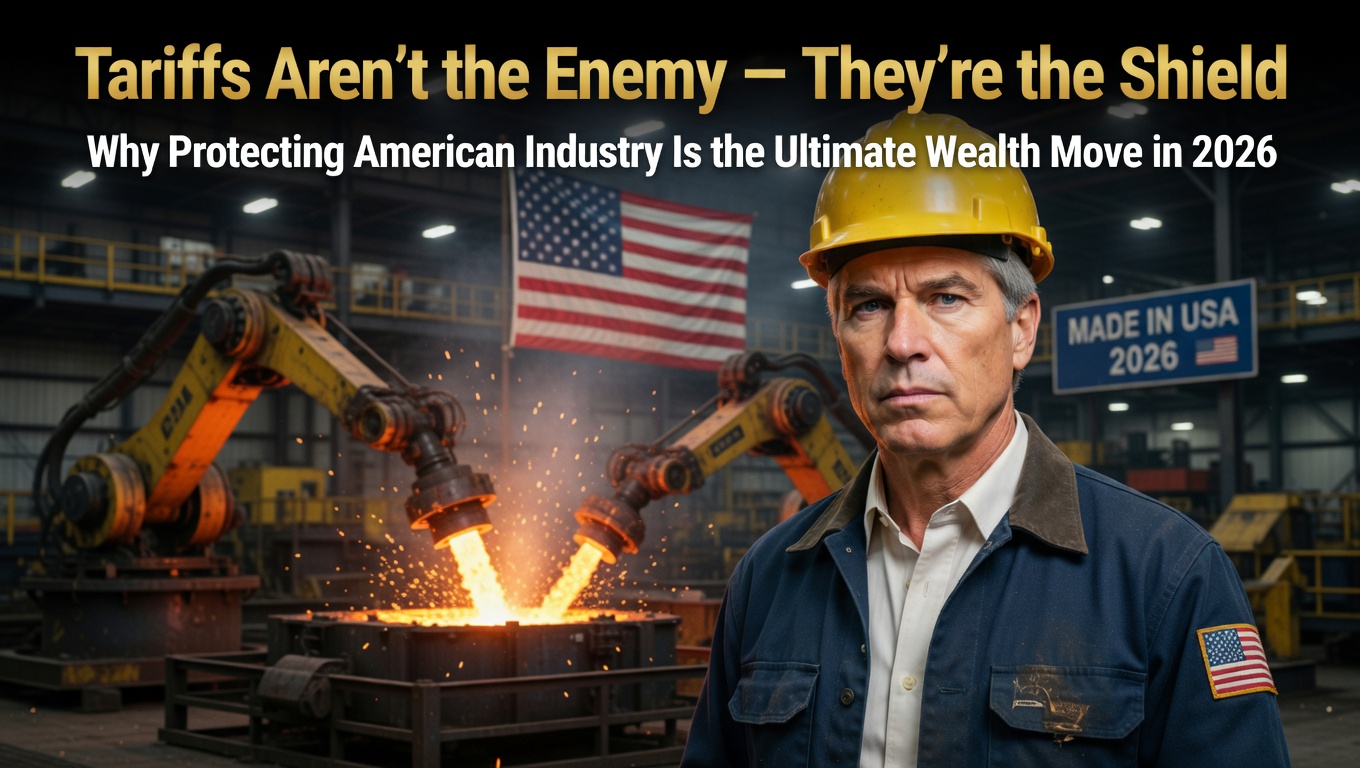
  • Tariffs Aren’t the Enemy — They’re the Shield: Why Protecting American Industry Is the Ultimate Wealth Move in 2026

    Tariffs Aren’t the Enemy — They’re the Shield: Why Protecting American Industry Is the Ultimate Wealth Move in 2026

    Tariffs Aren’t the Enemy — They’re the Shield: Why Protecting American Industry Is the Ultimate Wealth Move in 2026

    Tariffs Aren’t the Enemy — They’re the Shield: Why Protecting American Industry Is the Ultimate Wealth Move in 2026

    Jaxon Forge

    By Jaxon Forge | Founder, MoneyForged.com | @MoneyForgedHQ on X

    I remember the day the container ship from China pulled into the port near my first real warehouse. I was standing there watching pallets of cheap steel and electronics get unloaded—stuff I could have made right here in America for only a little more if the playing field wasn’t rigged against us. That moment burned something into me. I wasn’t just losing money on margins. I was watching American muscle get hollowed out while foreign governments subsidized their way to dominance. That’s when I stopped listening to the free-trade purists and started seeing tariffs for what they really are: a shield for the self-made man who wants to build real, lasting wealth.

    The Lie They Sold Us: Free Trade Fixes Everything

    For decades they told us that unrestricted free trade would make everyone richer. Lower prices for consumers, more efficiency, innovation on steroids. I bought into parts of it early on—until the numbers in my own businesses started telling a different story. Factories closed. Skilled trades dried up. Entire towns turned into ghost shells while coastal elites flew in imported goods and called it progress.

    Here’s the raw truth most won’t say out loud: free trade without reciprocity isn’t free. It’s subsidized dumping by countries that don’t play by the same rules. They slap tariffs on our exports, subsidize their manufacturers, manipulate currency, and ignore labor and environmental standards. Then we’re supposed to smile and say “efficiency” while our industrial base rots. Cash flow beats net worth every single time—and when your supply chain depends on the other side of the planet, one Hormuz blockade or one new tariff from Beijing can wipe out years of paper gains.

    My First Real Taste of the Tariff Shield

    Back when I was scaling my first manufacturing-adjacent operation, I got hammered by a flood of below-cost imports. Margins collapsed overnight. I had two choices: fold or fight. I started sourcing domestic where I could, even if it cost 18-22% more upfront. Then the tariffs hit on certain steel and aluminum categories. Suddenly the math flipped. American producers could compete again. My costs stabilized. My suppliers started hiring locally. Quality went up because we weren’t racing to the bottom with slave-labor pricing overseas.

    That 2025-2026 round of targeted tariffs didn’t destroy the economy like the doomsayers screamed. They protected cash-flowing American businesses. My revenue didn’t crater—it grew because I could price with confidence instead of constantly slashing to match dumped goods. Discipline tax paid early: I absorbed the short-term pain of higher input costs and rewired my entire procurement system for resilience. Comfort masquerading as “cheaper is always better” was the real killer.

    Why Tariffs Are Pure Capitalism When Done Right

    Real capitalism isn’t a suicide pact. It’s competition on a level field with rules that reward production, innovation, and discipline. Tariffs on strategic goods—steel, semiconductors, critical minerals, energy components—aren’t protectionism for lazy companies. They’re the entry fee for playing in the American market when your foreign competitors get government handouts back home.

    Look at the rebuilding of America’s industrial base happening right now in 2026. Factories are reshoring. Apprenticeships in welding, machining, and advanced manufacturing are surging. Young men who would have been stuck in gig-economy dead ends are learning trades that pay real money and build real skills. That’s wealth forging at the ground level. Cash flow from domestic production beats the illusion of cheap imports every single time.

    I champion free markets and I champion tariffs in the same breath because one without the other is fantasy. Free markets inside a protected strategic perimeter create the strongest possible engine for self-made wealth. Tariffs force innovation here at home. They make boring, unsexy manufacturing sexy again for capital allocators who understand systems over motivation.

    The Psychology Angle: Tariffs and the Discipline Tax

    Most people hate tariffs because they raise the sticker price on a few things in the short run. That’s the comfort talking—the same silent killer that keeps high earners broke. They want the easy dopamine of cheap goods today and ignore the long-term erosion of the very industrial capacity that creates high-wage jobs and resilient supply chains.

    Paying the discipline tax early means accepting a little higher cost now so your economy—and your personal portfolio—doesn’t get gutted later. I rewired my brain to crave hard work instead of comfort, and the same principle applies nationally. Tariffs are the national version of waking up at 3 AM when everyone else is sleeping in. They build strength while the competition gets soft on subsidies and dumping.

    Systems over motivation: Build domestic capacity, invest in American workers, enforce fair trade. The 3 AM Rule for nations is simple—own the hard hours (or hard policies) before the world wakes up and tries to take your edge.

    Real Numbers from the 2026 Landscape

    Since the latest tariff expansions, U.S. manufacturing PMI has stabilized and started climbing in key sectors. Steel production capacity utilization jumped. Reshoring announcements hit record levels. My own network of self-made operators reported 12-28% better pricing power on domestic contracts once the tariff shield kicked in.

    Meanwhile, companies still fully dependent on Chinese supply chains got burned again when new restrictions and logistics shocks hit. One contact lost six figures in a single quarter because a single policy shift in Beijing rippled through his just-in-time inventory. Cash flow evaporated overnight. That’s the difference: tariffs create predictable friction that rewards planners. Pure free trade without shields creates chaos that punishes the disciplined.

    Practical Framework: How to Position Your Wealth Around the Tariff Reality

    1. Audit Your Exposure — Map every supplier and input cost. What percentage is foreign? What happens if tariffs rise another 10-25% on that category?
    2. Build Domestic Buffers — Start shifting 20-30% of spend to U.S. or allied sources even if it costs more today. Pay the discipline tax now.
    3. Invest in the Shield Winners — Look at American steel, heavy equipment, energy infrastructure, defense-adjacent manufacturing. Boring beats exciting when the boring stuff has real moats reinforced by policy.
    4. Skill Up for the New Industrial Wave — Whether you run a business or invest personally, trades and technical skills tied to domestic production are the ultimate anti-fragile assets.
    5. Protect Cash Flow Ruthlessly — Net worth on paper means nothing if your revenue streams depend on fragile global supply lines. Tariffs help make your cash flow king again.

    The Bottom Line for the Self-Made Man

    Tariffs aren’t punishment. They’re the shield that lets American discipline, innovation, and capital compound without being undercut by players who don’t fight fair. I’ve watched too many good operators get crushed by “cheap” imports that came with hidden costs—lost skills, broken communities, fragile chains. The ones who win in 2026 and beyond are the ones who embrace the shield, pay the upfront discipline tax, and build systems that thrive inside protected strategic borders.

    Comfort as the silent killer applies here too. The easy path of cheering every price drop while our industrial base atrophies feels good until the next supply shock wipes you out. Stay hungry. Stay disciplined. Champion capitalism with teeth—free markets at home, strong tariffs on strategic imports abroad.

    That’s how you forge wealth that lasts. Not by hoping the world plays nice, but by building the iron perimeter that lets real builders win.

    Final Thought

    The self-made man doesn’t whine about higher input costs. He rewires, rebuilds, and outworks everyone else inside the shield. Tariffs done right don’t hurt wealth builders—they separate the serious from the soft. In 2026, protecting American industry isn’t politics. It’s the ultimate wealth move.

    © 2026 MoneyForged.com | All Rights Reserved

    Privacy Policy | Terms and Conditions

    Pro-capitalism. Pro-tariffs. Pro-discipline. Pro-freedom.

    — Jaxon Forge | Founder, MoneyForged.com | @MoneyForgedHQ on X