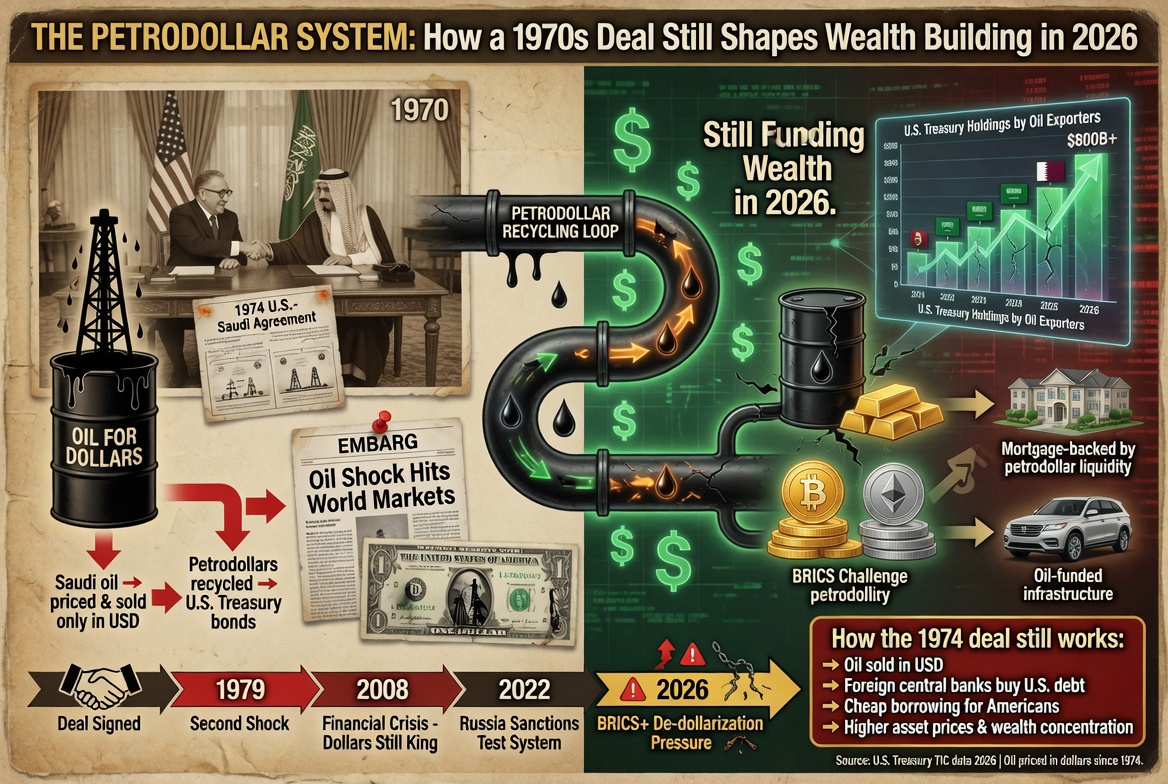
The Petrodollar System: How a 1970s Deal Still Shapes Wealth Building in 2026
A data-driven look at the agreement that gave the U.S. dollar its structural demand — and what every serious wealth builder needs to know today.

I’m Jaxon Forge, founder of MoneyForged.com. Over the years I’ve shared stories about rewiring my brain to crave systems instead of motivation, paying the discipline tax early, and turning boring businesses into cash-flow machines. Today I’m applying the same no-fluff lens to something bigger than any single side hustle: the petrodollar system.
This isn’t motivational hype. It’s a data-driven look at how a pragmatic 1970s deal between the United States and Saudi Arabia locked the U.S. dollar into the world’s most important commodity trade.
The Setup: Bretton Woods Ends, the Dollar Needs a New Anchor (1971)
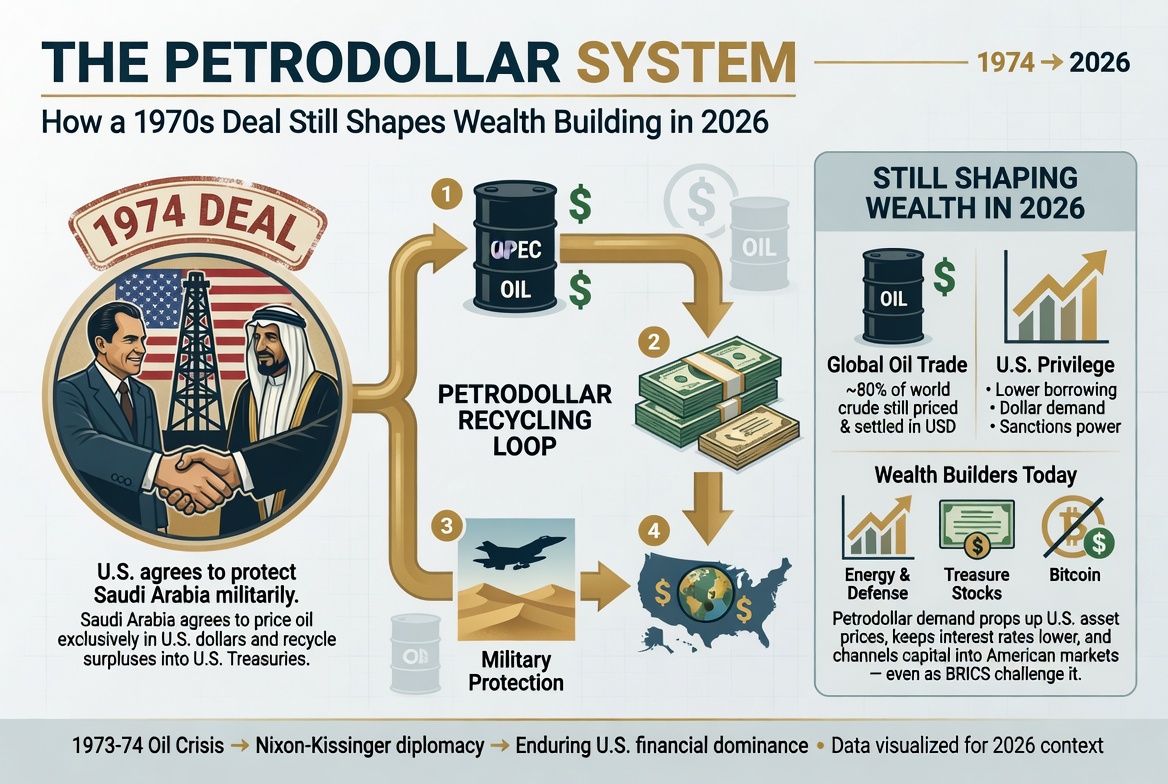
August 15, 1971. President Richard Nixon suspends dollar-to-gold convertibility. The Bretton Woods system collapses. Oil was already largely priced in dollars, but the 1973 OPEC embargo changed everything. Crude prices jumped from roughly $3 per barrel in early 1973 to over $12 by 1974.
Nominal Crude Oil Prices (USD per Barrel) — 1970–2025
The 1974 U.S.-Saudi Agreement: The Birth of the Petrodollar
In June 1974, U.S. officials met with Saudi leaders. The informal understanding: Saudi Arabia would price and sell its oil exclusively in U.S. dollars and recycle those revenues into U.S. Treasury securities.
Approximate Petrodollar Recycling in the 1970s
The Numbers That Matter Today (2026)
USD Share of Global Foreign Exchange Reserves (%)
What This Means for Wealth Builders
A strong dollar — supported in part by petrodollar demand — has kept U.S. borrowing costs manageable and preserved purchasing power for American savers and investors.
This reinforces three practical rules I live by:
- Cash flow still beats net worth. Dollar strength helps U.S.-based cash-flow assets.
- Diversification without gambling. I own assets I can influence — rental properties, boring businesses, some precious metals.
- Discipline over trends. I evaluate every new money-making idea against macro realities like currency flows and energy geopolitics.
The Bottom Line
The petrodollar system delivered decades of dollar dominance and lower U.S. borrowing costs. Today the data shows resilience with measurable erosion at the margins.
Study the systems that move capital, pay the discipline tax early, and build assets that generate cash flow regardless of which currency the next barrel of oil is priced in.
Stay disciplined. Stay curious. Forge forward.
— Jaxon Forge
Founder, MoneyForged.com
@MoneyForgedHQ on X
Stories and advice from Jaxon Forge, the Founder of MoneyForged.com
Get the systems, calculators, and unfiltered truth delivered straight to your inbox.