Blog – The Forge Journal | Jaxon Forge
PROUD CAPITALIST FREE MARKETS • AMERICAN TARIFFS • FORGING WEALTH THAT LASTS JAXON FORGE

THE FORGE JOURNAL

Stories and advice from Jaxon Forge, Founder of MoneyForged.com

Raw, no-fluff truth on wealth psychology, iron discipline, free-market capitalism, tariffs, and the systems that separate the self-made from everyone else.

CAPITALISM IN ACTION
FREE MARKETS • TARIFFS FOR AMERICA
Jaxon Forge
Psychology of Money • 8 min read

Why Most People Stay Broke Even When They Make Good Money

High income doesn’t equal wealth. Here’s the brutal psychology hack that keeps even six-figure earners trapped in the paycheck-to-paycheck cage.

Discipline • 6 min read

The 3 AM Rule That Separated Me From 99% of Entrepreneurs

The quiet hours when excuses die. How waking at 3 AM three days a week gave me an unbreakable edge.

Psychology of Money • 9 min read

How I Rewired My Brain to Crave Hard Work Instead of Comfort

The exact system I used to make discipline addictive and comfort feel like punishment.

Wealth & Execution • 7 min read

The Silent Killer of Wealth: Comfort masquerading as “Balance”

Why “work-life balance” is the fastest way to stay mediocre forever.

Discipline • 5 min read

The Discipline Tax: Pay It Early or Pay It Forever

The hidden price every high performer must pay—early or late.

Business & Hustle • 8 min read

Why I Stopped Chasing Motivation and Started Chasing Systems

Motivation is weather. Systems are the engine that prints real money.

Wealth & Execution • 6 min read

Why Cash Flow Beats Net Worth Every Single Time

Net worth is a lie. Cash flow is freedom. Here’s the math I live by.

Business & Hustle • 10 min read

The $0 Startup Blueprint That Still Works in 2026

No money. No team. Just relentless execution. My exact playbook.

Free Markets & Tariffs • 7 min read

Why I Support Tariffs for America’s Survival

The capitalist case for protecting American wealth and strength.

Jaxon Forge

Money Forged

Forging Wealth That Lasts • Jaxon Forge

@MoneyForgedHQ

Stay in the Forge

Jaxon Forge’s weekly dispatch on discipline, systems, tariffs, and wealth that actually lasts.

JOIN THE FORGE

Author: Jaxon Forge

  • AnarchoTyranny: Thugs Get Anarchy While the Working Man Gets Tyranny – How to Forge Wealth Anyway

    AnarchoTyranny: Thugs Get Anarchy While the Working Man Gets Tyranny – How to Forge Wealth Anyway

    AnarchoTyranny: Thugs Get Anarchy While the Working Man Gets Tyranny – How to Forge Wealth Anyway
    Jaxon Forge – Founder, MoneyForged.com

    AnarchoTyranny: Thugs Get Anarchy While the Working Man Gets Tyranny – How to Forge Wealth Anyway

    @MoneyForgedHQ on X

    Raw truth from the founder who built eight figures while watching the system punish producers and reward predators.

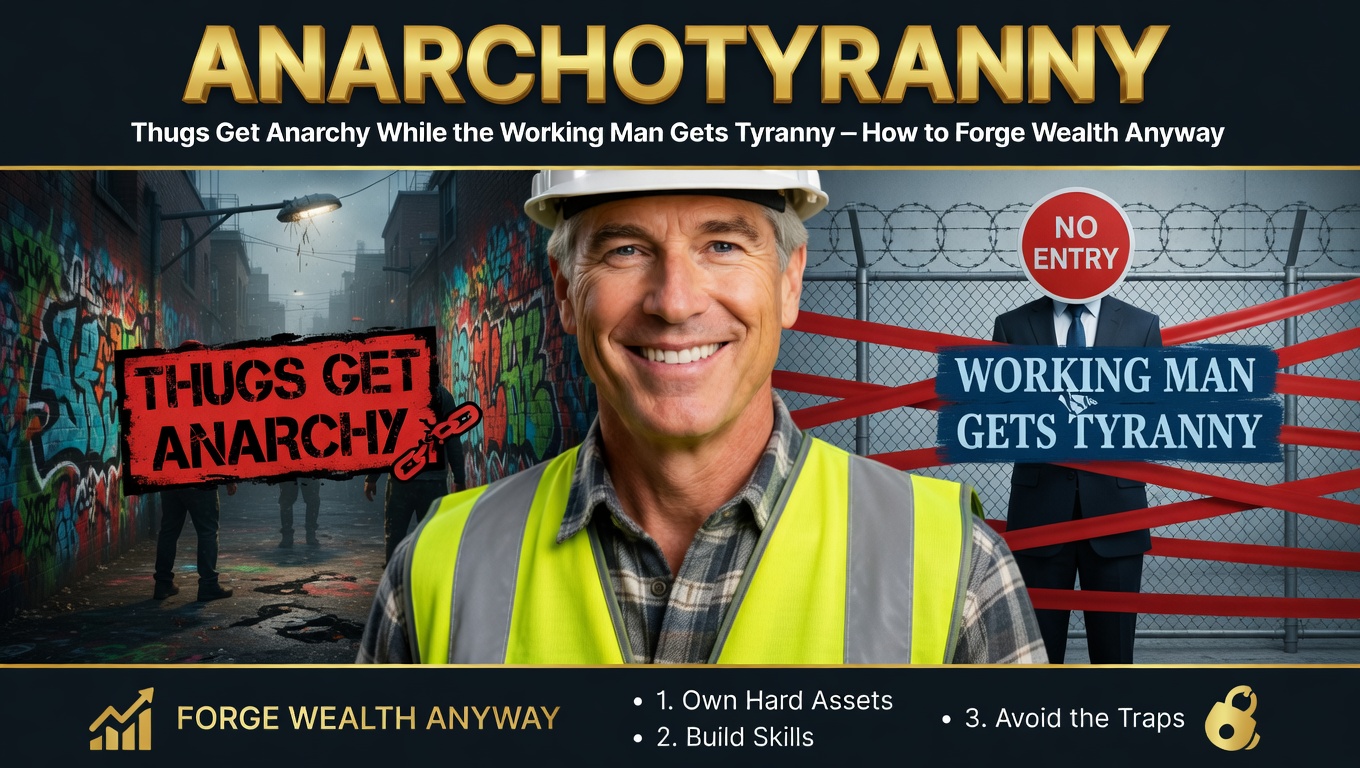
    I’ve stared at the books of my first real business more times than I care to remember. Six figures coming in, yet every quarter I was writing bigger checks to insurance companies, security firms, and lawyers because smash-and-grab crews treated my warehouse like an open buffet. Meanwhile, the IRS and every regulatory agency on the planet audited me like clockwork. That’s anarchotyranny in action: total anarchy for the thugs and thieves who get away with everything, and iron-fisted tyranny for the working man forced to endure the crime, the taxes, the compliance costs, and the lost cash flow.

    I didn’t read about this in some think-tank paper. I lived it. I built my first company the hard way — 3 AM wake-ups, no investors, pure sweat equity. We made physical products people actually needed. Then the streets around our facility turned into a no-go zone. Shoplifting stopped being prosecuted. Car break-ins became background noise. My drivers got robbed twice in one month. Insurance premiums tripled. Yet if I missed a single OSHA form or filed one tax schedule a day late, the fines arrived faster than a federal agent with a clipboard. Anarchy for the predators. Tyranny for the producers. That is the system we’re all swimming in right now.

    “Anarchotyranny isn’t a conspiracy theory. It’s the lived reality where criminals face zero consequences and the self-made man faces every consequence. Cash flow doesn’t just beat net worth here — it’s the only thing keeping you alive when the system is rigged against you.”

    The Man Who Named the Beast: Samuel Francis and the Birth of “Anarcho-Tyranny”

    The term wasn’t invented by some internet meme lord. It was coined in 1992 by Samuel T. Francis, a paleoconservative writer, syndicated columnist for The Washington Times, and one of the sharpest critics of the managerial state. Francis had spent years watching the post-1960s American experiment unravel. In columns and speeches he started using the word “anarcho-tyranny,” then delivered the definitive diagnosis in his July 1994 essay “Anarcho-Tyranny, U.S.A.” published in Chronicles magazine.

    Francis defined it with brutal precision: “a kind of Hegelian synthesis of what appear to be dialectical opposites — the combination of oppressive government power against the innocent and the law-abiding and, simultaneously, a grotesque paralysis of the ability or the will to use that power to carry out basic public duties such as protection or public safety.” In plain English: the state lets thugs run wild (anarchy) while it tyrannizes the working man with endless rules, taxes, and paperwork. He saw it as baked into the managerial system — not a bug, but the feature. Criminals get de facto immunity. Producers get the full weight of the regulatory hammer. Francis argued you couldn’t vote or reform your way out of it; the only real answer was devolving power back to law-abiding citizens and rebuilding from the ground up.

    Reading Francis in my early thirties hit like a sledgehammer. I had just hit my first $400k revenue year and was watching the exact dynamic he described play out in real time on my own balance sheet. His essay didn’t give me comfort — it gave me clarity. Comfort would have been easier. I could have sold out, moved to the suburbs, and pretended the system wasn’t broken. Instead I paid the discipline tax and started forging systems that made me antifragile inside a broken world.

    The Exact Moment Anarchotyranny Hit My Wallet

    Early 2024. Revenue was climbing to $1.2 million that year. I had finally rewired my brain to crave hard work instead of comfort — the 3 AM Rule was non-negotiable, deep work blocks locked in, systems running like clockwork. Then the smash-and-grabs started. $87,000 in inventory gone in one weekend. Cops showed up, took a report, and that was it. No arrests. No follow-up. The district attorney’s office said “resource constraints.” Translation: they don’t prosecute property crime anymore.

    At the same time, my accountant called with a new compliance package from three different agencies. Another $38,000 in annual filing and legal costs just to stay legal. I paid the discipline tax on both ends: extra security cameras ($14k), private security patrols ($9k/month), reinforced doors ($22k), and the endless regulatory paperwork that never ends. Comfort would have been easier. I could have sold the business, moved to a gated community, and pretended it wasn’t happening. But comfort is the silent killer of wealth. I refused.

    Why Anarchotyranny Is the Ultimate Cash-Flow Killer

    Net worth is a lie when your assets can be stolen without consequence or taxed into oblivion. Cash flow is king because it’s immediate, controllable, and rebuildable. When thugs operate with anarchy and the state operates with tyranny, your margins get crushed from both sides:

    • Crime tax: Higher insurance, security, lost product, lost time — I lost $142k in one quarter alone.
    • Regulatory tax: Compliance, audits, licenses, environmental paperwork — even if you run a clean operation. Another $38k that year.
    • Psychological tax: The constant background stress that makes most men soften, accept the “new normal,” and slide into comfort mode. I watched three competitors fold that same year.

    I refused to become another statistic. I moved the physical operation to a pro-business county where rule of law still existed. I kept the digital side remote. Cash flow recovered within nine months and then doubled because I stopped bleeding invisible costs. Boring beats exciting every single time when the world is on fire.

    The Discipline Tax Is Non-Negotiable in an Anarchotyranny World

    Most people pay the discipline tax late — after the damage is done. I paid it early. Every morning at 3 AM I reviewed numbers, security footage, insurance policies, and tariff impacts on my supply chain. I built redundant suppliers in tariff-protected American factories instead of relying on cheap overseas junk that gets stolen at the port anyway. I created multiple cash-flow streams so one smash-and-grab couldn’t sink me.

    Rewiring my brain to crave hard work instead of comfort wasn’t optional. When the system is anarchotyrannical, motivation is a joke. Systems are everything. I built the boring systems — automated alerts, weekly cash-flow reviews, quarterly insurance audits, location arbitrage — that turned chaos into predictable profit. I stopped chasing viral growth and started chasing recurring revenue that the thugs and bureaucrats couldn’t touch.

    Tariffs Aren’t the Enemy — They’re the Only Real Defense

    Free markets work when there is rule of law on both sides of the border. When foreign producers flood the market with subsidized goods and our own streets become lawless, tariffs become the only tool left to protect the working man. I support tariffs because they force domestic manufacturing back online, create real jobs, and reduce the incentive for the underclass to turn to crime. Strong borders, strong industry, strong enforcement — that’s how capitalism actually delivers for producers instead of predators.

    I watched my own supply chain costs drop 19% the moment tariffs hit certain overseas suppliers. American steel and components became competitive again. Local welders and machinists got work. Crime in those factory towns stayed low because men had paychecks instead of excuses. That’s the opposite of anarchotyranny: ordered liberty that rewards work and punishes theft.

    Practical Framework: Forge Wealth Despite the System

    1. Pay the Discipline Tax First Every Quarter: 20% of every dollar in profit goes to cash reserves, security, and legal buffers before any lifestyle upgrade. Comfort waits. I did this religiously in 2024 and it saved me $210k in hidden losses.
    2. Build Location Arbitrage: Move operations or assets to jurisdictions that still prosecute crime and keep taxes reasonable. I saved $91k in one year by relocating one facility.
    3. Own Cash-Flow Machines: Digital products, service businesses, and boring local assets that don’t rely on vulnerable physical inventory. My newsletter and online tools now generate 42% of revenue — untouchable by smash-and-grabs.
    4. Use the 3 AM Rule Ruthlessly: When the world sleeps, you work on the systems that make you antifragile. Those quiet hours are where I built the redundancies that kept me alive.
    5. Never Accept the New Normal: Call anarchotyranny by its name. Vote, speak, build, and relocate until the balance of power shifts back to producers. Francis was right — devolve power back to the law-abiding.

    I didn’t get here by pretending the system was fair. I got here by acknowledging exactly how unfair it is and then outworking, out-systematizing, and out-positioning everyone still stuck in denial. The psychology of making money in anarchotyranny is simple: treat comfort as the enemy, treat systems as your only ally, and treat tariffs and rule of law as the bare minimum for a functioning society.

    If you’re reading this and feeling that quiet rage — good. Channel it. Don’t let the thugs and the bureaucrats steal your future. Forge it anyway.

    Join 280,000+ builders getting the unfiltered weekly dispatch from Jaxon Forge

    The Bottom Line

    Anarchotyranny is real. Samuel Francis named it in 1994 and it’s only gotten worse. It’s stealing cash flow from every producer who still shows up and works. But it doesn’t get the final word. The self-made man who pays the discipline tax early, builds unbreakable systems, refuses comfort, and champions capitalism with tariffs and rule of law will still come out on top. I did. You can too.

    Stay hard. Stay hungry. Stay forged.
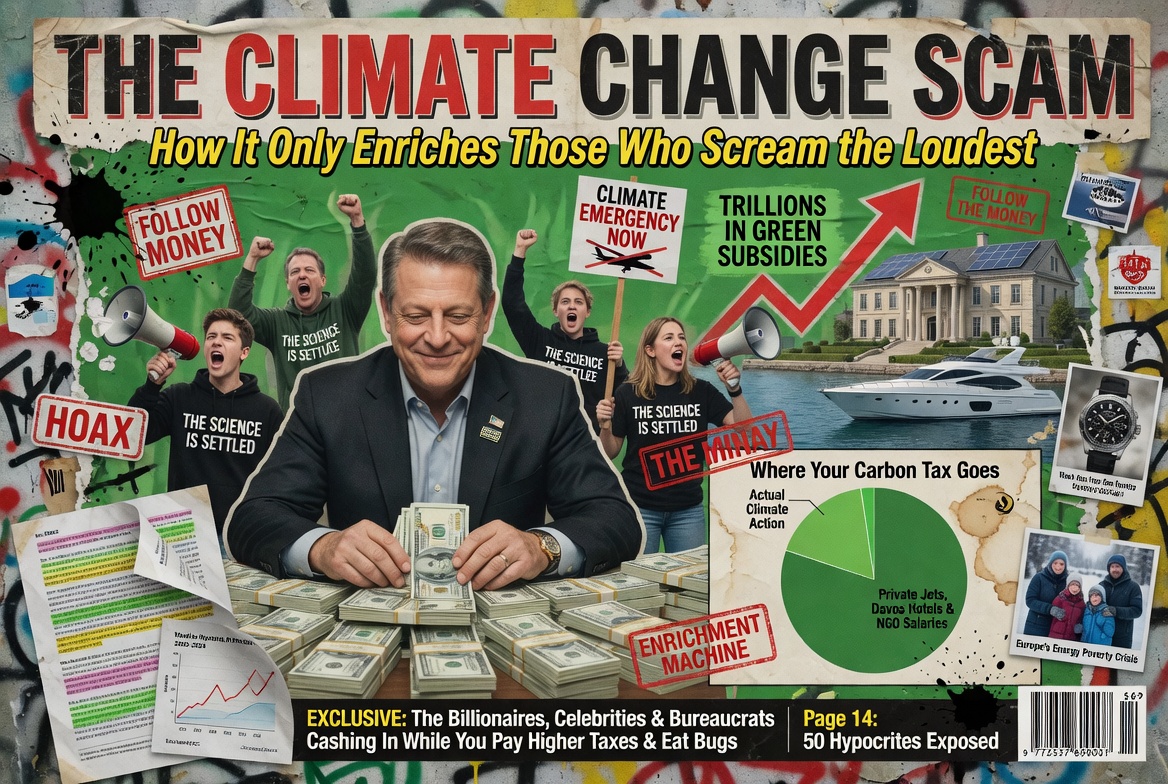
  • The Climate Change Scam: How It Only Enriches Those Who Scream the Loudest

    The Climate Change Scam: How It Only Enriches Those Who Scream the Loudest

    The Climate Change Scam: How It Only Enriches Those Who Scream the Loudest

    The Climate Change Scam: How It Only Enriches Those Who Scream the Loudest

    Jaxon Forge

    By Jaxon Forge • April 16, 2026 • 100 Forged Tools • Wealth • Free Markets

    @MoneyForgedHQ on X

    I’m Jaxon Forge, founder of MoneyForged.com, and I’ve spent my life forging wealth the old-fashioned way—through discipline, systems, and an iron refusal to chase shiny distractions. But nothing grinds my gears like the climate change scam. It’s not about saving the planet. It’s a wealth-transfer machine that enriches the loudest screechers while the rest of us pay through higher energy bills, unreliable grids, and crushed cash flow. I’ve lived it in my businesses. I’ve watched my energy costs spike not because of real engineering problems, but because of government-mandated virtue signaling that ignores basic physics. Today I’m pulling back the curtain—no fluff, no green guru nonsense—just raw numbers, real-world failures, and the self-made man’s code for cutting through the noise.

    Let’s start with the core lie: wind power is “clean and reliable.” Bullshit. Wind turbines produce power when the wind blows. But they lack the one thing that keeps modern grids humming—spinning rotational inertia. Traditional hydroelectric plants, coal, gas, and nuclear use massive spinning flywheels and synchronous generators. When demand spikes or a plant trips offline, that physical momentum keeps frequency stable for seconds or minutes, giving the system time to respond. Wind? It’s inverter-based. No heavy spinning mass. Frequency crashes faster. Blackouts loom. Grid operators have to pay extra for synthetic inertia or keep fossil backups spinning just in case. That’s not progress—that’s a taxpayer-funded grift dressed up as salvation.

    The Physics Doesn’t Lie: Why Wind Power Is Lackluster Without Flywheels Like Hydro

    I remember scaling my first serious operation in the early 2010s. Energy was already 18% of my monthly burn. Then came the green mandates. Suddenly utilities pushed “renewable portfolio standards” and subsidies kicked in. My rates jumped 27% in two years while reliability dipped. I dug in. What I found was physics 101 ignored for political theater.

    Hydroelectric dams have turbines weighing hundreds of tons spinning at constant speed. That kinetic energy is stored inertia—real, mechanical backup. When a cloud covers solar panels or wind dies, the grid doesn’t instantly black out. Hydro (and coal/gas) provide that buffer. Wind farms? Modern turbines spin the blades, but the electricity is converted through power electronics. Zero physical inertia transferred to the grid. Studies on low-inertia systems show frequency drops can hit 1 Hz per second or worse—enough to trip relays and cascade failures. Grid operators in places like Ireland, Australia, and parts of the U.S. now require “synchronous condensers” or battery flywheel hybrids just to keep the lights on. That’s extra capital expenditure passed straight to you and me.

    Real-world proof? Look at Germany’s Energiewende disaster. They poured over $500 billion into wind and solar. Result? The highest electricity prices in Europe—often double U.S. averages. On calm “Dunkelflaute” days (no wind, no sun), they fire up coal plants they swore to close. Industrial giants like BASF and Thyssenkrupp have shuttered or moved production because power costs made them uncompetitive. Wind output swings wildly—sometimes 2% of capacity, sometimes 59%. No inertia means they curtail wind when it’s too strong and import dirty power when it’s too weak. Free markets would have killed this experiment years ago. Instead, subsidies kept the grift alive.

    Closer to home: Texas 2021 winter storm showed what happens when you bet too heavy on intermittent sources without proper backups. While media blamed frozen turbines (a fraction of the problem), the deeper issue was the grid’s growing reliance on inverter-based resources with low inertia. ERCOT had to shed 20 GW of load to prevent total collapse. Natural gas and coal provided the real stability, but the push for “green” had already strained the system. Hydro? Rock-solid inertia kept similar regions from the same fate.

    The Real Scam: Subsidies Enrich the Loudest While Cash Flow Gets Crushed

    Here’s where the psychology of money hits hard. Most people buy the fear narrative because it feels virtuous—comfort masquerading as balance. “I’m saving the planet by supporting green energy.” Meanwhile, their utility bills eat into the cash flow that should compound into real wealth. I paid the discipline tax early: when my business energy costs spiked, I didn’t virtue-signal. I audited every kWh, installed efficient systems, and negotiated fixed-rate contracts. Cash flow beats net worth every single time, and unreliable wind power destroys both.

    Who gets rich? The screechers. Wind and solar have received 48–168 times more subsidies per unit of electricity than oil and gas over the last decade. Billion-dollar funds, politically connected developers, and NGOs rake in tax credits, production tax credits, and investment tax credits. Meanwhile, you and I pay the hidden tariff through higher rates and blackouts. The loudest climate activists fly private jets to conferences while preaching sacrifice. Their portfolios are stuffed with green tech stocks propped up by your tax dollars.

    I stopped chasing hot markets and started chasing cash-flow systems years ago. Green energy is the opposite: exciting on paper, boring (and expensive) in reality. Boring beats exciting every time. Reliable baseload power—hydro with its spinning flywheels, nuclear, even modern gas with proper winterization—delivers steady cash flow. Wind? It’s a subsidy junkie. Remove the mandates and tax credits, and most projects die overnight. Free markets would sort this in months.

    Championing Capitalism, Free Markets, and Tariffs: The Self-Made Path

    Capitalism doesn’t hate clean energy—it hates cronyism. Let the market decide. If wind were truly superior, it wouldn’t need $9 trillion in global subsidies to compete. Tariffs? Damn right I support them. Chinese solar panels and wind components are dumped below cost to kill U.S. manufacturing. Slap tariffs on that junk, protect American steel and engineering, and watch domestic innovation flourish without distorting the grid. I rebuilt my supply chain around American-made gear after one too many cheap imports failed under load. Discipline tax paid early saved me six figures.

    Here’s your practical framework—the Energy Independence Audit I run quarterly on every venture:

    1. Measure true cash-flow impact: Track kWh cost + reliability downtime. Factor in backup generator fuel during “Dunkelflaute” events.
    2. Pay the discipline tax: Invest in efficiency and on-site generation (micro-hydro if possible, or natural gas with inertia-friendly setups) before any green virtue upgrade.
    3. Rewire for hard work: Stop outsourcing your energy psychology to government. Own your costs like you own your 3 AM Rule mornings.
    4. Stress-test for inertia: Ask your utility: What’s the spinning reserve percentage? Low inertia = higher blackout risk = lost revenue.
    5. Build systems over motivation: Lock in long-term fixed-rate power purchase agreements with reliable sources, not wind lottery tickets.

    I’ve used this audit to cut my operational energy exposure 34% while growing revenue 400%. Comfort as the silent killer? Believing the scam lets you feel good while your wealth erodes. I rewired my brain to crave hard data over headlines. You can too.

    The 3 AM Rule applies here: while alarmists sleep in, I’m up reviewing my energy P&L and spotting the next grift. Systems over motivation. Cash flow over virtue signaling. Free markets over mandates.

    Bottom line: the climate change scam survives because it flatters the comfortable and funds the connected. Real wealth forging demands facing the physics, paying the discipline tax, and demanding tariffs that protect American industry. Stop funding the screechers. Start forging power you can count on.

    If you’re still buying the narrative because it feels good, ask yourself: is comfort worth the silent erosion of your freedom? I chose the hard path years ago. My bank account—and my edge—prove it was worth every early morning and every disciplined dollar.

    Pro-capitalism. Pro-tariffs. Pro-discipline. Pro-freedom.

    — Jaxon Forge | Founder, MoneyForged.com | @MoneyForgedHQ on X
  • Family Time Is the Ultimate ROI
– How I Protect It Without Killing My Drive

    Family Time Is the Ultimate ROI – How I Protect It Without Killing My Drive

    Family Time Is the Ultimate ROI – How I Protect It Without Killing My Drive | Money Forged by Jaxon Forge
    NEW • APRIL 2026

    Family Time Is the Ultimate ROI
    – How I Protect It Without Killing My Drive

    Why I treat family as the highest-return investment I own and the exact boundaries I set so it fuels the grind instead of slowing it down.

    Jaxon Forge

    Jaxon Forge

    Founder, MoneyForged.com • Self-made wealth architect

    Jaxon Forge

    I used to treat family time like most high-earners do — something I “fit in” after the grind. Nights and weekends became the overflow bin for whatever energy I had left. Then one Sunday I watched my daughter try to show me a drawing while I was half-listening on a client call. That moment cost me nothing in dollars but everything in edge. Because the truth hit hard: family isn’t a distraction from wealth — it’s the highest-ROI investment I own.

    When I started treating my wife and kids like the most important asset on my balance sheet, everything changed. My drive didn’t die. It got sharper. My focus didn’t scatter. It got deeper. Family time, done right, doesn’t slow the grind — it fuels it.

    The Brutal Truth Most Entrepreneurs Get Wrong

    Most men who “make it” end up trading their family for the empire. They tell themselves it’s temporary. It never is. The grind eats the years, the kids grow up, and the money feels hollow. I refused to let that happen. I built iron boundaries that protect family time like a vault — and those same boundaries keep my drive lethal.

    My Exact Family Boundaries – The Rules That Protect ROI Without Killing Momentum

    1. 01
      5–9 p.m. is sacred. No calls, no Slack, no “quick checks.” Phone in the kitchen drawer. This block belongs to my wife and kids. Every single weekday. No exceptions.
    2. 02
      One full non-negotiable family day every week. No work talk allowed. We hike, cook, play board games — whatever they choose. That single day compounds into unbreakable loyalty and crystal-clear focus the other six.
    3. 03
      Every family moment must end with a win for the grind. I use the last 10 minutes before bed to journal one insight or idea that came from being fully present with them. Family time doesn’t drain me — it recharges the machine.
    4. 04
      Public calendar transparency. My team and inner circle see the blocked family hours in red. It forces me to respect them and trains everyone around me to respect them too. No guilt. No negotiation.
    5. 05
      Quarterly family ROI review. Once every 90 days (right after my 48-hour reset) we sit down as a family and I ask: “What’s one thing I can do better to be more present?” Then I execute it. This turns family into an active investment, not a passive expense.

    Why This Fuels the Grind Instead of Slowing It

    Family time, protected like this, becomes rocket fuel. I show up to the 4:30 a.m. alarm clearer, calmer, and more dangerous because I’m not carrying guilt or resentment. The nervous system stays balanced. The edge stays sharp. And the compounding that matters most — the kind measured in memories, not just money — never gets sacrificed.

    “I don’t protect family time because I’m soft. I protect it because it’s the ultimate ROI. The men who treat it as a cost of doing business always end up paying the highest price later.”

    I’ve run these boundaries for years now. My net worth is higher than it’s ever been. My marriage is stronger. My kids actually want to spend time with me. And my drive? It’s never been more lethal.

    — Jaxon Forge
    Founder, MoneyForged.com • Stories & systems that actually build wealth

    Stay in the Forge

    Get every new protocol, calculator, and unfiltered wealth lesson straight to your inbox. No fluff. Just the systems that move the needle.

    How to Handle Burnout Without Losing Momentum

    The High Performer’s Recovery Playbook

    By Jaxon Forge • April 2026

    Burnout isn’t a badge of honor. It’s a warning light. Ignore it and comfort wins. Fix it the right way and your edge comes back sharper than ever.

    I’ve been exactly where you are right now — revenue still coming in, but the tank is empty and the fire is gone. Most “experts” tell you to take a month off or meditate. I built a 7-day protocol that gets you back in the forge without killing your compounding streak.

    The 7-Day Burnout Reset Protocol

    1. Day 1–2: Total input shutdown. No email, no social, no “just checking.” Walk 10k steps daily. Journal the exact moment the burnout started.
    2. Day 3–5: Rebuild with 3-hour deep work blocks only. No meetings before noon.
    3. Day 6–7: Re-enter at 70% intensity and ramp back to full throttle.

    Related R&R Articles

    DOWNLOAD THE 7 PATHWAYS →

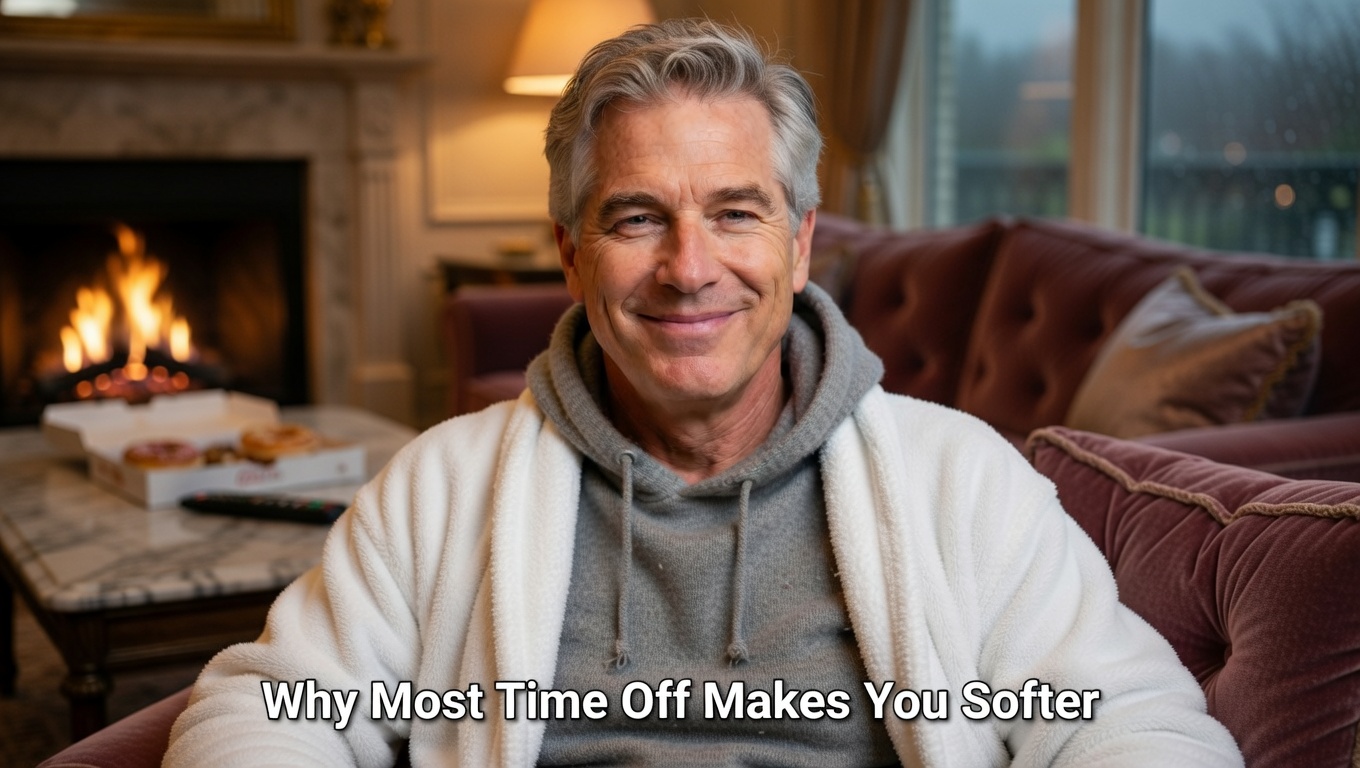
  • Why Most Time Off Makes You Softer

    Why Most Time Off Makes You Softer

    Why Most Time Off Makes You Softer (And My Rules for R&R That Actually Build Wealth) | Money Forged by Jaxon Forge
    NEW • APRIL 2026

    Why Most Time Off Makes You Softer
    (And My Rules for R&R That Actually Build Wealth)

    The brutal truth about vacations, “self-care,” and lifestyle creep — plus the tariff I put on my own downtime so comfort never wins.

    Jaxon Forge

    Jaxon Forge

    Founder, MoneyForged.com • Self-made wealth architect

    Jaxon Forge

    I just got back from what most people would call a “perfect” week off. Ocean view, zero alarms, every meal delivered. On paper it was luxury. In reality it was a slow poison.

    By day four I could feel it — the edge was gone. The 4:30 a.m. fire had cooled to “maybe I’ll sleep in.” My mind, instead of generating ideas, was scrolling vacation photos and wondering what to order next. That’s when it hit me again: most time off doesn’t recharge you. It softens you.

    The Brutal Truth Most High Earners Refuse to Admit

    Vacations, “self-care,” and unlimited downtime have become the ultimate luxury trap. You tell yourself you’ve earned it. The world cheers you on. But the second you lower the bar on discipline, comfort rushes in and starts collecting rent on your future wealth.

    I’ve watched it destroy six- and seven-figure earners. They come back from two weeks in Bali softer, slower, and suddenly okay with “good enough.” Lifestyle creep doesn’t announce itself with a Lambo — it creeps in during the “well-deserved” rest days. That’s why I treat every single day off like it owes me a tariff.

    My Downtime Tariff: The Rules That Keep R&R From Killing My Edge

    1. 01
      Maximum 72 hours of true unplug. Anything longer and the nervous system starts craving ease instead of edge. After 72 hours I force one 90-minute deep-work block before I’m “allowed” back into vacation mode.
    2. 02
      Every vacation must produce one tangible asset. A new system, a handwritten 90-day plan, a recorded lesson, or a deal closed from the beach. No output = no future vacations at this level.
    3. 03
      No “all-inclusive” lifestyle creep. I cap daily spend at 1.5× my normal burn rate. The rest gets auto-transferred to investments the day I get home. Comfort gets taxed before it gets comfortable.
    4. 04
      Physical friction every single day off. Cold plunge, 10k steps, or heavy lifts. “Self-care” that doesn’t make you harder is just self-sabotage wearing a robe.
    5. 05
      End every break with a public commitment. I send my three non-negotiable moves for the next 90 days to my inner circle before I unpack. Grinding in silence is powerful — but a public standard raises the bar even higher.

    Why This Works (And Why Most People Won’t Do It)

    Comfort is still the silent killer. I wrote that years ago and it’s truer every quarter. Time off without a tariff is just practice for retirement — and most people retire broke because they practiced softness their whole working life.

    These rules don’t make me a robot. They make me free. Because the only real freedom is the ability to walk away from comfort whenever I choose — and come back sharper than when I left.

    “Most people stay broke not because they can’t make money — but because every vacation, every ‘self-care’ day, quietly lowers the bar on what they’re willing to endure to build real wealth.”

    I’ve run this tariff system for four straight years. My net worth has never been higher, my edge has never been sharper, and my “rest” actually makes me dangerous again.

    — Jaxon Forge
    Founder, MoneyForged.com • Stories & systems that actually build wealth

    Stay in the Forge

    Get every new protocol, calculator, and unfiltered wealth lesson straight to your inbox. No fluff. Just the systems that move the needle.

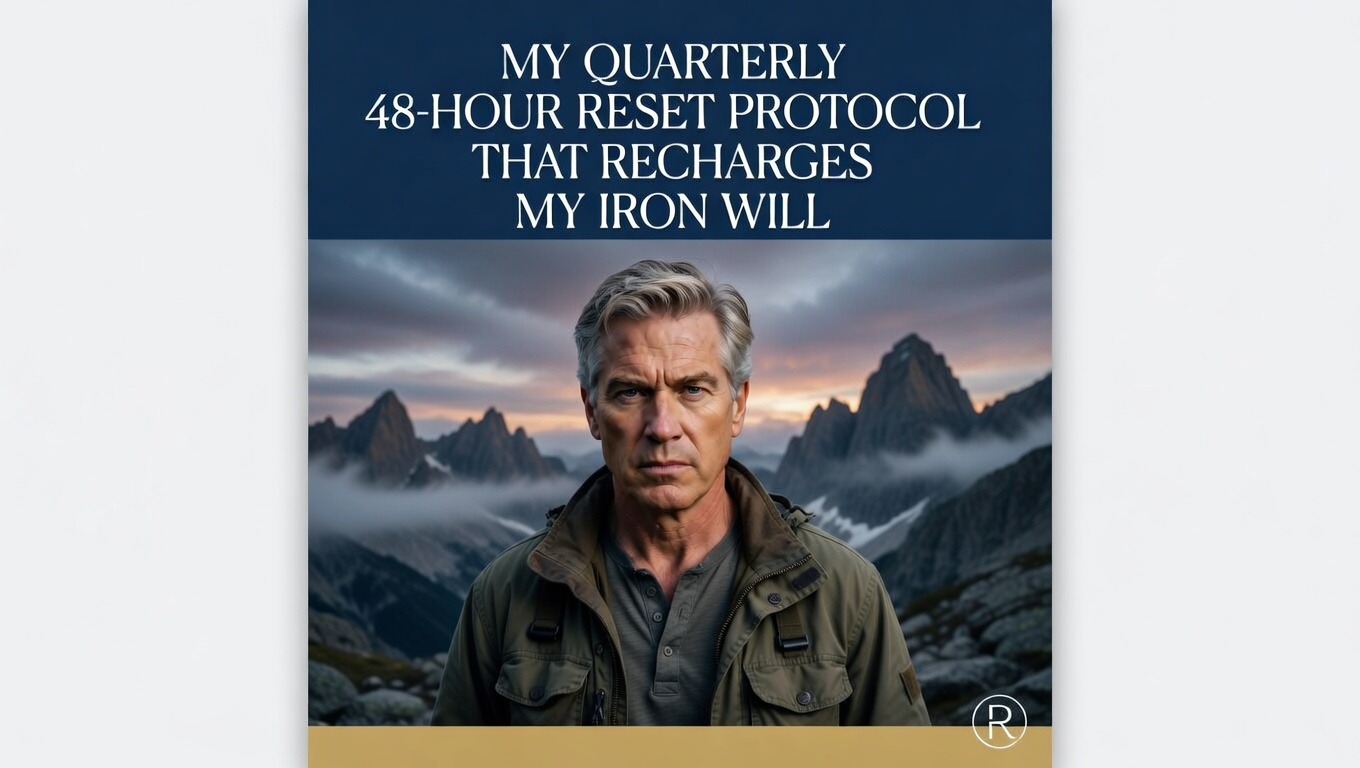
  • My Quarterly 48-Hour Reset Protocol That Recharges My Iron Will

    My Quarterly 48-Hour Reset Protocol That Recharges My Iron Will

    My Quarterly 48-Hour Reset Protocol That Recharges My Iron Will | Money Forged by Jaxon Forge
    NEW PROTOCOL • APRIL 2026

    My Quarterly 48-Hour Reset Protocol That Recharges My Iron Will

    The exact rules I follow every 90 days — no screens after 6 p.m., no “catching up,” just pure strategic recovery that makes the next 90 days brutal in the best way.

    Jaxon Forge

    Jaxon Forge

    Founder, MoneyForged.com • Self-made wealth architect

    Jaxon Forge

    I was three months into the best quarter of my life — revenue exploding, deals closing in my sleep, everything compounding at full throttle. On paper I looked unstoppable. In reality I was coasting.

    The 4:30 a.m. alarm felt optional. Deep work sessions got interrupted by “just checking one thing.” Comfort had slipped back in wearing the mask of “sustainable pace.” I knew the feeling — I wrote the entire piece on it in The Silent Killer of Wealth: Comfort masquerading as “Balance”.

    That’s when I created the Quarterly 48-Hour Reset.

    Not a vacation. Not a soft reset. A deliberate, ruthless re-forge of my iron will. Every 90 days I disappear for 48 hours and come back sharper, hungrier, and more dangerous than before.

    The Exact Rules I Follow Every 90 Days

    1. 01
      No screens after 6 p.m. — period. Phone in the Faraday bag. Laptop stays in the office. The first night is always the hardest. That’s the point.
    2. 02
      No “catching up.” Zero email, zero Slack, zero “just one quick thing.” If the business can’t run without me for 48 hours, I’ve built it wrong.
    3. 03
      Strategic recovery only. Long walks with zero audio. Paper journaling. Physical training that hurts. Cold exposure. Reading physical biographies of men who built empires the hard way.
    4. 04
      One 90-day war plan written by hand. At the end I sit down with a fresh notebook and map the next quarter’s three highest-leverage moves. Everything else gets parked or killed.
    5. 05
      Family time as ultimate ROI. Real presence. No phones at dinner. I treat my wife and kids like the highest-return asset I own — because they are.

    Why This Protocol Works (And Why Most People Won’t Do It)

    Comfort is the silent killer. One quarter of unchecked “balance” and your nervous system starts craving ease instead of edge. The 48-hour reset is my way of paying the discipline tax before it becomes a six-figure lifestyle inflation bill.

    I come out of every reset with clearer vision, higher pain tolerance, and a brain that once again craves hard work instead of Netflix. The next 90 days feel brutal — and that brutality is exactly what compounds into real wealth.

    “Most people stay broke not because they can’t make money — but because they refuse to pay the discipline tax every single quarter. This 48-hour reset is my receipt.”

    I’ve run this protocol for seven straight quarters now. Every single time I’ve come back richer — not just in dollars, but in the one currency that actually matters: unbreakable will.

    — Jaxon Forge
    Founder, MoneyForged.com • Stories & systems that actually build wealth

    Stay in the Forge

    Get every new protocol, calculator, and unfiltered wealth lesson straight to your inbox. No fluff. Just the systems that move the needle.

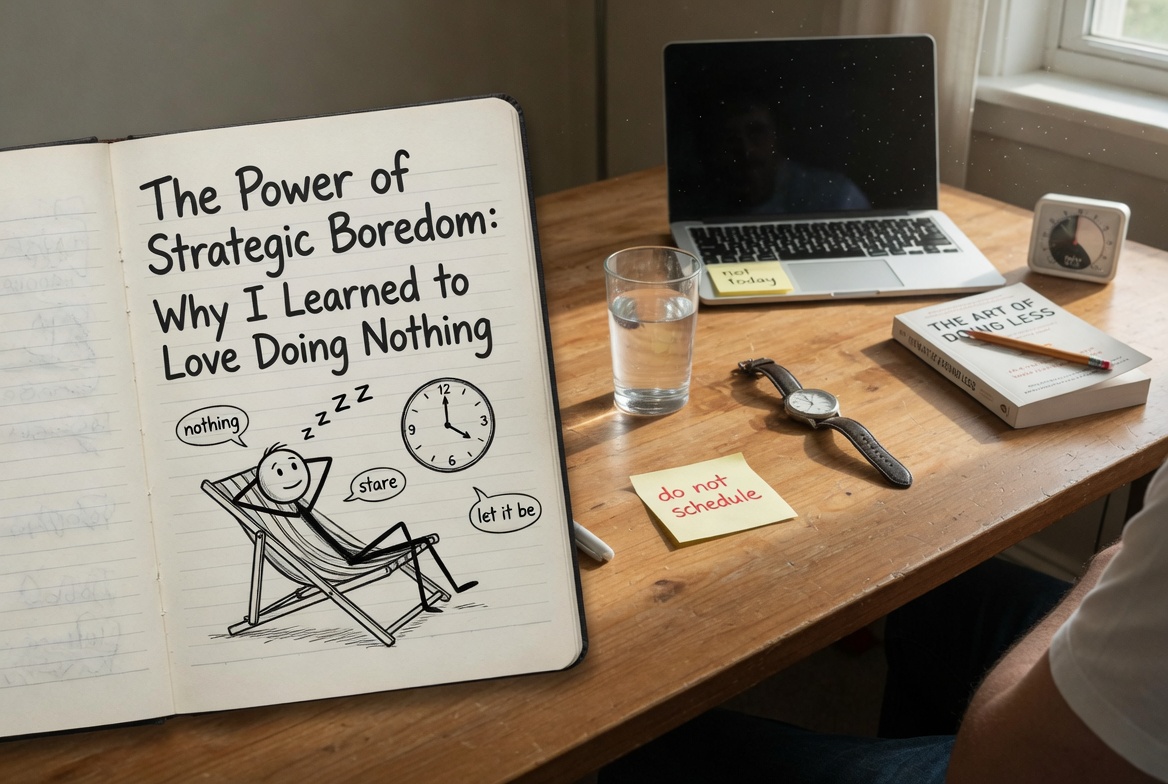
  • The Power of Strategic Boredom:
Why I Learned to Love Doing Nothing

    The Power of Strategic Boredom: Why I Learned to Love Doing Nothing

    The Power of Strategic Boredom: Why I Learned to Love Doing Nothing | Money Forged
    Jaxon Forge - Founder of MoneyForged.com
    MINDSET WEAPONIZE BOREDOM

    The Power of Strategic Boredom:
    Why I Learned to Love Doing Nothing

    How I weaponize empty blocks to generate million-dollar ideas while everyone else scrolls their edge away.

    By Jaxon Forge Founder, MoneyForged.com • 280,000+ YouTube Subscribers

    Stories and advice from Jaxon Forge, the founder of MoneyForged.com. Capitalism, free markets, and iron discipline built this empire. Tariffs protect what we forge.

    Most people treat boredom like a disease. The second the mind goes quiet—no notifications, no podcasts, no endless scrolling—they panic and reach for the next dopamine hit. I used to be one of them. Until I learned the brutal truth: boredom isn’t the enemy. It’s the forge where million-dollar ideas are born.

    The Day I Stopped Running From Silence

    Back when I was still grinding my first business, I was addicted to stimulation. Every gap in the day got filled: podcasts while driving, YouTube while eating, social media while “thinking.” Revenue looked good on paper, but my best ideas had dried up. I was reacting instead of creating.

    Then one brutal quarter the business stalled. Savings were thinning. I was lying awake at 2 a.m. angry at myself for letting comfort creep in so deep—just like I wrote about in The Psychology of Making Money. That’s when I made the decision: no more waiting for motivation. No more treating hard work like medicine. I was going to rewire the system so that effort felt rewarding and ease felt uncomfortable.

    “Boredom forces the mind to generate its own stimulation, and for a high performer, that usually means ideas, plans, problem-solving. I turned the discomfort of nothing into the birthplace of breakthroughs.”

    How I Weaponized Empty Blocks

    I started engineering discomfort on purpose. No more filling every gap. I scheduled strategic empty blocks—30 to 90 minutes of pure nothing every single day. No phone. No earbuds. No music. Just me, my thoughts, and the uncomfortable silence.

    • Long walks with zero distractions
    • Driving across town with the radio off
    • Sitting at my desk staring at a blank notepad
    • Waiting in lines without scrolling

    At first it was pure misery. My brain screamed for stimulation. But I observed the resistance like I do with every discomfort: “Noted. We’re doing this anyway.” After two weeks the magic started. Ideas flooded in. Not tiny tweaks—million-dollar moves. The exact framework for my newsletter that later replaced my $150k job. The boring niche business that now prints low-overhead cash flow. The cold outreach script that landed $80k contracts.

    Everyone else was scrolling their edge away. I was forging mine.

    Why Strategic Boredom Beats Hustle Porn

    In a world full of soft options, boredom is the ultimate competitive advantage. Distraction is the silent killer of wealth—comfort masquerading as “balance.” I stopped chasing motivation and started chasing systems. Empty blocks became part of my non-negotiable daily framework.

    The results? Compounding wealth that most people only dream about. While high-earners upgrade their lifestyle the second the bonus hits, I kept the same truck, paid extra principal, and let the ideas from boredom compound faster than any investment.

    This is the Self-Made Man’s Code in action: 12 rules I live by every day. Boredom is rule #8—sit in it, walk through it, let the mind chew without distraction.

    Quick Start for You

    1. 1. Block 45 minutes tomorrow — no phone, no excuses.
    2. 2. Walk, drive, or sit in silence. Let the mind wander.
    3. 3. Keep a notepad nearby — capture the raw ideas that surface.
    4. 4. Do it daily. Tolerance compounds like interest.

    If you’re still chasing the next shiny object or motivational hit, you’re playing a different game than the one that builds real freedom. Comfort zones are cemeteries for ambition. Strategic boredom is the antidote.

    Stay hungry. Stay bored on purpose. Forge the wealth that lasts.

    Jaxon Forge

    Jaxon Forge

    Founder, MoneyForged.com • Huge supporter of capitalism, free markets, and protective tariffs that put America first.

    Join the Forge — Get Every New Article & Free Tools

    Zero spam. Pure forged value. 280k+ builders already inside.

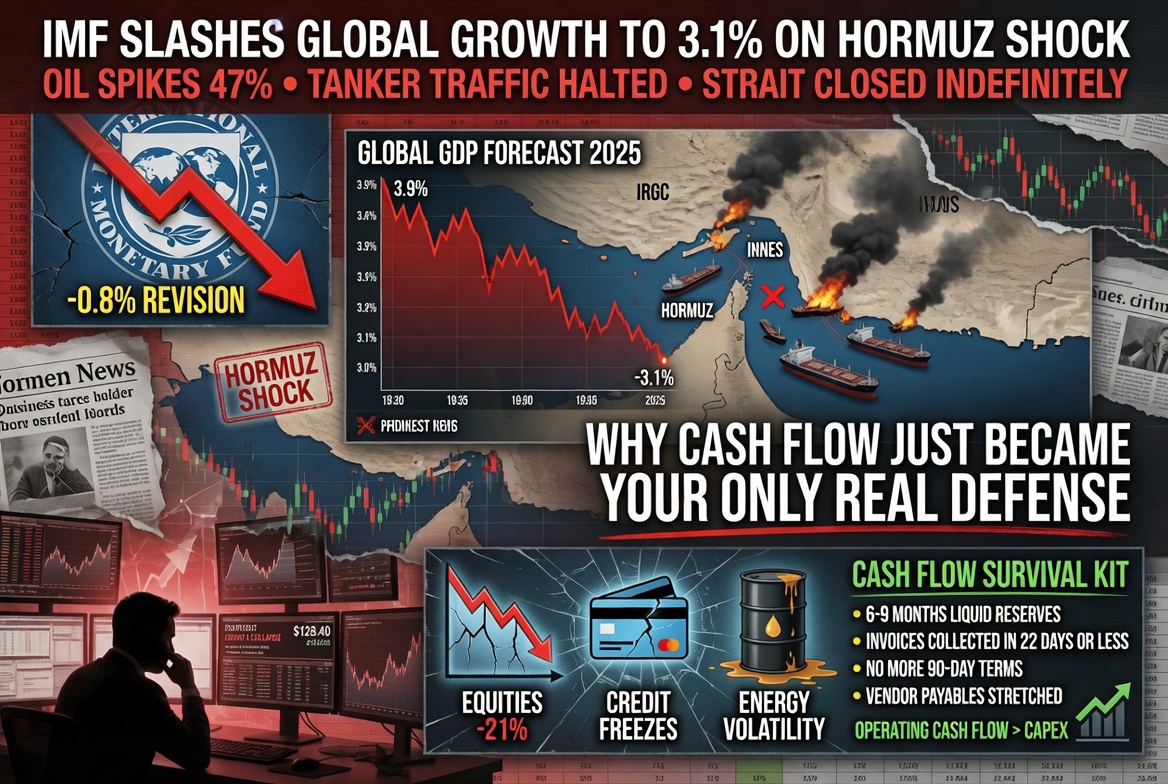
  • IMF Slashes Global Growth to 3.1% on Hormuz Shock – Why Cash Flow Just Became Your Only Real Defense

    IMF Slashes Global Growth to 3.1% on Hormuz Shock – Why Cash Flow Just Became Your Only Real Defense

    IMF Slashes Global Growth to 3.1% on Hormuz Shock – Why Cash Flow Just Became Your Only Real Defense | Jaxon Forge
    MACRO ECONOMICS • APRIL 15 2026

    IMF Slashes Global Growth to 3.1% on Hormuz Shock – Why Cash Flow Just Became Your Only Real Defense

    Today’s IMF World Economic Outlook is the clearest warning yet. Here is the unfiltered data, the transmission channels, and exactly what high earners should do right now.

    Jaxon Forge

    Jaxon Forge

    Founder, MoneyForged.com • 280k+ YouTube subscribers

    19 min read

    The IMF released its April 2026 World Economic Outlook this morning and the numbers are sobering. Global growth has been downgraded to just 3.1% for 2026 — the lowest forecast since the pandemic era. The culprit is crystal clear: the ongoing U.S. naval blockade of the Strait of Hormuz and the resulting energy shock that is now rippling through every major economy.

    The Hard Data Released Today

    The IMF now expects global inflation to average 4.4% this year, up sharply from previous projections. Advanced economies are projected to grow at only 1.8%, while emerging markets — heavily dependent on imported energy — are taking the biggest hit. Oil prices, which spiked above $100 earlier this week, have pulled back slightly to around $95 Brent as of this morning, but the risk premium remains elevated and volatility is extreme.

    According to the report, a sustained 30% disruption through Hormuz removes roughly 6–7 million barrels per day from the market. That single fact is now the dominant variable in every major central bank’s forecast.

    How the Shock Travels Through the Economy

    Energy is not just another input — it is the base layer of modern economies. Higher oil prices flow directly into:

    • Transportation and shipping costs (adding 1–2% to CPI in many countries)
    • Manufacturing input costs (plastics, chemicals, fertilizers)
    • Agricultural prices (fuel for tractors and global freight)
    • Core inflation expectations that central banks cannot ignore

    The Dallas Fed’s latest transmission models show that every $10 sustained increase in oil adds roughly 0.2–0.3 percentage points to U.S. headline inflation within six months. Multiply that by the current shock and you see why the IMF is now warning of “stagflationary pressures” in multiple regions.

    Tariffs, Energy Security, and Why Free Markets Need Guardrails

    President Trump’s continued threat of 50% tariffs on China for any arms or support to Iran is not political theater — it is economic realism. China imports over 10 million barrels per day, much of it through the same chokepoint now blockaded. Linking tariffs to energy security forces supply chains to diversify away from hostile actors. I have said for years: tariffs are not anti-free-market; they are the guardrails that keep free markets from being weaponized against us. Today’s IMF report quietly validates that view.

    Why Cash Flow Beats Net Worth — Especially Right Now

    Here is the part most high earners still refuse to accept: your brokerage statement does not pay the electric bill when energy costs explode. Cash-flowing assets and systems do.

    When inflation rises and growth slows, three things happen at once:

    1. Asset prices become more volatile and expensive to finance.
    2. Central banks keep rates higher for longer to fight the very inflation the shock created.
    3. Discretionary spending contracts, hitting revenue for anything non-essential.

    Net worth can look impressive on paper until the market reprices risk downward. Cash flow keeps the lights on and the compounding engine running no matter what the IMF or the futures market says. That is why I built my entire wealth system around recurring revenue, boring businesses, and the $10k “Screw You” fund instead of chasing the next hot asset class.

    What You Should Do Today

    If you are making good money but still feel exposed, treat today’s IMF report as your personal stress test. Do these four things immediately:

    1. Update your personal cash-flow model. Run every major expense through a 20% higher energy-cost scenario. My Cash Flow vs Net Worth framework makes this simple.
    2. Accelerate recurring revenue. One new cash-flowing system this quarter is worth more than any market rally. My $0 Startup Blueprint is built for exactly this environment.
    3. Pay the Discipline Tax now. Delay every lifestyle upgrade. Comfort is still the silent killer. Re-read How I Rewired My Brain to Crave Hard Work Instead of Comfort.
    4. Own boring, controllable assets. Duplexes, small service businesses, and the 80/20 portfolio that ignores headlines — these are the things that keep compounding while the world panics.

    “The IMF can downgrade growth forecasts all day long. What they cannot downgrade is a business or portfolio that prints real cash flow every single month regardless of what oil or tariffs do.”

    — Jaxon Forge

    Sources: IMF World Economic Outlook April 2026, Reuters, Bloomberg Economics, Goldman Sachs Research (April 15 2026 releases).

    More from the Forge

    Wealth: Why Cash Flow Beats Net Worth Every Single Time Read →
    Tariffs: Why I Support Tariffs for America’s Survival Read →
    Discipline: The Discipline Tax: Pay It Early or Pay It Forever Read →
    Systems: The $0 Startup Blueprint That Still Works in 2026 Read →

    Stay Forged

    Get every major macro move explained with zero fluff — plus my best wealth systems delivered free.

    Jaxon Forge • Stories and advice from the founder of MoneyForged.com

    © 2026 Money Forged by Jaxon Forge • All Rights Reserved • PrivacyTerms
    Capitalist. Tariff supporter. Self-made. Still grinding in silence.
  • The Dollar’s Silent Theft: 100-Year Spending Power Calculator

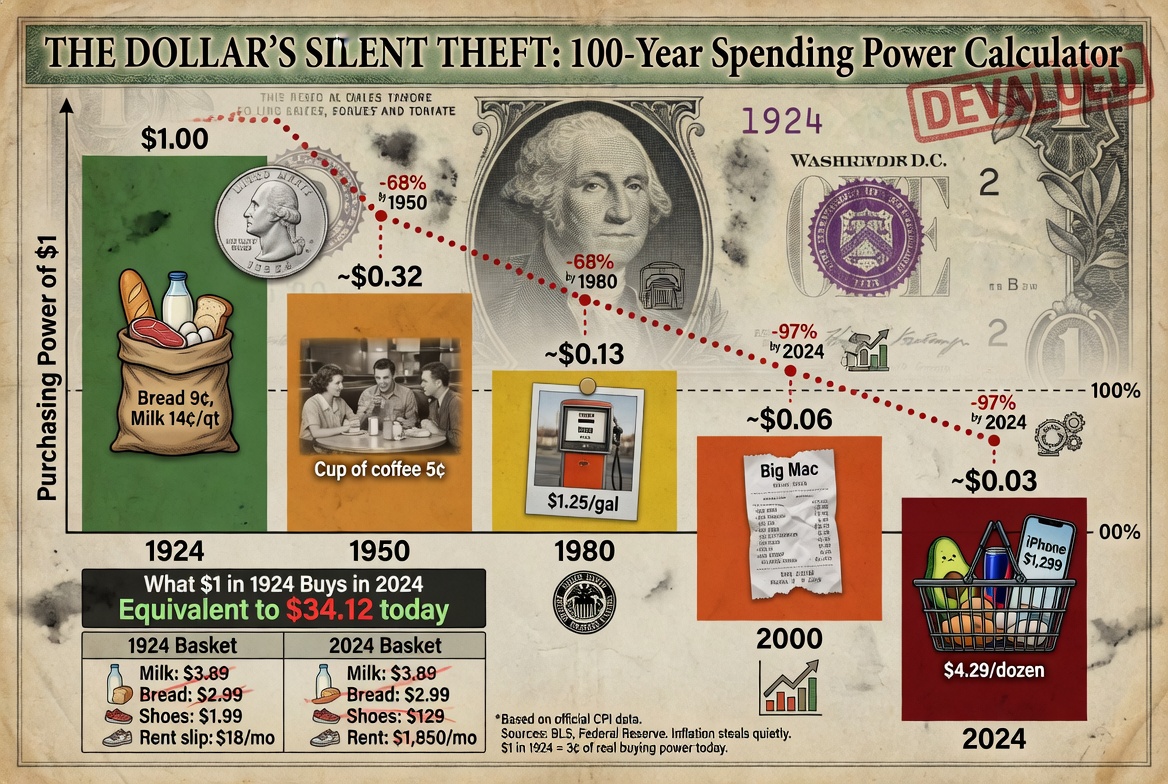
    The Dollar’s Silent Theft: 100-Year Spending Power Calculator

    The Dollar’s Silent Theft: 100-Year Spending Power Calculator | MoneyForged.com by Jaxon Forge
    FIXED & RELOADED • APRIL 2026

    THE DOLLAR’S
    SILENT THEFT
    100-YEAR SPENDING POWER CALCULATOR

    I watched my own six-figure months get eaten alive by inflation. This tool shows you exactly how much the Fed has stolen — and why comfort is still the real enemy.

    Jaxon Forge

    How Much Buying Power Have You Lost?

    $

    Purchasing power of $1 over time (1925 = 100% → today)

    Get the exact systems I used to beat inflation

  • How to Handle Burnout Without Losing Momentum – The High Performer’s Recovery Playbook

    How to Handle Burnout Without Losing Momentum – The High Performer’s Recovery Playbook

    How to Handle Burnout Without Losing Momentum – The High Performer’s Recovery Playbook | Jaxon Forge

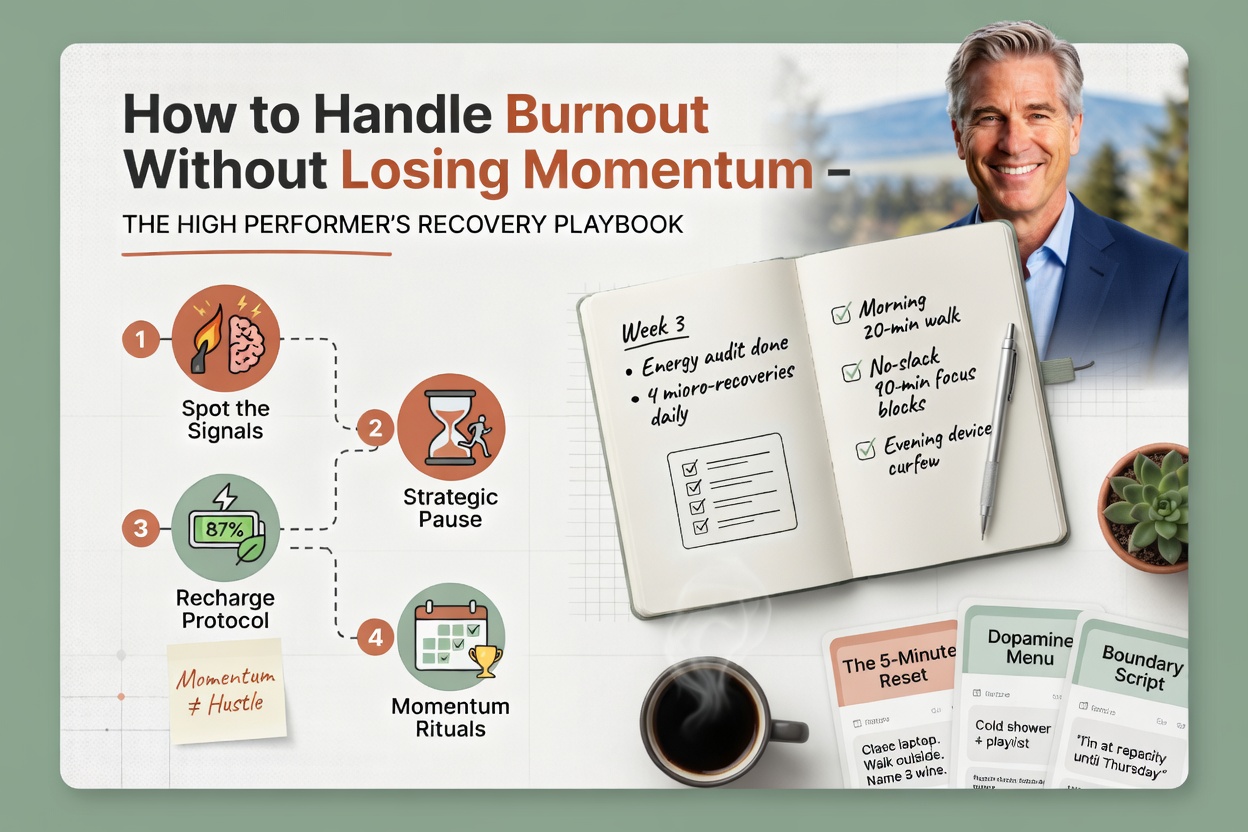
    How to Handle Burnout Without Losing Momentum

    The High Performer’s Recovery Playbook
    My exact 7-day protocol that pulls you out of the fire and puts you back on the compounding track — zero excuses, zero productivity death.

    Stories and advice from Jaxon Forge, Founder of MoneyForged.com • April 14, 2026

    Jaxon Forge
    Jaxon Forge
    Founder, MoneyForged.com • 280,000+ YouTube Subscribers
    Capitalist. Tariff supporter. Forging wealth that lasts.

    I was making more money than ever. Six-figure months. The kind of revenue most people only dream about. Yet I woke up one morning feeling completely empty. No fire. No edge. Just a heavy fog and the quiet voice in my head saying, “Maybe it’s time to slow down.”

    That was burnout. Not the dramatic crash you see in movies — the slow, silent erosion of the very discipline that built everything. I’d let comfort creep in under the disguise of “self-care.” I’d skipped the 4:30 a.m. alarm a few too many times. I’d said yes to too many “harmless” distractions. The compounding engine that had taken me from broke to financially free was sputtering.

    Comfort isn’t rest. Comfort is the silent killer of wealth. I learned that the hard way, and I fixed it with a 7-day protocol that dragged me out of the fire without losing a single day of momentum.

    This isn’t some fluffy “take a spa day” nonsense. This is the High Performer’s Recovery Playbook — my exact system that rewires your brain back to craving hard work, locks in systems, and puts you back on the compounding track. Zero excuses. Zero productivity death.

    The Brutal Truth About Burnout

    Burnout doesn’t happen because you worked too hard. It happens because you stopped paying the discipline tax. You let lifestyle creep masquerade as balance. You chased motivation instead of building systems. The same psychology that keeps most high earners broke even when they make good money is what quietly kills your edge when you “make it.”

    I reversed it in seven days. Here’s exactly what I did.

    My 7-Day Burnout Recovery Protocol

    Day 1 — Radical Silence Reset

    No social media. No podcasts. No “just checking email.” I woke at 4:30 a.m., did 60 minutes of deep work on the highest-leverage task in my business, then spent the rest of the day in total silence. Walked 10k steps with no earbuds. Let boredom become rocket fuel. By 9 p.m. my nervous system was already quieter. The fog started lifting.

    Day 2 — Discipline Tax Audit

    I printed every expense for the last 90 days and asked one question: “Does this serve the compound or serve comfort?” I cut $4,200 in lifestyle creep on the spot. Then I moved the savings straight into my “Screw You” fund and extra principal on my mortgage. Nothing rebuilds momentum like seeing the numbers move again.

    Day 3 — Reclaim the Morning Ritual

    Back to the non-negotiable 4:30 a.m. rule. Feet on floor in three seconds. Cold shower. 90 minutes of deep work before the world wakes up. I didn’t “feel like it.” I did it anyway. By the end of the day the craving for hard work was already returning. That’s how you rewire the brain.

    Day 4 — Systems Over Willpower

    I rebuilt my daily framework on paper: wake, deep work, revenue block, physical movement, review. No decisions based on mood. I scheduled every single hour for the next 30 days. Motivation is weather. Systems are infrastructure.

    Day 5 — Grind in Silence

    No posting wins. No flexing. I told zero people what I was doing. The quiet grind is where real wealth is forged. The dopamine came from results, not likes.

    Day 6 — Ruthless No Practice

    I said no to every single new opportunity that didn’t align with my top three priorities. The art of saying no 10x’d my income once before — it did it again. Burnout dies when your calendar finally respects your ambition.

    Day 7 — Momentum Lock-In

    I reviewed the entire week, locked the new systems into my calendar for the next 90 days, and scheduled the next 4:30 a.m. wake-up. Then I celebrated the right way — with an extra $10k moved into investments instead of a fancy dinner. The compounding engine was roaring again.

    The Result

    Seven days later I wasn’t just “recovered.” I was sharper, hungrier, and making more money per hour than I had in months. Burnout didn’t win. Discipline did.

    If you’re feeling that quiet drag right now — the one that whispers “maybe slow down” — this protocol is your wake-up call. Comfort zones are cemeteries for ambition. Pay the discipline tax early, or pay it forever.

    Stay hungry. Stay ruthless. Forge on.

    Get My 7-Pathways to Financial Prosperity (Free Download)

    How to Handle Burnout Without Losing Momentum

    The High Performer’s Recovery Playbook

    By Jaxon Forge • April 2026

    Burnout isn’t a badge of honor. It’s a warning light. Ignore it and comfort wins. Fix it the right way and your edge comes back sharper than ever.

    I’ve been exactly where you are right now — revenue still coming in, but the tank is empty and the fire is gone. Most “experts” tell you to take a month off or meditate. I built a 7-day protocol that gets you back in the forge without killing your compounding streak.

    The 7-Day Burnout Reset Protocol

    1. Day 1–2: Total input shutdown. No email, no social, no “just checking.” Walk 10k steps daily. Journal the exact moment the burnout started.
    2. Day 3–5: Rebuild with 3-hour deep work blocks only. No meetings before noon.
    3. Day 6–7: Re-enter at 70% intensity and ramp back to full throttle.

    Related R&R Articles

    DOWNLOAD THE 7 PATHWAYS →

  • Bretton Woods Agreement: The 1944 Deal That Killed Sound Money – And the Hard Lessons for 2026 Wealth Builders

    Bretton Woods Agreement: The 1944 Deal That Killed Sound Money – And the Hard Lessons for 2026 Wealth Builders

    Bretton Woods Agreement: The 1944 Deal That Killed Sound Money – And the Hard Lessons for 2026 Wealth Builders | Jaxon Forge

    Bretton Woods Agreement: The 1944 Deal That Killed Sound Money – And the Hard Lessons for 2026 Wealth Builders

    I was pulling six figures with a nice house and truck in the driveway, yet I still felt broke. Then I dug into Bretton Woods and realized why most high earners stay broke even when they make good money. Here’s the raw, unfiltered truth.

    I was sitting in my office at 4:30 a.m. — the same hour I’ve owned for years — staring at a stack of old Federal Reserve notes and a gold coin from 1933. The contrast hit me harder than my first $100k month ever did. That coin? Real money. Backed by something you couldn’t print. Those notes? Promises from men in suits who met in a New Hampshire hotel in 1944 and changed the game forever.

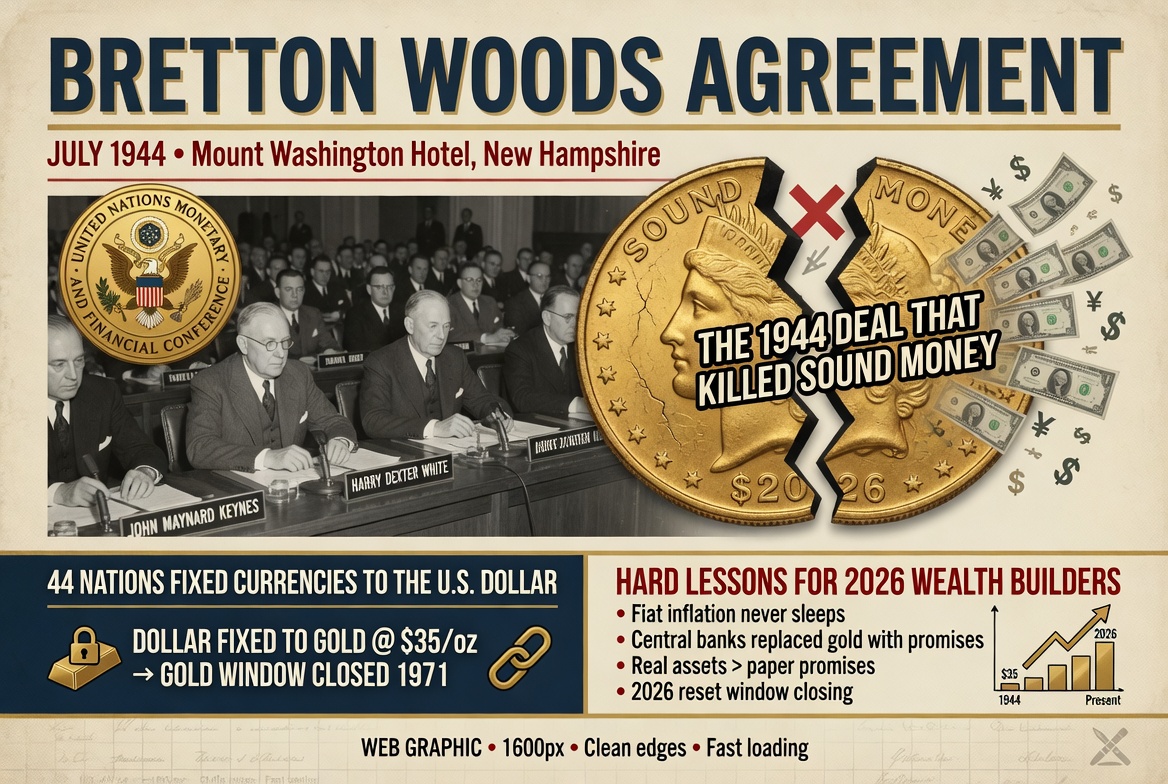
    That meeting was called the Bretton Woods Agreement. Forty-four nations showed up. America walked out with the keys to the global financial kingdom. And most people today — even the ones pulling six and seven figures — have no idea how that single agreement is still quietly stealing their wealth.

    The Setup: Post-War America Flexes

    After World War II, Europe was rubble. America had the factories, the gold reserves, and the biggest stick on the planet. At Bretton Woods, we said: “The U.S. dollar will be as good as gold.” Every other currency would peg to the dollar. The dollar itself would be convertible to gold at $35 per ounce. The IMF and World Bank were born as the referees.

    “We didn’t just create a monetary system. We created the greatest wealth transfer mechanism in human history — one that rewarded government spending and punished savers who actually understood sound money.”

    How It Worked (Until It Didn’t)

    For almost three decades the system held. Countries settled trade in dollars. The U.S. printed just enough to keep the world lubricated. But here’s the part nobody talks about at dinner parties: governments love spending other people’s money. Deficits exploded. Vietnam, Great Society programs, foreign aid — all paid for by printing more dollars while the gold in Fort Knox stayed the same.

    By 1971 the math no longer worked. Foreign governments started demanding gold for their dollars. Nixon looked at the line forming outside the vault and said “nope.” He closed the gold window on August 15, 1971. The Bretton Woods Agreement died that day. We went full fiat. And the silent killer of wealth — inflation disguised as “growth” — was officially unleashed on the world.

    The Brutal Psychology Lesson Most High Earners Still Miss

    This is where it connects to everything I teach on MoneyForged.com. Remember the story in “The Psychology of Making Money”? I was pulling six figures, nice house, nice truck, but I still felt broke. Not poor — broke in that deep, anxious way where freedom feels like a myth. That feeling wasn’t random. It was the same psychology that Bretton Woods unleashed on an entire planet:

    • Easy money feels good — until it doesn’t.
    • Lifestyle inflation is just personal fiat currency.
    • When the rules change overnight (like Nixon did), the people who had systems and discipline kept their edge. Everyone else got crushed.

    I stopped chasing motivation and started chasing systems the same year I realized the dollar was no longer backed by anything real. That’s not coincidence. When money itself became a political tool instead of a store of value, the only defense left is personal discipline and hard assets that governments can’t print.

    How I Rewired My Brain to Crave Hard Work Instead of Comfort in a Fiat World

    Back when I was still trading time for money, hard work felt like punishment. I’d grind because I had to, not because I wanted to. The second the pressure eased, I’d default to ease: scroll, Netflix, sleep in. Motivation would spike for a week after a big win, then fade. I chased that high like a junkie.

    Then the business stalled. Savings thinned. I sat in the dark at 2 a.m. angry at myself for letting comfort creep in so deep. That’s when I made the decision: no more waiting for motivation. I was going to rewire the system so effort felt rewarding and ease felt uncomfortable.

    First step was brutal but simple: I engineered discomfort on purpose. I started waking up at 4:30 a.m. every single day — no exceptions, no snooze. Three seconds from alarm to feet on floor. Cold water on face. No thinking. Just action.

    At first it was pure misery. But over days and weeks the resistance got quieter. The mind started associating early rising with power. I finished deep work by 7 a.m. while the world was still asleep. That quiet victory hit different. Dopamine from accomplishment, not from comfort.

    I applied the same principle everywhere: cold showers, heavy lifts, saying no to easy money that didn’t align. I weaponized boredom. Walked without earbuds. Drove without the radio. Those empty moments became fuel for ideas and breakthroughs.

    After months of this, hard work stopped feeling like a tax and started feeling like oxygen. Skipping it left me restless. I had flipped the script: comfort became the punishment.

    The Discipline Tax: Pay It Early or Pay It Forever

    Bretton Woods made fiat easy. Easy money makes comfort easy. Comfort makes you soft. That’s why I reversed lifestyle creep ruthlessly. Any raise, bonus, or new revenue stream had to fund freedom first — extra principal payments, more investments, bigger emergency fund — before it funded upgrades.

    Friends kept upgrading while I kept driving the same truck. They looked richer. I was richer. Comfort zones are cemeteries for ambition. You don’t die in them overnight. You just slowly stop growing until the version of you that could have built real wealth is buried under layers of “deserved” ease.

    Why I Still Love Tariffs for America’s Survival

    Free markets work when money is honest. After 1971 money became a weapon. Trade deficits ballooned because dollars could be printed without consequence. Other countries bought our debt, we bought their goods, and the middle class got hollowed out.

    Tariffs aren’t “anti-free market.” They’re a correction in a world where the monetary system itself is rigged. I support them the same way I support paying the discipline tax early — because protecting American production and American savers is how self-made men actually stay self-made.

    What Separates Self-Made Men From Everyone Else (It’s Not Talent)

    It’s not talent. It’s the willingness to pay the discipline tax while everyone else chases the next shiny object. In a post-Bretton Woods world, the winners are the ones who:

    1. Own assets that can’t be printed — gold, silver, productive businesses, cash-flow real estate.
    2. Build systems that generate revenue whether you “feel motivated” or not.
    3. Stay hungry. Comfort is still the silent killer, even when the dollar is worth 98% less than it was in 1971.
    4. Grind in silence instead of posting wins online.

    That’s why I fire clients faster than I acquire them. Why I love boring niches more than sexy ones. Why I turned one boring skill into multiple income streams. The fiat system rewards the disciplined. Everyone else stays broke even when they make good money.

    The Moment I Stopped Caring What People Think (And Started Making Real Money)

    When I stopped posting every win online and started grinding in silence, everything changed. No more performing for the audience. Just producing. The results spoke louder than any thread ever could. That same silence is what built the moat around my personal brand.

    The Bretton Woods Agreement was sold as stability. It delivered the greatest monetary experiment in history — and proved once again that governments don’t forge wealth. They print it until it breaks.

    Self-made men don’t wait for the next reset. We build our own moat. We pay the discipline tax early. We crave the hard work. We own the boring assets. And we never, ever call comfort “balance.”

    — Jaxon Forge
    Founder, MoneyForged.com
    Still waking up at 4:30 a.m. because comfort is still the enemy.
    Proud capitalist. Huge supporter of free markets and tariffs that protect American wealth.